
Pontius Pilate: Roman governor of Judaea and figure in the trial of Jesus
Pontius Pilate was the Roman prefect (procurator) of Judaea (c. AD 26–36). Known from the New Testament, Roman historians, and inscriptions, he presided at Jesus' trial and remains a contested historical figure.
Overview
Pontius Pilate served as the Roman governor of the province of Judaea in the reign of Emperor Tiberius, commonly dated to about AD 26–36. In classical and Christian sources he is most famous for presiding over the legal proceedings that led to the crucifixion of Jesus of Nazareth. Pilate's name appears in Latin and Greek sources and on inscriptions, and his term provides a fixed chronological reference used by historians for dating events in early first‑century Judaea.
Image gallery
10 Images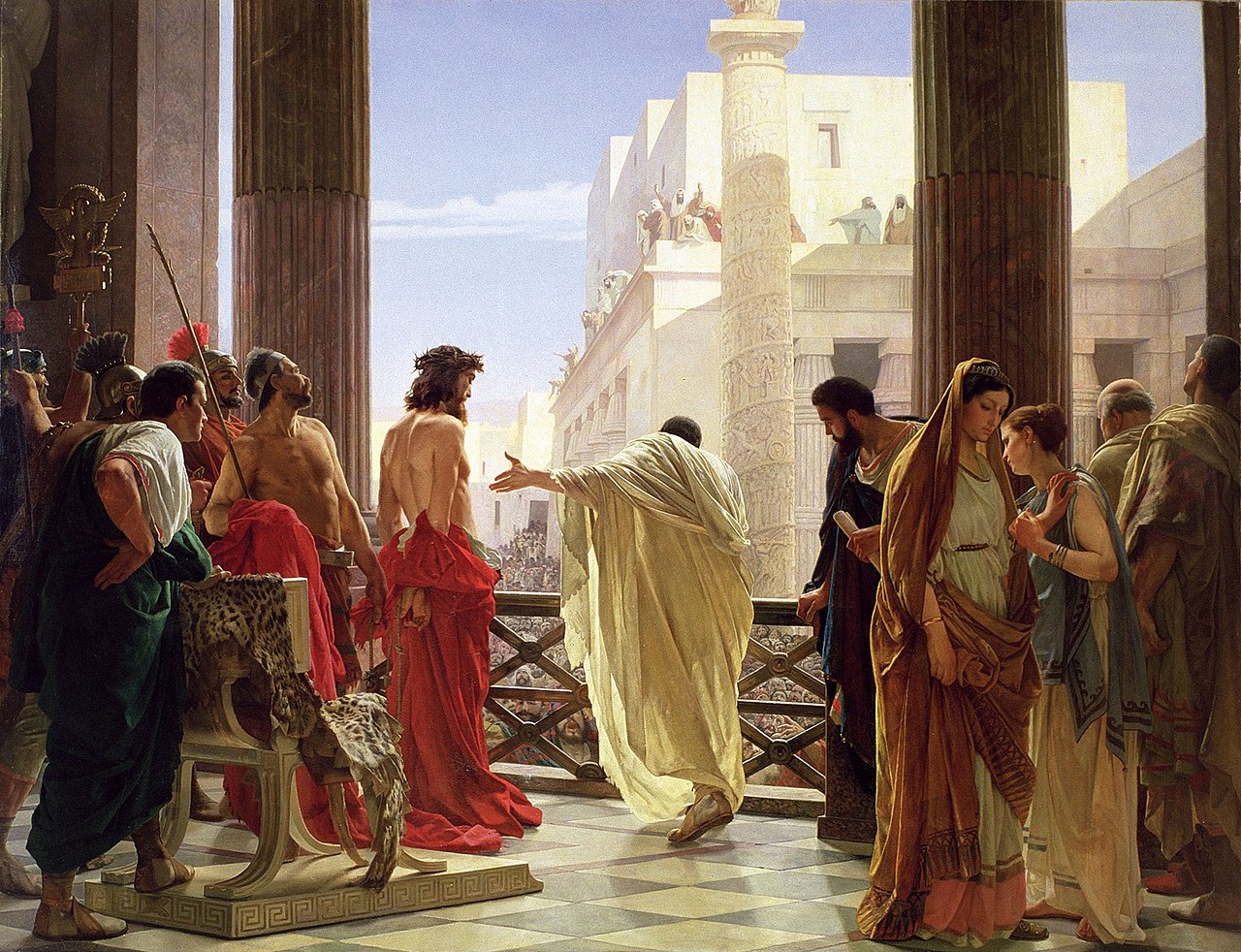


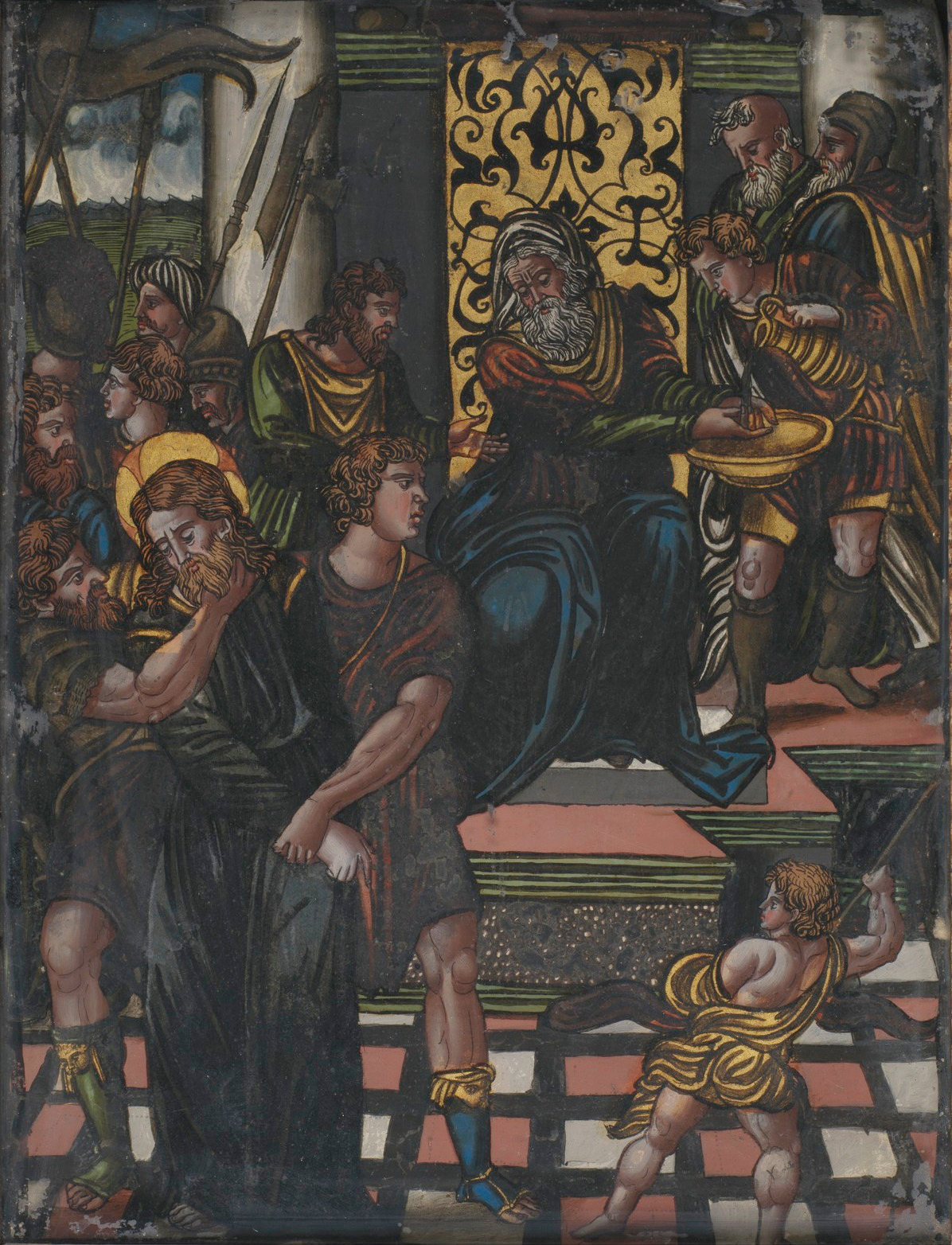

Role and administration
As a prefect (sometimes called procurator in later usage), Pilate commanded the Roman garrison, oversaw taxation and public order, and represented imperial authority in religiously sensitive territory. The surviving accounts portray a governor balancing Roman priorities—security, tribute and loyalty to the emperor—with the need to avoid inflaming local Jewish sensibilities. Details about his life before appointment and his family background are not securely documented; later Christian tradition gives his wife a name and story but these are not confirmed by contemporary records.
The trial of Jesus and Gospel portrayals
All four canonical Gospels record encounters between Pilate and Jesus, but they emphasize different themes. In Mark Pilate appears reluctant to condemn Jesus and is represented as a pragmatic magistrate trying to avoid responsibility. Matthew adds the episode of the governor washing his hands to show he disclaims guilt. Luke portrays both Roman and Jewish authorities as finding no political crime, while John emphasizes a theological exchange about kingship and truth. These narrative differences reflect the evangelists' theological aims as much as any historical record.
Non-Christian literary and archaeological evidence
Independent Roman and Jewish sources refer to Pilate and confirm some elements of the Gospel narratives. The historian Tacitus notes that Christus suffered under a procurator named Pontius Pilatus during Tiberius' reign. Jewish historian Flavius Josephus and the philosopher Philo of Alexandria also mention a Roman official by this name and recount incidents showing friction between Pilate and local populations. Archaeology has provided direct confirmation: an inscription known as the Pilate Stone, discovered at Caesarea Maritima, bears his name and title in Latin and is widely regarded as proof of his historical existence.
Later traditions, fate and cultural impact
After his removal from office Pilate's later fate is unclear in reliable historical records. Ancient and medieval traditions offer varied accounts—exile, execution, or conversion in different texts—but these are not historically certain. Christian apocryphal writings and Eastern Christian tradition expanded his role and added stories about his wife (often called Procula) and about Pilate's attitudes toward Jesus; some traditions even venerate his wife as a saint. Pilate appears throughout art, literature and theology, used as a symbol of legal authority, moral responsibility and political compromise.
Notable facts and distinctions
- Pilate's official title appears in contemporary inscriptions; the form and rank (prefect vs. procurator) are debated by scholars based on epigraphic and literary evidence. See the Latin form: Pontius Pīlātus and the Greek form: Πόντιος Πιλάτος.
- He governed the Roman province usually called Judaea or Iudaea in Latin sources; this was an especially sensitive province for Roman rule due to religious and nationalist tensions.
- The episode most associated with his name is the legal case commonly referred to as the Trial of Jesus (trial), described in the Christian Gospels (canonical Christian accounts such as the four Gospels).
- Key ancient references to Pilate outside Christian scripture include works by Tacitus (Annales), Philo of Alexandria (Legatio ad Gaium) and Josephus (Antiquities). These sources corroborate certain administrative actions and conflicts.
- Christian tradition preserves additional material such as the so‑called Acts or Gospel of Pilate and stories about his wife, sometimes called Procula, who is commemorated in some Eastern traditions (Procula, Greek Orthodox Church).
Pilate remains a figure of enduring historical and cultural interest because he stands at the intersection of Roman provincial governance, Jewish communal life, and the origins of Christianity. His documented existence, the wide range of source types that mention him, and his central role in the Passion narratives all contribute to his continuing study in history, theology and archaeology.
For further reading see referenced ancient authors and epigraphic studies: consult Roman historians and the corpus of first‑century Jewish historians for additional context (Mark, Matthew, Luke, John, and classical sources like Tacitus and Philo).
Additional resources are available in specialized academic works and museum publications that discuss the Pilate Stone and related inscriptions (archaeological reports, epigraphy, hagiography, biblical studies, historical commentaries, textual analyses, and modern scholarly syntheses: Latin forms, Greek forms, Josephus, trial studies, Gospel traditions).
Questions and answers
Q: Who was Pontius Pilate?
A: Pontius Pilate was the governor of the Roman province of Judaea from AD 26 until 36. He was the sixth Procurator of Judaea and is best known as the man who presided over the Trial of Jesus and ordered his crucifixion.
Q: What do modern sources say about Pilate's role in Jesus' death?
A: Modern sources, such as Mark, portray Pilate as extremely reluctant to execute Jesus and suggest that it was actually the Jewish hierarchy that was responsible for his death. In Matthew, Pilate is said to have washed his hands of Jesus before reluctantly sending him to his death. In Luke, both Pilate and King Herod agree that Jesus did not conspire against Rome.
Q: What other historical figures mention Pontius Pilate?
A: Tacitus mentions him in his Annales (15,44), Philo of Alexandria mentions him in Leg. ad Caj. 38, and Flavius Josephus mentions him in Antiquities 18:3-4 and Bellum II 9-2-4.
Q: What is known about Pontius Pilates' life before or after he became governor?
A: Not much is known about Pontius Pilates' life before or after he became governor but some details have been supplied by tradition including that his wife's name was Procula (she has since been canonized as a saint in the Greek Orthodox Church).
Q: How does Pontius Pialte serve as a reliable historical benchmark for Jesus' death?
A: Since we know when Pontius Pialte served as governor (AD 26 - 36) we can use this time frame to reliably estimate when Jesus died during this period which serves as a historical benchmark for His death.
Q: Where does John state "my kingdom is not of this world" when held by Pilate?
A: This statement appears in John 18;36 where it states "My kingdom is not of this world” when held by Pontius Pialte
Author
AlegsaOnline.com Pontius Pilate: Roman governor of Judaea and figure in the trial of Jesus Leandro Alegsa
URL: https://en.alegsaonline.com/art/128825