
Pieter Zeeman: discoverer of the Zeeman effect and Nobel laureate
Pieter Zeeman (1865–1943) was a Dutch physicist who discovered the splitting of spectral lines in magnetic fields, the Zeeman effect, and shared the 1902 Nobel Prize in Physics with Hendrik Lorentz.
Overview
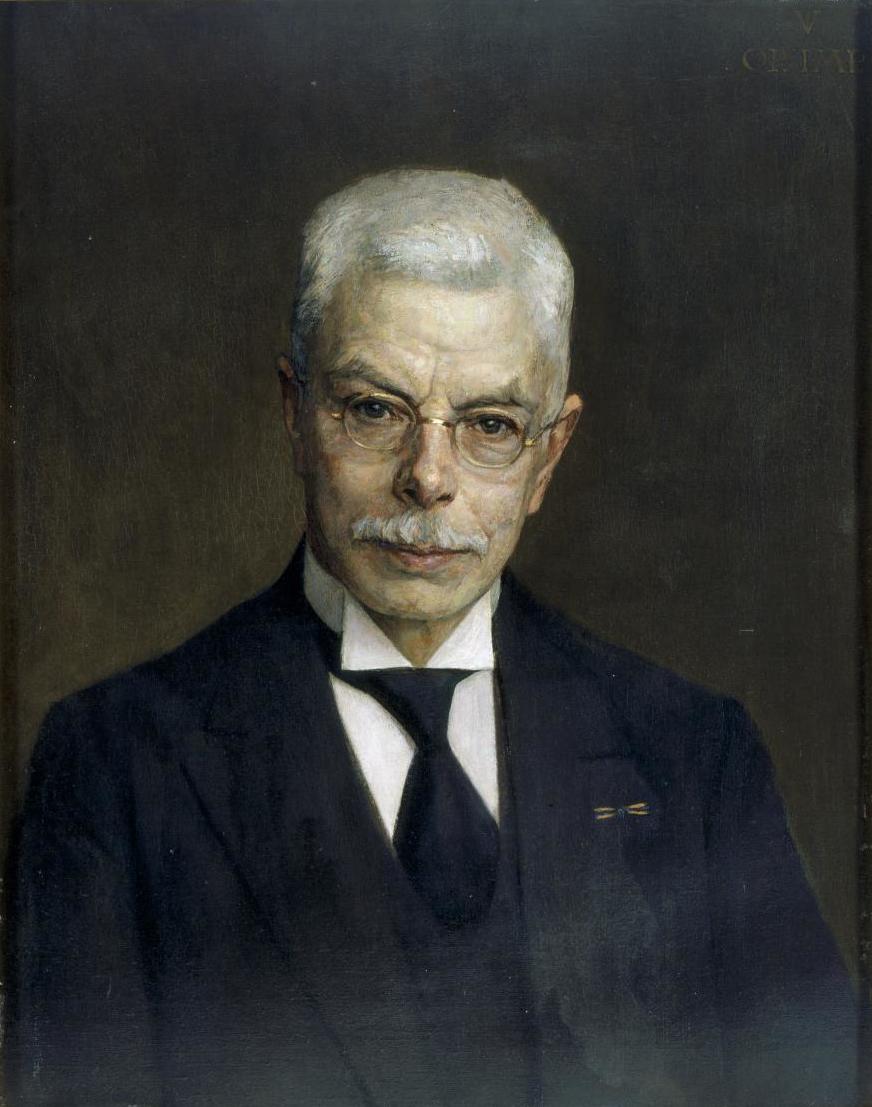
Pieter Zeeman (25 May 1865 – 9 October 1943) was a Dutch physicist best known for identifying what became known as the Zeeman effect. His experimental discovery of magnetic splitting in spectral lines and the subsequent theoretical account earned him, jointly with Hendrik Lorentz, the Nobel Prize in Physics in 1902. Zeeman’s work bridged precise laboratory spectroscopy and emerging theories of matter and electromagnetism.
Image gallery
6 Images



Discovery and basic phenomenon
In 1896 Zeeman observed that light emitted by atoms changed when the emitting source was placed in a strong magnetic field: single spectral lines separated into multiple components, and their polarization properties altered. This splitting revealed a direct influence of magnetic fields on the atomic emission process. The effect was reproducible with different elements and light sources and was rapidly recognized as a new experimental window onto atomic structure and electromagnetic interactions.
Experimental characteristics
The Zeeman effect appears in two commonly described forms: the "normal" effect, where a line divides into three components, and the more complex "anomalous" patterns produced in many atoms with multiple electrons. Components show characteristic polarization states and frequency shifts approximately proportional to the magnetic field strength. These signatures depend on the transitions involved and later were quantified by factors such as the Landé g‑factor.
Theoretical interpretation and recognition
Shortly after Zeeman’s measurements, Lorentz provided an explanation within the electron theory of matter, treating electrons as oscillators influenced by magnetic fields. This classical account explained many features of the observed splitting; later, quantum mechanics and the concept of electron spin refined and extended the explanation of anomalous patterns. Zeeman’s experimental clarity and the interplay with theory were central to awarding him the Nobel Prize; contemporary biographical accounts emphasize both experimentation and collaboration with theorists.
Legacy and applications
Zeeman’s discovery has practical and scientific importance across several fields. Applications and notable impacts include:
- Astrophysics: measuring magnetic fields in the Sun and other stars by detecting Zeeman splitting in stellar spectra.
- Laboratory spectroscopy and plasma diagnostics: providing a tool to quantify magnetic environments and to test atomic models.
- Foundations of atomic physics: supplying experimental constraints that helped shape quantum theory and our understanding of electron behavior.
- Instrumentation: informing methods for polarization analysis and high‑resolution spectral measurements in research and industry.
More than a century after its discovery, the Zeeman effect remains a fundamental phenomenon taught in physics courses and used in research, illustrating how careful observation of light can reveal microscopic interactions and large‑scale magnetic structures alike.
Questions and answers
Q: Who was Pieter Zeeman?
A: Pieter Zeeman was a Dutch physicist.
Q: What did Pieter Zeeman discover?
A: Pieter Zeeman discovered the Zeeman effect.
Q: When was Pieter Zeeman awarded the Nobel Prize in Physics?
A: Pieter Zeeman was awarded the Nobel Prize in Physics in 1902.
Q: Who did Pieter Zeeman share the Nobel Prize in Physics with?
A: Pieter Zeeman shared the Nobel Prize in Physics with Hendrik Lorentz.
Q: What was the discovery and theoretical explanation of the Zeeman effect by Pieter Zeeman and Hendrik Lorentz about?
A: The discovery and theoretical explanation of the Zeeman effect by Pieter Zeeman and Hendrik Lorentz was about the splitting of spectral lines when the light-emitting substance is placed in a magnetic field.
Q: What is the importance of the Zeeman effect?
A: The Zeeman effect helps in understanding the behavior of the atoms in the magnetic field.
Q: When was Pieter Zeeman born and when did he die?
A: Pieter Zeeman was born on 25 May 1865 and died on 9 October 1943.
Author
AlegsaOnline.com Pieter Zeeman: discoverer of the Zeeman effect and Nobel laureate Leandro Alegsa
URL: https://en.alegsaonline.com/art/128780