
Pierre-Louis Maupertuis
French mathematician and Enlightenment natural philosopher (1698–1759). Led the Lapland expedition, formulated an early principle of least action, directed the Académie des Sciences, and influenced ideas about heredity.
Overview
Pierre Louis Moreau de Maupertuis (1698 – 27 July 1759) was a prominent French mathematician, natural philosopher and man of letters of the Enlightenment. He held leadership roles in the French scientific establishment and, at the invitation of Frederick the Great, became the first President of the Prussian Academy of Sciences. Maupertuis combined mathematical analysis, experimental measurement and speculative natural history in a career that helped shape 18th‑century science.
Image gallery
6 Images


Major achievements
Maupertuis is best remembered for several interrelated accomplishments that span practical measurement, theoretical physics and natural history:
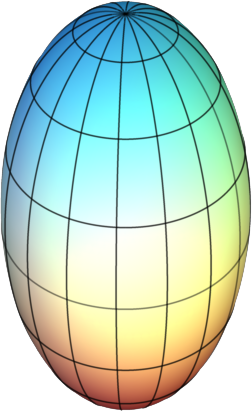
- Lapland expedition (1736). He led an international team to measure a degree of the meridian near the Arctic Circle; their results supported the Newtonian prediction that the Earth is flattened at the poles.
- Principle of least action. Maupertuis proposed an early form of the least‑action principle: that nature follows paths that make a particular integral quantity extremal. His statement stimulated later mathematical formulations by Euler, Lagrange and Hamilton and contributed to the development of variational methods in physics.
- Scientific leadership and correspondence. As director of the Académie des Sciences and later head of the Prussian Academy, he promoted mathematical research, organized experiments and corresponded widely with other leading thinkers of his day.
Intellectual context and scientific method
Maupertuis worked at the intersection of experiment and theory. The Lapland mission exemplified the Enlightenment ideal of cross‑national collaboration and measured investigation to settle theoretical disputes — in that case, between proponents of Newtonian gravity and older Cartesian ideas about the Earth's figure. His variational idea framed dynamics as a problem of extremal quantities rather than forces alone, opening a conceptual route to later analytical mechanics.
Natural history and ideas about heredity
Beyond physics, Maupertuis wrote on subjects of natural history and biological variation. In his essays he advanced speculative remarks about heredity, variation and the struggle for existence that later historians recognize as anticipatory of aspects of evolutionary thinking. He did not develop a full theory of biological descent, but his reflections indicated an interest in causes of form and continuity in living organisms. For discussion of his work in this area see natural history and treatments of his remarks on heredity.
Controversies and legacy
Maupertuis was a polemical figure: he engaged in public disputes over priority, interpretation and the correctness of mathematical proofs. Some of these controversies affected his personal reputation in the short term, but his scientific contributions endured. The least‑action idea, the successful Lapland measurements and his role in institutionalizing scientific practice are important elements of his legacy. His work helped pave the way for later developments in analytical mechanics and influenced how scientists combined measurement with theoretical principles.
Notable facts
- Born in 1698 and died in 1759; active during the high Enlightenment.
- Worked closely with leading mathematicians and served as director of major academies.
- Often credited with proposing an early form of the principle of least action, later refined by others.
Questions and answers
Q: Who was Pierre Louis Moreau de Maupertuis?
A: Pierre Louis Moreau de Maupertuis was a French mathematician, philosopher, and man of letters, who became the Director of the Académie des Sciences and the first President of the Prussian Academy of Science.
Q: What was Maupertuis's contribution to science?
A: Maupertuis made an expedition to Lapland to determine the shape of the Earth, and he is often credited with having invented the principle of least action, a version of which is known as Maupertuis's principle.
Q: What is the principle of least action?
A: The principle of least action is an integral equation that determines the path followed by a physical system.
Q: When did Maupertuis live?
A: Maupertuis was born in 1698 and died in 1759.
Q: What was Maupertuis's role at the Prussian Academy of Science?
A: Maupertuis was the first President of the Prussian Academy of Science, at the invitation of Frederick the Great.
Q: What was Maupertuis's work in natural history?
A: Maupertuis's work in natural history touched on aspects of heredity and the struggle for life, which is interesting in relation to modern science.
Q: Where did Maupertuis go on his expedition?
A: Maupertuis made an expedition to Lapland to determine the shape of the Earth.
Author
AlegsaOnline.com Pierre-Louis Maupertuis Leandro Alegsa
URL: https://en.alegsaonline.com/art/128753