
Philotheus Boehner (1901–1955), Franciscan medieval scholar
German-born Franciscan scholar (1901–1955) noted for his work on medieval philosophy and theology, especially editions, translations, and studies that promoted the Franciscan scholastic tradition.
Philotheus Boehner (born Heinrich Boehner, February 17, 1901 – May 22, 1955) was a Franciscan friar and a respected scholar of medieval philosophy and theology. He is remembered for his careful textual work, his translations and editions of medieval texts, and for helping to bring attention to the intellectual achievements of the Franciscan scholastic tradition in the twentieth century.
Image gallery
1 Image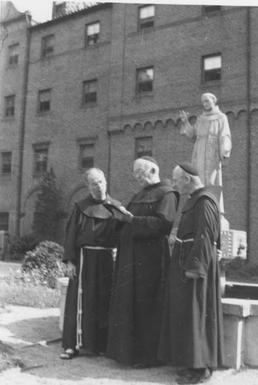
Life and religious identity
Born Heinrich Boehner, he entered religious life and took the name Philotheus. As a member of the Franciscan order he combined monastic commitment with rigorous academic study. His vocation shaped both the subjects he chose and the perspective he brought to historical and theological questions.
Scholarship and methods
Boehner’s scholarship emphasized close attention to manuscripts, accurate editions, and clear translations from Latin. He worked on commentators and theologians of the medieval period, applying philological methods to establish reliable texts and to clarify philosophical arguments embedded in theological writings. His approach balanced historical sensitivity with concern for philosophical content.
Contributions and influence
- Edited and translated medieval Christian philosophical and theological texts into modern languages.
- Produced bibliographical and critical studies that assisted later researchers.
- Helped revive modern interest in the Franciscan intellectual tradition, making primary sources more accessible to scholars and students.
Through editions, articles, and teaching, Boehner influenced mid-twentieth-century studies of scholasticism and contributed to the recovery of neglected medieval thinkers.
Legacy and notable facts
Although he died relatively young, Boehner left a lasting mark on medieval studies by improving access to texts and by modeling a careful, historically informed way of reading scholastic sources. His work remains a reference point for scholars interested in the Franciscan school and in the history of medieval philosophy.
Author
AlegsaOnline.com Philotheus Boehner (1901–1955), Franciscan medieval scholar Leandro Alegsa
URL: https://en.alegsaonline.com/art/128696