
Peter Medawar
British biologist (1915–1987) who helped explain graft rejection and discovered acquired immune tolerance, a foundation for modern organ transplantation and immunology. Nobel Prize 1960.
Overview
Sir Peter Brian Medawar (28 February 1915 – 2 October 1987) was a British biologist whose experimental and conceptual work transformed understanding of why tissue from one individual is often rejected by another. His research established principles that made routine skin grafts and organ transplants more feasible and laid the theoretical groundwork for modern transplantation immunology.
Image gallery
3 Images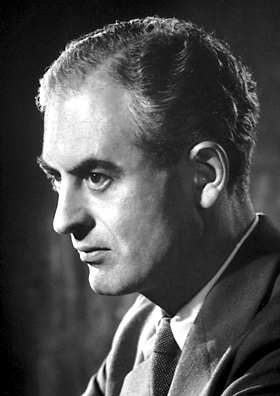


Major contributions
Medawar's work is often summarized by two related discoveries: the mechanisms of graft rejection and the phenomenon of acquired immunological tolerance. He showed that rejection is an active process carried out by the body's defensive systems rather than a passive failure of the graft, and that under particular circumstances the immune response can be modified so foreign tissue is accepted.
- Clarifying the biology behind skin grafts and organ rejection.
- Demonstrating how early exposure to foreign cells can produce long-term tolerance in the recipient.
- Providing experimental evidence that redefined concepts about the immune system and self–nonself recognition.
- Shared the 1960 Nobel Prize in Physiology or Medicine with Sir Frank Macfarlane Burnet for the discovery of acquired immunological tolerance.
Methods and findings
Medawar combined careful animal experiments with clear theoretical interpretation. He and colleagues used grafting experiments and studies of developing immune systems to show that animals exposed to foreign tissue at an early stage could later accept grafts from the same source without rejection. This implied that immune responsiveness could be shaped during development rather than being fixed, a result with far-reaching implications for both basic immunology and clinical practice.
Impact and applications
The conceptual breakthrough around acquired tolerance helped researchers and clinicians approach transplantation with new strategies. It influenced the development of immunosuppressive therapies, tissue-typing methods, and protocols that aim to minimize rejection. Beyond transplantation, these insights stimulated research into autoimmunity, vaccine design, and the fundamental question of how an organism distinguishes its own tissues from foreign material.
Career, honors, and legacy
Medawar served as director of the National Institute for Medical Research at Mill Hill, London, until a stroke partially disabled him later in life. He held several honors and civic appointments, including being appointed to the Order of Merit and recognized with titles such as CBE and FRS. His clear writing and public lectures also made him a prominent figure in communicating science to wider audiences. Medawar's combination of experiment, theory and exposition left a durable legacy in immunology and clinical transplantation.
Although clinical practice has advanced since his time, the principles he articulated—about tolerance, immune education, and graft recognition—remain central to current research and therapeutic approaches. Medawar is remembered both for his scientific breakthroughs and for his influence on how medical science connects laboratory discovery to patient care.
Questions and answers
Q: Who was Sir Peter Brian Medawar?
A: Sir Peter Brian Medawar was a British biologist who was known for his important work on skin grafts and organ transplants.
Q: What was the contribution of Sir Peter Brian Medawar in the field of skin grafts and organ transplants?
A: Sir Peter Brian Medawar's work was important to skin grafts and organ transplants. He showed that sometimes the reaction of the immune system towards transplants of skin and organs from other people can be avoided.
Q: What did Sir Peter Brian Medawar discover in the field of graft rejection?
A: Sir Peter Brian Medawar worked on graft rejection and discovered acquired immune tolerance.
Q: What was the Nobel Prize awarded to Sir Peter Brian Medawar for?
A: Sir Peter Brian Medawar was awarded the Nobel Prize in Physiology or Medicine in 1960, along with Sir Frank Macfarlane Burnet, for his work on acquired immune tolerance.
Q: Where did Sir Peter Brian Medawar work before he was partially disabled by a stroke?
A: Before he was partially disabled by a stroke, Sir Peter Brian Medawar was the Director of the National Institute for Medical Research at Mill Hill, London.
Q: What is the usual reaction of the immune system towards transplants of skin and organs from other people?
A: The immune system usually rejects transplants of skin and organs from other people.
Q: Why is the immune system's reaction towards transplants of skin and organs from other people important in the context of organ transplantation?
A: The immune system's reaction towards transplants of skin and organs from other people is important in the context of organ transplantation because it can cause rejection of the transplant, which can be life-threatening for the recipient.
Author
AlegsaOnline.com Peter Medawar Leandro Alegsa
URL: https://en.alegsaonline.com/art/128539