
Pedro II of Brazil (1825–1891) — second and last Brazilian Emperor
Pedro II was the long-reigning second and final Emperor of Brazil, noted for modernization, cultural patronage, and a peaceful but ultimately overthrown constitutional monarchy.
Overview
Pedro II (full name Pedro de Alcântara João Carlos Leopoldo Salvador...) ruled Brazil during most of the 19th century and is remembered as a stabilizing and culturally engaged monarch. Born in Rio de Janeiro in 1825, he inherited the throne as a child and presided over a period of territorial consolidation, infrastructure expansion, and intellectual life until the monarchy ended in 1889. He spent his final years in exile and died in Paris; contemporary references to that city often mark the end of his life at Paris.
Image gallery
10 Images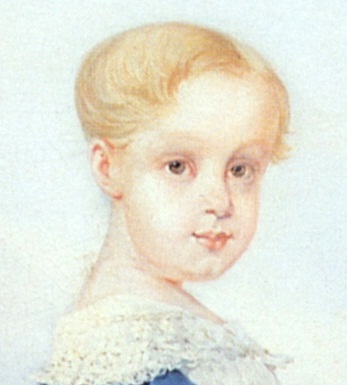


Early life and accession
Pedro was the son of Emperor Pedro I of Brazil and Archduchess Maria Leopoldina of Austria. After his father's abdication in 1831, Pedro became emperor as a minor and Brazil was governed by regents for several years. The political crises and factionalism of the regency era led to an early declaration of majority for Pedro, allowing him to assume full powers while still in his teens. As a constitutional monarch he worked within the institutions of the Empire of Brazil, often mediating between competing political forces.
Reign: policies and modernization
Pedro II's long reign focused on modernization and national unity. He supported the gradual development of railways, telegraph networks and educational institutions, and encouraged scientific and cultural activity. Under his rule Brazil expanded economically and improved communications, although regional inequalities and political tensions remained. Key themes of his government included administrative centralization, promotion of immigration for labor and settlement, and investment in public works.
Cultural patronage and influence
Often described as a patron of the arts and sciences, Pedro II personally supported scholars, writers and inventors. He collected books, corresponded with leading intellectuals of the era, and helped establish scientific societies and museums. His interest in scholarship and technological progress made the imperial court a notable center for cultural exchange. Readers interested in his role as monarch may consult resources on the institution of the Emperor of Brazil.
Abolition, politics and fall of the monarchy
The question of slavery defined much of the late imperial period. Abolitionist pressures rose from urban elites, international opinion and organized movements within Brazil. The legal end of slavery was formalized in 1888 with the passage of the Golden Law, which was signed by Princess Isabel acting as regent. Political consequences of abolition, combined with growing republican sentiment in the military and among urban elites, culminated in a coup that deposed the monarchy in 1889 and forced Pedro II into exile.
Exile, death and legacy
After the proclamation of the republic Pedro II lived abroad until his death in 1891. His legacy is complex: admired for personal qualities, moderation and cultural patronage, but also criticized for failures to reform social structures more rapidly. He is often discussed alongside other 19th-century European and American rulers and figures; contemporary lists of related personalities include Napoleon II, Franz Joseph I and Maximilian I of Mexico.
Notable facts and distinctions
- Length of reign: Pedro II was one of the longest-serving monarchs in Brazilian history, ruling de facto for most of the 19th century.
- Cultural impact: He expanded libraries, museums and scientific institutions and promoted education.
- Political role: He exercised a moderating influence as constitutional monarch, though his authority waned as republican ideas spread.
- End of monarchy: The imperial system ended with a military-backed republic in 1889; the last imperial family left Brazil and never returned to power.
For further reading on the institution, biographies and contextual histories see general resources on Brazilian imperial history and related archival materials available through academic and public collections. Additional contextual entries and primary-source materials are often linked from digital repositories and national archives (Portuguese-language sources and other translations are common).
Researchers wanting contemporary diplomatic context or genealogical connections may consult comparative studies of 19th-century monarchies and diplomatic correspondence; contextual references to dynastic and international links appear in many historical overviews (see also Brazilian monarchical history and other surveys).
Questions and answers
Q: Who was Dom Pedro II of Brazil?
A: Dom Pedro II of Brazil (complete name: Pedro de Alcântara João Carlos Leopoldo Salvador Bibiano Francisco Xavier de Paula Leocádio Miguel Gabriel Rafael Gonzaga) was the second and last de facto Brazilian Emperor.
Q: When did he become Emperor?
A: He became Emperor when he was 16 years old, after his father, Pedro I, abdicated from the Brazilian Throne in favor of him.
Q: What other titles did he hold?
A: He was known as O Magnânimo (The Magnanimous) in Portuguese.
Q: Who were some of his relatives?
A: His relatives included Miguel I (father's part), Napoleon Bonaparte (mother's part), Napoleon II, Franz Joseph I and Maximilian I of Mexico, Maria da Glória (eldest daughter), Pedro V and Luís I (his nephews).
Q: Where and when was he born?
A: He was born in Rio de Janeiro on December 2nd 1825.
Q: Where and when did he die?
A: He died in Paris on December 5th 1891.
Q:What action made his father abdicate from the Brazilian Throne in favor of him?
A:His father had to return to Portugal in order to rule over the country as an Emperor which made him abdicate from the Brazilian Throne in favor of his son.
Author
AlegsaOnline.com Pedro II of Brazil (1825–1891) — second and last Brazilian Emperor Leandro Alegsa
URL: https://en.alegsaonline.com/art/128387