
Paul von Hindenburg: German field marshal and president (1847–1934)
Paul von Hindenburg (1847–1934) was a German field marshal turned president whose WWI fame and political decisions in the 1920s–30s shaped the end of the Weimar Republic and the rise of Nazi rule.
Overview
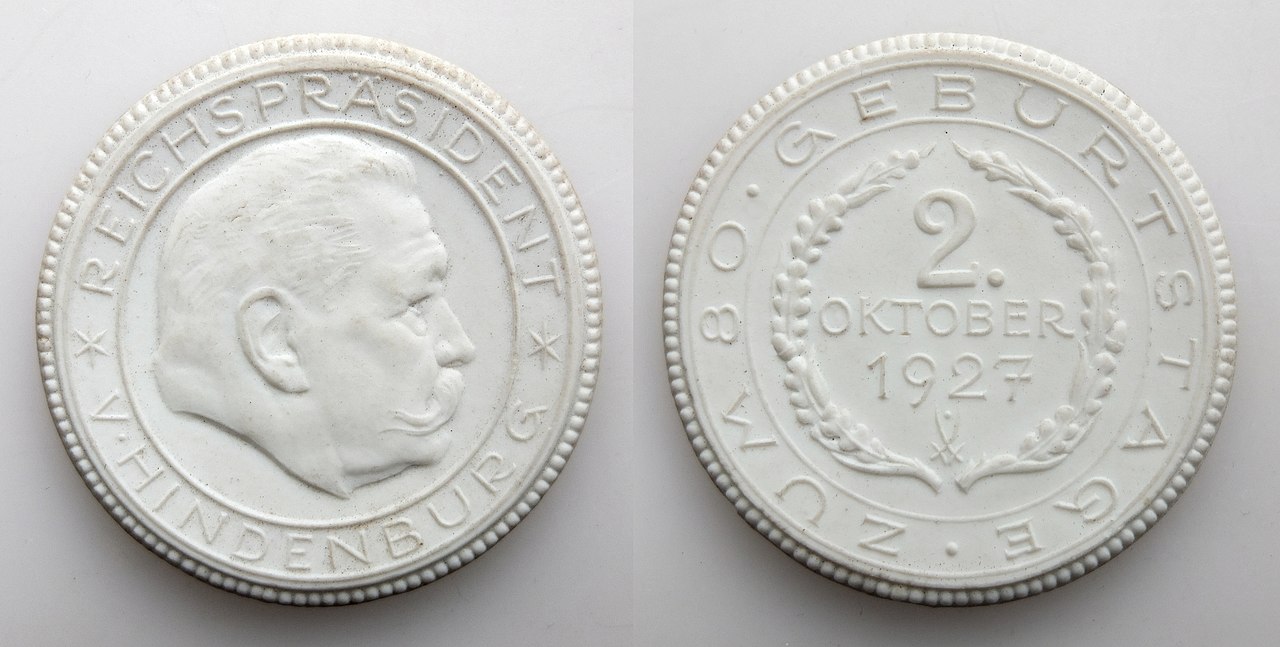
Paul Ludwig Hans Anton von Beneckendorff und von Hindenburg (2 October 1847 – 2 August 1934) was a German military leader and later head of state. He is best known for his prominent military career during the First World War and for serving as a conservative statesman who became President of the Weimar Republic. His public standing as a war hero and his decisions as president had lasting consequences for Germany’s political direction in the early 1930s.
Image gallery
10 Images



Military career and public reputation
Hindenburg retired from active service in 1911 but was recalled to command at the outbreak of war in 1914. He rose to national prominence after the German victory at the Battle of Tannenberg, a victory that boosted his reputation and made him a symbol of resistance on the Eastern Front. Working closely with his deputy, Erich Ludendorff, he oversaw large parts of the German army’s strategy and later attained the rank of field marshal. His wartime leadership made him a celebrated figure at home and an influential voice in military and public affairs.
From retirement to the presidency
After the armistice and the collapse of the Imperial government, Hindenburg retired in 1919. He returned to public life in 1925 and was elected as the second President of Germany (President of Germany), a largely ceremonial office under the Weimar constitution but one that carried emergency powers and moral authority. By the early 1930s he remained widely respected by conservative circles despite advanced age and declining health. In the face of political turmoil he sought to preserve order while navigating polarized parties and social unrest. He viewed Adolf Hitler and the rising Nazi Party with suspicion, seeing them as extremists who threatened democratic norms.
The 1933 chancellorship and constitutional crisis
In January 1933 Hindenburg appointed Hitler to the post of Chancellor of Germany after advisers persuaded him this would stabilize the country. Key figures, including Franz von Papen, convinced Hindenburg and other conservative leaders and the professional military that they could control a government dominated by the Nazis. This calculation proved mistaken. Within weeks and months the new government enacted measures that concentrated power in the executive, and emergency legislation and political maneuvers paved the way for a system often described as a dictatorship. Opposition parties were outlawed or dissolved, eliminating meaningful competition from other political parties.
Death and legacy
Hindenburg died on 2 August 1934. Soon afterward Hitler combined the offices of president and chancellor and assumed the title of Führer, formalizing his personal control over the German state. Historians debate the extent to which Hindenburg intended the outcomes that followed; many regard his decision to appoint Hitler and his deference to advisers as pivotal errors that helped dismantle the Weimar constitutional order.
Notable facts and commemorations
Hindenburg’s name appeared in several public memorials and pieces of infrastructure during the interwar period. The large rigid airship commonly called the zeppelin bore his name, the Hindenburg, and a major causeway linking the island of Sylt to the mainland in Schleswig-Holstein was named the Hindenburgdamm. These honors reflect both his standing as a national symbol after 1914 and the contested legacy that followed his role in the final years of the Weimar Republic.
- Born: 2 October 1847.
- Major military fame: Battle of Tannenberg, 1914.
- President: 1925–1934.
- Key political act: Appointment of Hitler as chancellor, January 1933.
Hindenburg remains a complex historical figure: celebrated for his wartime leadership, criticized for political choices that helped end Germany’s fragile democracy. His life illustrates how military prestige and conservative politics intersected with the volatile democratic experiment of the Weimar era.
Questions and answers
Q: Who was Paul Ludwig Hans Anton von Beneckendorff und von Hindenburg?
A: Paul Ludwig Hans Anton von Beneckendorff und von Hindenburg was a German field marshal and statesman.
Q: What did Hindenburg do in 1911?
A: In 1911, Hindenburg retired from the army.
Q: When did he become famous?
A: He became famous when he won the Battle of Tannenberg in 1914.
Q: What happened in 1925?
A: In 1925, Hindenburg returned to public life one more time to be elected as the second President of Germany.
Q: Why did Hindenburg run for re-election in 1932?
A: He ran for re-election in 1932 as the only candidate who could defeat Adolf Hitler, because he saw him as a dangerous extremist.
Q: What act gave special powers to Hitler and his government?
A: The Enabling Act of 1933 gave special powers to Hitler and his government.
Q: How did Hitler become a dictator after Hindenburg's death?
A: After Hindenburg's death, Hitler declared the office of President vacant and made himself Führer (Head of State and Head of Government) of Germany.
Author
AlegsaOnline.com Paul von Hindenburg: German field marshal and president (1847–1934) Leandro Alegsa
URL: https://en.alegsaonline.com/art/128364