
Owsley "Bear" Stanley: LSD chemist and Grateful Dead sound innovator
Augustus Owsley Stanley III (1935–2011), known as Owsley or Bear, was a central figure in 1960s psychedelia — an LSD manufacturer and pioneering live-audio engineer for the Grateful Dead.
Overview
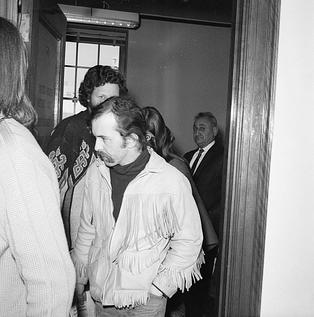
Augustus Owsley Stanley III (January 19, 1935 – March 13, 2011), widely known as Owsley or "Bear," played a distinctive dual role in the 1960s Bay Area counterculture: he became famous both for producing large quantities of high-purity LSD and for advancing live sound for rock concerts. Born into a conservative political family, he gravitated toward the developing psychedelic scene centered around the San Francisco Bay area and figures such as Ken Kesey. By combining technical skill, secrecy, and a countercultural outlook, Owsley helped shape the experience and vocabulary of American psychedelia (psychedelia).
Image gallery
3 Images
Production, reputation and cultural impact
Owsley is best known to the public as a prolific manufacturer of LSD. Operating in the mid-1960s, he produced what many contemporaries described as unusually pure and potent batches, and has been credited with an estimated 1.25 million doses distributed between about 1965 and 1967. That supply helped fuel major events and movements of the era — from private parties associated with Kesey's Merry Pranksters to the broader youth gatherings of the Summer of Love. The name "Owsley" became synonymous with accessible, high-quality acid and helped popularize a drug that, for a time, was a central medium for experimentation with consciousness.
Relationship with music and sound engineering
Alongside his chemical work, Stanley developed a deep interest in audio systems and musical acoustics. He became closely involved with the Grateful Dead, initially through Acid Tests and social connections, and later served as their informal road manager and technical adviser. His curiosity about electronic and acoustic behavior — and even the mystical aspects of sound — led him to experiment with live mixing and loudspeaker design. He was among the first to adopt stereo live mixing on rock stages and to record high-fidelity tapes from behind the mixing board. Those recordings and innovations contributed to the band's extended improvisational style and reputation for large, immersive concerts.
Technical contributions and organizations
Stanley's appetite for better sound equipment pushed the Grateful Dead to design and commission custom gear for the road. Over time, those requirements fostered the emergence of specialized firms and small workshops that went on to become well-known names in professional audio. His practical experiments culminated in unusually large, multi-element stage systems — sometimes referred to in accounts as a "Wall of Sound" — intended to deliver clearer music even in open-air venues.
- Live mixing: early adoption of stereo and multi-channel techniques.
- Recording practice: systematic taping from the soundboard improved documentation of live shows.
- Equipment development: custom amplification and speaker arrays influenced later commercial products and companies.
Legal pressure, legacy and distinctions
As LSD moved from subcultural commodity to a focus of law-enforcement attention, Stanley encountered legal pressure and arrests that disrupted his manufacturing activities. Regardless of the controversies, his effects on both the culture of the 1960s and on live audio technology are widely noted: he helped make psychedelic experiences more available to thousands and helped professionalize concert sound for large-scale touring. Contemporary historians often treat him as a bridge figure who connected experimental chemistry, Do-It-Yourself engineering, and a distinctive musical community.
Final years and death
In later life Stanley continued to be associated with music, technical projects, and the community of people who followed the Grateful Dead. He died on March 13, 2011, in a car accident in Queensland, Australia. He remains a controversial but important figure: admired by some for his technical ingenuity and criticized by others for the consequences of widespread drug distribution.
For related context on the Bay Area counterculture, the Merry Pranksters, live-sound development, and the history of psychedelia, see sources and oral histories that document the 1960s music and social movements of the era. Additional biographical treatments explore how one individual's technical talents and contrarian spirit intersected with broader cultural change in the United States.
Magician-like anecdotes and first-person recollections often surround Owsley's reputation, while references to his role as an engineer underline the technical side of his life. These multiple facets help explain why he is remembered simultaneously as "Bear," the underground chemist, and as a formative figure in live sound and touring culture.
Questions and answers
Q: Who was Owsley Stanley?
A: Owsley Stanley (born Augustus Owsley Stanley III, January 19, 1935 – March 13, 2011) was an important person in the rise of the San Francisco Bay counter-culture during the Beat-era years. He was best known under the name of "Owsley" - a magician like figure who "cooked" LSD. He was also a music producer, engineer and artist to psychedelic rock band the Grateful Dead.
Q: What did Bear do for The Grateful Dead?
A: Bear was the road manager for The Grateful Dead and he became their sound engineer. His technical interests helped the band's interest in electronic, acoustic and mystical properties of sound. He often recorded live tapes behind his mixing board and developed their own high-fidelity audio components and sound-systems for their performances. His abilities helped The Dead to experiment further afield, playing in dramatic and remote places.
Q: How did companies form to support The Grateful Dead?
A: Their need for support to tour with big shows, and their need for special equipment meant that companies formed to supply them. These needs were the starting point for both Marin County's high-end music-instrument makers Alembic Inc and concert-sound manufacturer Meyer Sound.
Q: What is Owsley known for producing?
A: Owsley is known around the world as one of the first people to manufacture mass quantities of LSD between 1965 and 1967; he produced more than 1.25 million doses of LSD which is still known today for its quality and purity.
Q: How did Owsley's production help develop counterculture?
A: This amount of quality LSD was responsible for the wide popularity of the drug, and thus contributed greatly to development of an anti-authoritarian, anti-war counterculture from Los Angeles' Sunset Strip Riots all way up to San Francisco's Summer Of Love which has been described as "the biggest LSD party in history."
Q: Where did Owsley die?
A: Stanley died in an car accident in Queensland, Australia on March 13th 2011
Author
AlegsaOnline.com Owsley "Bear" Stanley: LSD chemist and Grateful Dead sound innovator Leandro Alegsa
URL: https://en.alegsaonline.com/art/128013