
Oswald Avery — Pioneer Who Identified DNA as Genetic Material
Canadian-born American physician and researcher whose 1944 work showed DNA carries genetic information, a foundation for molecular biology and immunochemistry.
Overview
Oswald Theodore Avery Jr. (1877–1955) was a Canadian-born American physician and medical researcher who spent most of his career at Rockefeller Institute Hospital in New York. Trained as a physician, Avery became one of the early figures in molecular biology and a significant contributor to immunochemistry. His experimental work on the chemical nature of the heritable substance transformed biological science by showing that DNA, not protein, carried genetic information.
Image gallery
1 Image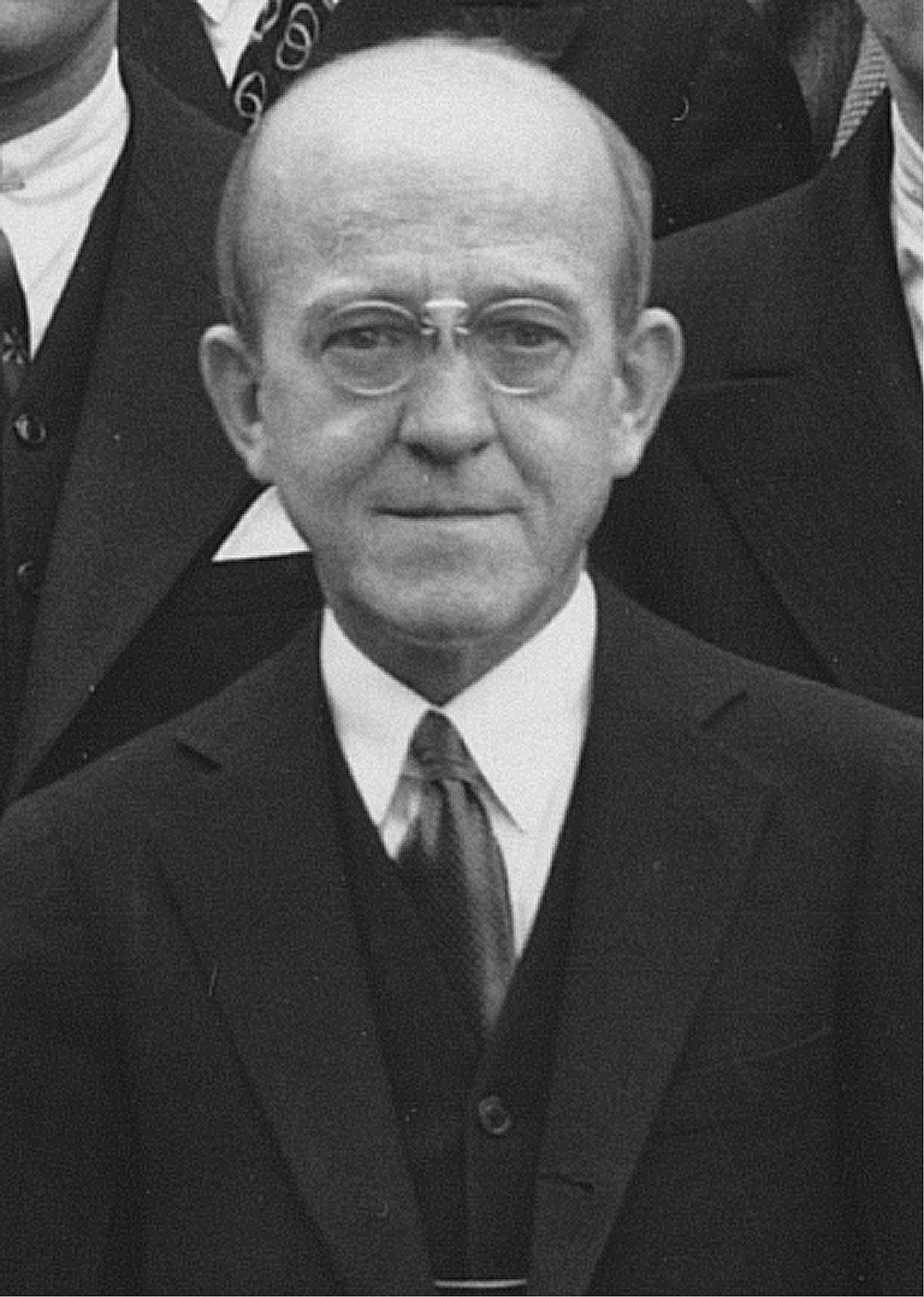
The transformation experiments and proof
Avery built directly on Frederick Griffith's 1928 observation that a ‘‘transforming principle’’ could transfer virulence between strains of pneumococcus bacteria. In a series of careful biochemical separations and enzyme treatments, Avery and his colleagues Colin MacLeod and Maclyn McCarty reported in 1944 that the transforming activity co-purified with deoxyribonucleic acid and was destroyed by enzymes that degrade DNA. That result—published in a landmark paper—was one of the first persuasive pieces of evidence that DNA is the material of heredity rather than protein, a notion that changed the direction of biological research.
Methods, skepticism and later confirmation
Avery’s approach combined classical microbiology with chemical fractionation and enzymology to identify the active molecule. At the time, many scientists remained skeptical because proteins were considered more chemically varied and thus a more likely candidate for genetic information. Subsequent work, including the Hershey–Chase experiments in 1952 and advances in molecular structure, reinforced Avery’s conclusion and helped usher in the era of molecular genetics.
Career, influence and recognition
Avery spent decades at the Rockefeller Institute pursuing bacterial and immunological questions, and his work influenced researchers who followed, including those who resolved DNA’s structure and mechanism of inheritance. Colleagues and later historians have noted Avery’s central place in the history of biology; Nobel laureate Arne Tiselius remarked that Avery was highly deserving of the prize even though he never received it. Avery was elected a Fellow of the Royal Society and received other honors during his lifetime.
Legacy and significance
- Foundational discovery: showed DNA could carry biological information.
- Methodological impact: brought chemical precision to microbiology and immunochemistry.
- Long-term influence: paved the way for molecular genetics, DNA sequencing and modern biotechnology.
For more on Avery’s life, career and primary publications see the institutional biographies and historical reviews linked here: biography and archives, Rockefeller Institute background, early molecular biology context, immunochemistry contributions, and the original 1944 report: Avery, MacLeod & McCarty (1944). Additional resources discuss his collaborators: MacLeod and McCarty, the molecule they identified: deoxyribonucleic acid (DNA), and the broader concept of genes.
Questions and answers
Q: Who was Oswald Theodore Avery Jr.?
A: Oswald Theodore Avery Jr. was a Canadian-born American physician and medical researcher who spent most of his career at the Rockefeller University Hospital in New York City.
Q: What is he best known for?
A: He is best known for the experiment (published in 1944 with his co-workers Colin MacLeod and Maclyn McCarty) which proved that DNA is the material from which genes are made.
Q: Was he ever awarded a Nobel Prize?
A: No, even though he was nominated for the award several times during the 1930s, 1940s, and 1950s, he never received a Nobel Prize.
Q: Who said that Avery was the most deserving scientist to not receive a Nobel Prize?
A: The Nobel laureate Arne Tiselius said that Avery was the most deserving scientist to not receive a Nobel Prize for his work.
Q: What did Avery study?
A: He studied immunochemistry and molecular biology.
A:He studied immunochemistry and molecular biology.
Author
AlegsaOnline.com Oswald Avery — Pioneer Who Identified DNA as Genetic Material Leandro Alegsa
URL: https://en.alegsaonline.com/art/127975