
Oodgeroo Noonuccal: Aboriginal poet, activist and cultural educator
Oodgeroo Noonuccal (1920–1993), born Kathleen Walker, was the first Aboriginal Australian to publish a book of verse. Poet, teacher and campaigner, she combined literary work with advocacy for Indigenous rights and culture.
Oodgeroo Noonuccal, born Kathleen Jean Mary Ruska (often known earlier as Kath Walker), emerged as one of Australia's most visible Indigenous voices in the mid‑20th century. Best known for her poetry, she was the first Aboriginal Australian to publish a full volume of verse, and she used writing and public speaking to press for social change. In 1988 she adopted the traditional Quandamooka name Oodgeroo Noonuccal: "Oodgeroo" refers to the paperbark tree and is often given as a connection to country, while "Noonuccal" identifies her tribal group on North Stradbroke Island; both elements of her name are rooted in cultural meaning and identity (paperbark reference, citizenship context).
Image gallery
3 Images

Life, upbringing and teaching
Born in 1920 on North Stradbroke Island, she grew up in a community shaped by the traditions and everyday life of the Quandamooka people. She worked for many years as a teacher and community educator, and later established an education centre on Moongalba (North Stradbroke Island) to teach children about the environment and Indigenous knowledge. The centre combined hands‑on interactions with the natural world and cultural storytelling, reflecting her belief that formal education should include Aboriginal perspectives on land and heritage (nature and culture).
Writing: themes and style
Her first collection, We Are Going (1964), attracted wide attention for its direct voice and clear political message. Her poems range from quiet remembrances of place to passionate appeals for justice and recognition. She described aspects of her technique as deliberately economical and sometimes "sloganistic," aiming to make complex injustices accessible to broad audiences and to mobilise public opinion for equality (sloganistic, equality). Over subsequent decades she published further poetry, children's books and essays that combined cultural affirmation with advocacy.
Political activism and public life
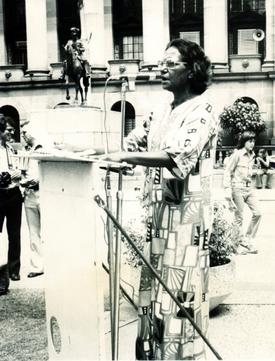
Oodgeroo was active in campaigns for Indigenous rights during a period of rapid social change in Australia. She played a prominent part in the movement that sought constitutional recognition and equal treatment for Aboriginal people during the 1960s, including the 1967 referendum campaign that expanded federal powers and public recognition of Aboriginal Australians. She engaged with political leaders of her time and used public platforms to press for reform, speaking to audiences across the country and working alongside other organisations and activists to raise awareness (Menzies era, Holt era).
- Selected books: We Are Going (1964) and later collections, poems for adults and children, and educational writings.
- Community work: founding an education centre on Moongalba; programs linking ecology and Indigenous knowledge.
Honours, protest and legacy
During her lifetime she received several literary awards and public honours, including recognition as a Member of the Order of the British Empire in 1970. In 1987 she returned that honour in a highly publicised act of protest against official bicentenary celebrations, which she felt glossed over ongoing dispossession and social inequality; the gesture was intended to draw attention to the unfinished business of justice for Indigenous Australians (Order of the British Empire, protest, bicentenary, social inequality).
- Mary Gilmore Medal (1970)
- Jessie Litchfield Award (1975)
- Fellowship of Australian Writers' Award
Her influence extends beyond award lists: she helped open public conversations about Australian identity, culture and land, and inspired later generations of Indigenous writers, artists and educators. Her work remains frequently anthologised and taught as an example of how literature and activism can intersect to advance social change. For readers seeking further context about the cultural and historical issues she addressed, consult materials on Indigenous political history and modern Australian poetry (Oodgeroo, citizenship, equality).
Questions and answers
Q: Who was Oodgeroo Noonuccal?
A: Oodgeroo Noonuccal was an Australian poet, political activist, artist and teacher. She was best known for her poetry, and was the first Aboriginal Australian to publish a book of verse.
Q: What is the meaning of the name "Oodgeroo"?
A: The name "Oodgeroo" refers to the paperbark tree, which is a traditional Quandamooka name that she adopted for herself in 1988.
Q: What changes did Oodgeroo campaign for?
A: Oodgeroo campaigned strongly for Aboriginal rights and was one of the main people behind the campaign for changes to the Australian constitution in 1967. These changes gave Aboriginal people full citizenship. She also campaigned for Prime Minister Robert Menzies and his successor Harold Holt.
Q: What type of writing style did Oodgeroo use?
A: Oodgeroo described her own writing style as "sloganistic". She wanted to show how proud she was of being an Aboriginal and used her writing to make people support equality and Aboriginal rights.
Q: What awards did Oodgeroo win?
A: Ooodergo won several literary awards including the Mary Gilmore Medal (1970), Jessie Litchfield Award (1975) and Fellowship of Australian Writers' Award.
Q: What educational centre did she open?
A: In 1972, she opened an educational centre in her hometown of Moongalba on North Stradbroke Island which taught children about nature and Aboriginal culture.
Q: What honour did she receive from Britain's monarchy? A:She was made a member of Order of British Empire in 1970 but returned it in 1987 to protest Australia's bicentenary celebrations and make a political statement about social inequality in Australia
Author
AlegsaOnline.com Oodgeroo Noonuccal: Aboriginal poet, activist and cultural educator Leandro Alegsa
URL: https://en.alegsaonline.com/art/127917