
Nicolaus Copernicus: Life, Heliocentric Theory, and Scientific Legacy
Polish Renaissance astronomer and polymath who formulated a heliocentric model of the solar system; author of De revolutionibus and a key figure in the Scientific Revolution.
Overview
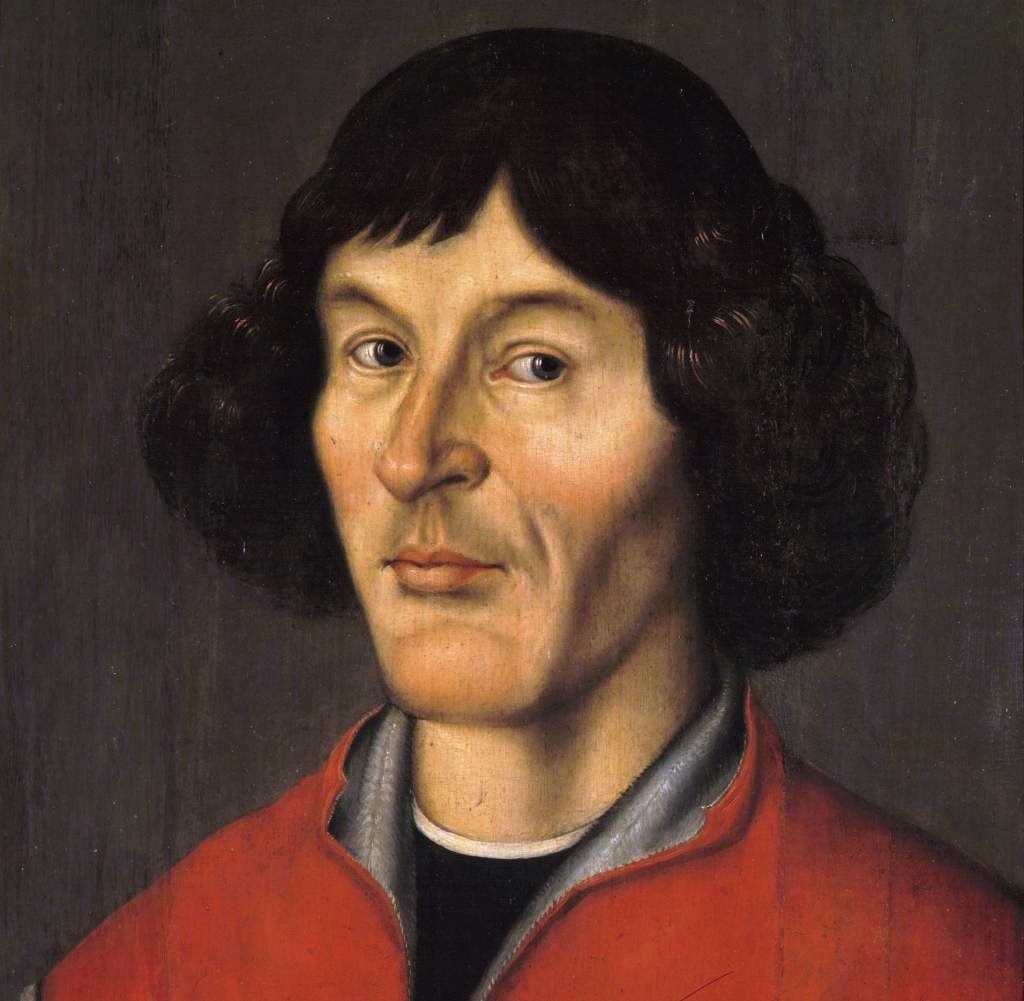
Nicolaus Copernicus (19 February 1473 – 24 May 1543) was a Renaissance mathematician and astronomer whose model placing the Sun near the center of the known universe challenged the long-standing Earth-centered cosmology. His ideas, set out most fully in De revolutionibus orbium coelestium, helped initiate a shift in European science from medieval frameworks toward observational and mathematical descriptions of celestial motion. Copernicus is remembered both for the substance of his proposals and for their profound long-term influence on astronomy and the philosophy of nature.
Image gallery
10 Images


Life and education
Born in the city of Toruń in Royal Prussia, Copernicus grew up in a region shaped by Polish and German cultural influences. He studied at the University of Kraków and later attended universities in Italy, where he received training in canon law and medicine. He served as a church canon for much of his adult life, an office that provided him with the time and resources to observe the heavens and carry out mathematical work. Copernicus spent many years in Frombork (Frauenburg), where he combined administrative duties with careful astronomical observation.
The heliocentric hypothesis
Contrary to the prevailing geocentric (Earth-centered) systems derived from Ptolemaic astronomy, Copernicus proposed that the planets orbit the Sun in a nested set of spheres and that apparent daily motion of the heavens could be explained by Earth's rotation. His formulation did not immediately displace earlier models: it retained circular orbits and some complex devices to match observations. Nevertheless, by simplifying the account of planetary ordering and by providing a coherent mathematical framework, the work opened a path toward later refinements—most notably the replacement of circular orbits with ellipses by Johannes Kepler.
Works, roles, and methods
Copernicus combined duties as a cleric with interests across mathematics, economics, and medicine. His major astronomical work was published in the year of his death, and he circulated earlier drafts and shorter treatises among contemporaries before then. He emphasized mathematical descriptions grounded in observation and was part of a broader Renaissance movement that rediscovered classical texts while developing new empirical approaches. Although often portrayed as a lone revolutionary, Copernicus drew on medieval and ancient sources, and his model should be seen as a step in a gradual transformation of astronomical thought.
Reception and legacy
The initial reaction to Copernicus's ideas varied: some scholars and clerics received them cautiously, others were hostile, and many treated them as a useful computational alternative without endorsing their physical reality. Over the following centuries, Copernican ideas were refined and tested, becoming central to the Scientific Revolution. Today he is recognized as a pivotal figure whose work helped reframe questions about the structure of the cosmos and humanity's place within it.
Further reading and resources
- Modern introductions to Copernican astronomy
- Explanations of heliocentrism and its development
- Studies of planetary motion in the Renaissance
- Editions and translations of De revolutionibus
- Historical overview of Toruń (Thorn)
- Context: Royal Prussia in the late 15th century
- Language and cultural background of Copernicus
- Records of Copernicus's Italian studies
- Copernicus's ecclesiastical posts and duties
- Mathematical methods used by Copernicus
- Legal and administrative activities
- Medical knowledge and practice in Copernicus's career
- Governance and regional responsibilities
- Administrative records and correspondence
- Diplomatic roles and travel
- Economic writings and monetary views
- Copernicus in the history of scientific ideas
- The birth of modern astronomy and its sources
For readers wishing to explore primary texts or scholarly introductions, the items listed above provide organized entry points into Copernicus's life and the gradual acceptance of heliocentrism. His work remains a central case study in the history of science, illustrating how mathematical reform, observation, and intellectual networks combine to change longstanding worldviews.
Questions and answers
Q: Who was Nicolaus Copernicus?
A: Nicolaus Copernicus was a Polish astronomer who is known for his ideas about the sun and the earth, specifically that our world is heliocentric (helios = sun).
Q: When and where was he born?
A: Copernicus was born in 1473 in the city of Thorn (Toruń) in Royal Prussia.
Q: What language did he speak?
A: Copernicus spoke German as his native language.
Q: Where did he study?
A: He studied first in Cracow and then in Italy, where he graduated as a lawyer of the church. He also studied medicine to serve his fellow clerics.
Q: What jobs did Copernicus have during his lifetime?
A: During his lifetime, Copernicus had many different jobs including priest, mathematician, astronomer, astrologer, jurist, physician, classical scholar, governor, administrator, diplomat, economist and soldier.
Q: What is one of the most important scientific hypotheses attributed to him?
A: One of the most important scientific hypotheses attributed to Nicolaus Copernicus is that the sun rather than the earth is at the center of the solar system; this theory marked the beginning of modern astronomy.
Author
AlegsaOnline.com Nicolaus Copernicus: Life, Heliocentric Theory, and Scientific Legacy Leandro Alegsa
URL: https://en.alegsaonline.com/art/127620