
Neil Gorsuch
Profile of Neil Gorsuch, Associate Justice of the U.S. Supreme Court since 2017: background, education, judicial career, nomination and confirmation, jurisprudence, and notable rulings.
Overview
Neil McGill Gorsuch (born August 29, 1967) is an Associate Justice of the Supreme Court of the United States, having joined the Court in April 2017. He served on the United States Court of Appeals for the Tenth Circuit from 2006 until his elevation to the high court. Gorsuch is widely described as a conservative jurist whose approach emphasizes textualism and originalist principles when interpreting statutes and the Constitution.
Image gallery
6 Images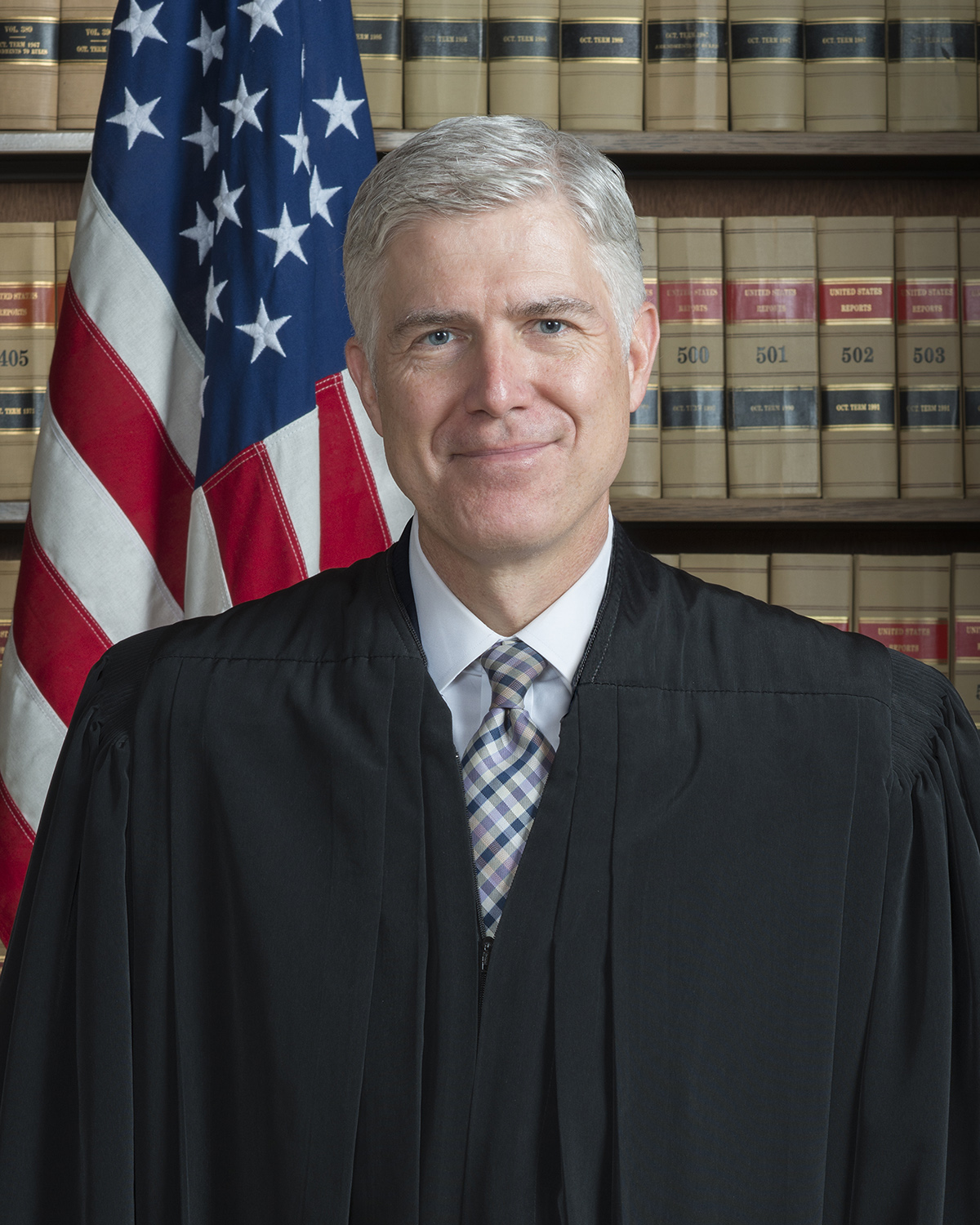


Early life and education
Gorsuch grew up in Colorado and completed undergraduate and graduate studies before entering the legal profession. He earned degrees from Columbia University and Harvard Law School, and he later completed a doctorate in law at the University of Oxford as a Marshall Scholar. His academic background combines American legal training with comparative and historical study of law.
Legal and judicial career
After law school and postgraduate study, Gorsuch worked in private practice and served in various government legal posts, gaining experience in appellate litigation. In 2006 he was nominated to the United States Court of Appeals for the Tenth Circuit by President George W. Bush and confirmed to that federal appellate bench. During his time on the Tenth Circuit he authored numerous opinions on administrative law, federalism, criminal procedure, and civil rights, building a reputation for precise writing and doctrinal rigor.
Nomination and confirmation to the Supreme Court
On January 31, 2017 President Donald Trump nominated Gorsuch to fill the Supreme Court vacancy created by the death of Justice Antonin Scalia. The Senate Judiciary Committee approved the nomination by an 11–9 vote, and the full Senate confirmed him by a 54–45 vote on April 7, 2017, with three Democrats joining Republicans. He took the judicial oath and began service on April 10, 2017, as a member of the Supreme Court of the United States.
Jurisprudence and notable rulings
Gorsuch is commonly associated with textualism in statutory interpretation and an originalist view of the Constitution, a method that seeks to apply the text's original public meaning. He has been an outspoken critic of broad judicial deference to executive and agency interpretations, and he has advocated limiting doctrines that grant agencies wide policymaking authority. On the Supreme Court, Gorsuch has authored opinions across a range of subjects; most prominently, he wrote the majority opinion in a major employment-discrimination case which applied Title VII to prohibit discrimination based on sexual orientation or gender identity, illustrating his textualist method applied to statutory language.
- Areas of frequent engagement: administrative law, separation of powers, federalism, criminal procedure, and civil liberties.
- Style: clear, often historically-informed opinions emphasizing statutory text and precedent.
Role, reception, and legacy
As a member of the Court, Gorsuch sits on a bench that decides cases with substantial national impact. He is often grouped with the Court's conservative wing, and commentators note both his affinity for some of Justice Scalia's methods and his distinct, independent judgments on particular issues. Supporters praise his emphasis on the rule of law and textual consistency; critics argue his originalist approach can be rigid in addressing modern social and administrative problems. Regardless, his opinions have shaped current debates about the role of judges, the reach of administrative agencies, and the interpretation of federal statutes.
Personal and professional notes
Gorsuch maintains a private life outside the Court and continues to be a prominent figure in discussions of judicial philosophy and constitutional interpretation. Observers follow his written opinions and oral contributions closely because they frequently illuminate the Court's reasoning on complex legal questions.
Questions and answers
Q: Who is Neil Gorsuch?
A: Neil Gorsuch is an American judge currently serving as an Associate Justice of the Supreme Court of the United States.
Q: When did Neil Gorsuch take office as a Supreme Court Justice?
A: Neil Gorsuch took office as a Supreme Court Justice on April 10, 2017.
Q: What was Neil Gorsuch’s previous role before he became a Supreme Court Justice?
A: Before becoming a Supreme Court Justice, Neil Gorsuch served as a judge on the United States Court of Appeals for the Tenth Circuit from August 8, 2006 through April 9, 2017.
Q: Who nominated Neil Gorsuch to be an Associate Justice of the Supreme Court of the United States?
A: President Donald Trump nominated Neil Gorsuch to be an Associate Justice of the Supreme Court of the United States.
Q: Why did the seat left vacant after the death of Justice Antonin Scalia need to be filled?
A: The seat left vacant after the death of Justice Antonin Scalia needed to be filled in order to maintain a full nine-member Supreme Court.
Q: How did the Senate Judiciary committee vote on Neil Gorsuch’s nomination?
A: The Senate Judiciary committee approved Neil Gorsuch’s nomination with a 11-9 vote.
Q: Was Neil Gorsuch’s nomination to the Supreme Court confirmed by the Senate?
A: Yes, Neil Gorsuch’s nomination to the Supreme Court was confirmed by the Senate with a bipartisan 54–45 affirmative vote with three Democratic Senators joining all of the Republican Senators.
Author
AlegsaOnline.com Neil Gorsuch Leandro Alegsa
URL: https://en.alegsaonline.com/art/127492