
Neil Armstrong: astronaut and first person to walk on the Moon
Neil Armstrong (1930–2012), American astronaut and engineer, commanded Apollo 11 and made humanity’s first lunar surface walk; engineer, test pilot, educator, and a widely recognized symbol of the space age.
Overview
Neil Alden Armstrong was an American astronaut and engineer best known as the commander of the Apollo 11 mission, during which he became the first person to set foot on the Moon on July 20, 1969. That historic surface excursion, with crewmate Buzz Aldrin joining him shortly after, followed a flight to lunar orbit atop the Saturn V rocket and remains one of the most widely watched events in television history; millions saw and heard the mission on live television.
Image gallery
10 Images
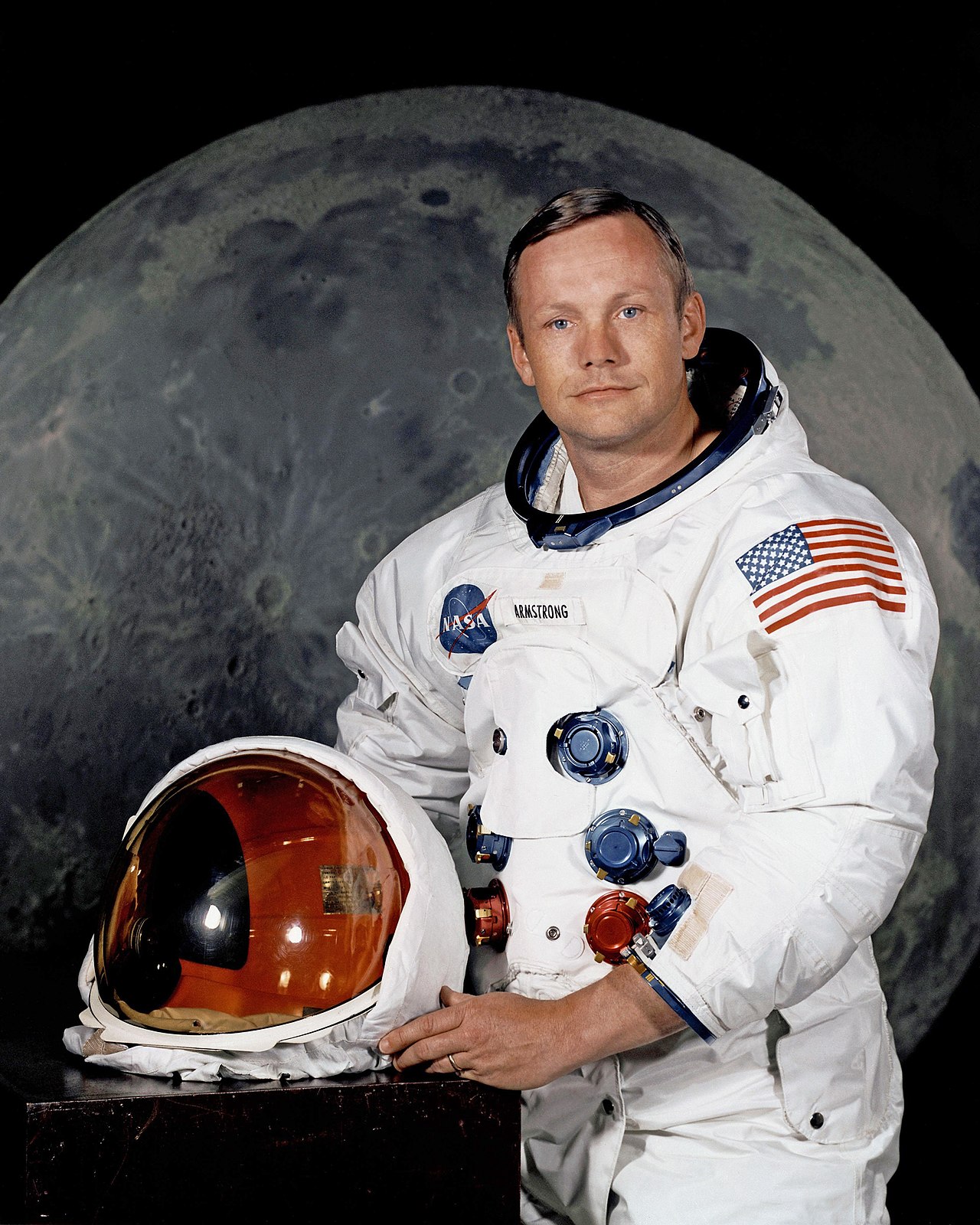


Early life, education and flight experience
Armstrong studied aeronautical engineering at Purdue University, from which he earned a BSc in 1955 after a period of naval service. He later completed graduate work, including an MSc in aerospace engineering at the University of Southern California. Before joining the national space effort he flew combat missions as a naval aviator in the Korean War and served as a civilian test pilot for the organization that became NASA, flying experimental aircraft out of Edwards Air Force Base.
Apollo 11 and the Moonwalk
As Apollo 11 commander, Armstrong piloted the lunar module to a landing in the Sea of Tranquility and took the historic first step that has since been widely quoted. The mission included Michael Collins in lunar orbit while Armstrong and Aldrin descended to the surface. Armstrong’s words as he stepped onto the Moon became part of the mission’s enduring record and later drew attention when analysts examined the original audio. Media outlets including the Houston Chronicle and other newspaper reports described work by researchers who used modern tools to re-examine those recordings: one analyst reportedly downloaded material from a web site and processed it with specialized editing software to clarify a disputed syllable.
Career after Apollo and public life
Following his return from the Moon Armstrong accepted a variety of roles in academia and industry. He took an appointment as a professor of aerospace engineering at the University of Cincinnati and later served on corporate and advisory boards. While he received many honors, he tended to avoid publicity and declined offers to commercialize his image extensively. Armstrong died in 2012, and his life and work continue to be cited in discussions about space exploration, engineering education, and leadership under pressure.
Honors, legacy and notable facts
- Academic honors and degrees from institutions such as Purdue University and the University of Southern California recognized his contributions to engineering and flight.
- He received national awards and public honors for his role in Apollo 11 and the larger space program; his achievements are often cited in histories of the Space Race and Cold War-era technology efforts.
- A small but persistent piece of media lore involves analysis by an Australian programmer who worked with computer tools to study the Moonwalk recordings; this story links back to work involving NASA audio archives and public web site resources, and raised questions about transcription of historical audio for listeners including those with hearing disabled people.
Why Armstrong remains important
Armstrong's career combined hands-on test flying, engineering education and a role at the center of a defining moment in 20th-century science and technology. His Moon landing symbolized the technical capability and political ambition of its era, inspired generations of engineers and scientists, and remains a focal point for debates about exploration priorities, public investment, and the human dimensions of spaceflight. Readers interested in further primary sources or audio archives will find official mission reports and recordings available through institutional collections and media repositories.
Additional references and archives are available via contemporary reporting and institutional pages; for general context see accounts of the Apollo program, technical histories of manned spaceflight and university records documenting Armstrong’s teaching and honors.
Related links: astronaut, engineer, Buzz Aldrin, Apollo 11, television coverage, BSc, Purdue, MSc, USC, Houston Chronicle, news, Australian, computer, programmer, downloaded, NASA, web site, editing software, accessibility.
Questions and answers
Q: Who was Neil Armstrong?
A: Neil Armstrong was an American astronaut and engineer who is known as the first person to walk on the moon.
Q: When did he land on the moon?
A: On July 20, 1969, Neil Armstrong and Buzz Aldrin landed on the moon in a small spacecraft that had been sent to the moon using the Saturn V rocket.
Q: What degrees did he earn?
A: He earned a BSc degree in Aeronautical Engineering from Purdue University in 1955 and an MSc degree in Aerospace Engineering from the University of Southern California.
Q: What honorary doctorates did he receive?
A: In 1970 he received an Honorary Doctorate of Engineering from Purdue University, and in 2005 he received an Honorary Doctorate of Letters from the University of Southern California.
Q: What position did he hold at NASA?
A: At NASA (then known as National Advisory Committee for Aeronautics), Armstrong served as a civilian test pilot at Edwards Air Force Base, Lancaster, Calif.
Q: How was it discovered that there was a missing "a" from his famous first words on the Moon?
A: It was discovered by Australian computer programmer Peter Shann Ford who downloaded audio recordings from a NASA website and analyzed them using editing software originally intended for use with hearing disabled people.
Q: Was Armstrong pleased with this discovery?
A: Yes, it is said that Armstrong was pleased with Ford's finding of the missing "a".
Author
AlegsaOnline.com Neil Armstrong: astronaut and first person to walk on the Moon Leandro Alegsa
URL: https://en.alegsaonline.com/art/127484