
Mustafa Kemal Atatürk: Founder and Reformer of Modern Turkey
Concise overview of Mustafa Kemal Atatürk (1881–1938): his life, military career, leadership in founding the Republic of Turkey, major reforms (Kemalism) and enduring legacy.
Mustafa Kemal Atatürk (1881–1938) was a Turkish military leader and statesman who guided the transition from a defeated imperial polity to a modern nation-state. As a marshal and statesman, he served as the first President of the Republic of Turkey from the republic's proclamation in 1923 until his death in 1938 (1923–1938). He promoted a program of political, legal and social change intended to create a secular, civic nation-state built on modernization and national development.
Image gallery
10 Images


Early life and military beginnings
Born in 1881 in Salonika (now Thessaloniki), then part of the Ottoman Empire, he received military education in Imperial schools where he gained a reputation for competence and discipline. He adopted the additional name Kemal while at school and later received the surname Atatürk, commonly translated as “Father of the Turks.” His formative military service during the late Ottoman period and the turmoil of the First World War shaped his leadership and strategic standing.
World War I and rise to prominence
Atatürk came to national attention during World War I as the commander who organized effective resistance at the Dardanelles and on other fronts. His campaign at Gallipoli in particular made him a prominent figure and a leading general officer of the collapsing empire. The wartime experience and the empire’s defeat convinced him that radical political and social reconstruction would be necessary.
War of Independence and founding of the Republic
Following defeat and occupation of parts of Anatolia, Atatürk organized a nationalist movement that led the Turkish War of Independence (1919–1923). The movement rejected partition and foreign control, abolished the sultanate and later the caliphate, and secured international recognition for the new state’s borders. In 1923 the Republic was proclaimed with Ankara as its capital; Atatürk and his colleagues put in place a new constitutional order to create a unitary republic governed by civil law rather than dynastic or ecclesiastical authority, guided by a modernizing constitution.
Major reforms and state policy
Atatürk pursued wide-ranging reforms intended to secularize and modernize public life and institutions. Key measures included separation of religion and state and the adoption of a laïcité-style secularism, replacement of religious courts with secular civil law, and reorganization of education. One striking reform was the switch from Arabic-based Ottoman script to a Latin-based Turkish alphabet to promote literacy. The legal system was overhauled with civil codes influenced by continental European models, while the state encouraged social change through laws on personal names, dress, and public conduct. In economic policy the government combined encouragement of private enterprise with significant state planning and investment; these measures are often described in terms of socio-economic intervention and republican nationalism.
Kemalism: principles and practice
The ideological framework associated with Atatürk is commonly called Kemalism and is summarized by six principles that guided Republican policy. These are typically listed as:
- Republicanism — emphasis on popular sovereignty and representative institutions;
- Nationalism — a civic conception of national identity that stresses unity and shared civic culture;
- Populism — a political stance favoring broad civic participation and social cohesion;
- Statism — a significant role for the state in guiding economic development and modernization;
- Secularism — institutional separation of religion from state affairs;
- Reformism (Revolutionism) — commitment to ongoing social, legal and cultural modernization.
Foreign policy and public motto
Atatürk articulated a restrained foreign policy captured by the well-known aphorism “Peace at Home, Peace in the World,” which emphasized non-aggression, national sovereignty and pragmatic diplomacy. His foreign-policy stance sought recognition and stability for the new republic while avoiding entangling alliances that might threaten independence.
Influence and international reception
The rapid and comprehensive nature of Atatürk’s reforms drew attention abroad. A number of contemporary leaders and reformers studied aspects of the Turkish experience—some for inspiration in modernization projects, others for comparison in discussions of state-building. Names often mentioned in comparative literature include Reza Shah Pahlavi, Habib Bourguiba, Gamal Abdel Nasser, Sukarno, Muhammad Ali Jinnah and observers such as John F. Kennedy. Scholarly assessments also note that the authoritarian aspects of the early single-party era attracted attention and comparison with a range of contemporary regimes, sometimes controversially including figures like Adolf Hitler in academic discussions about modernization and state power.
Legacy and remembrance
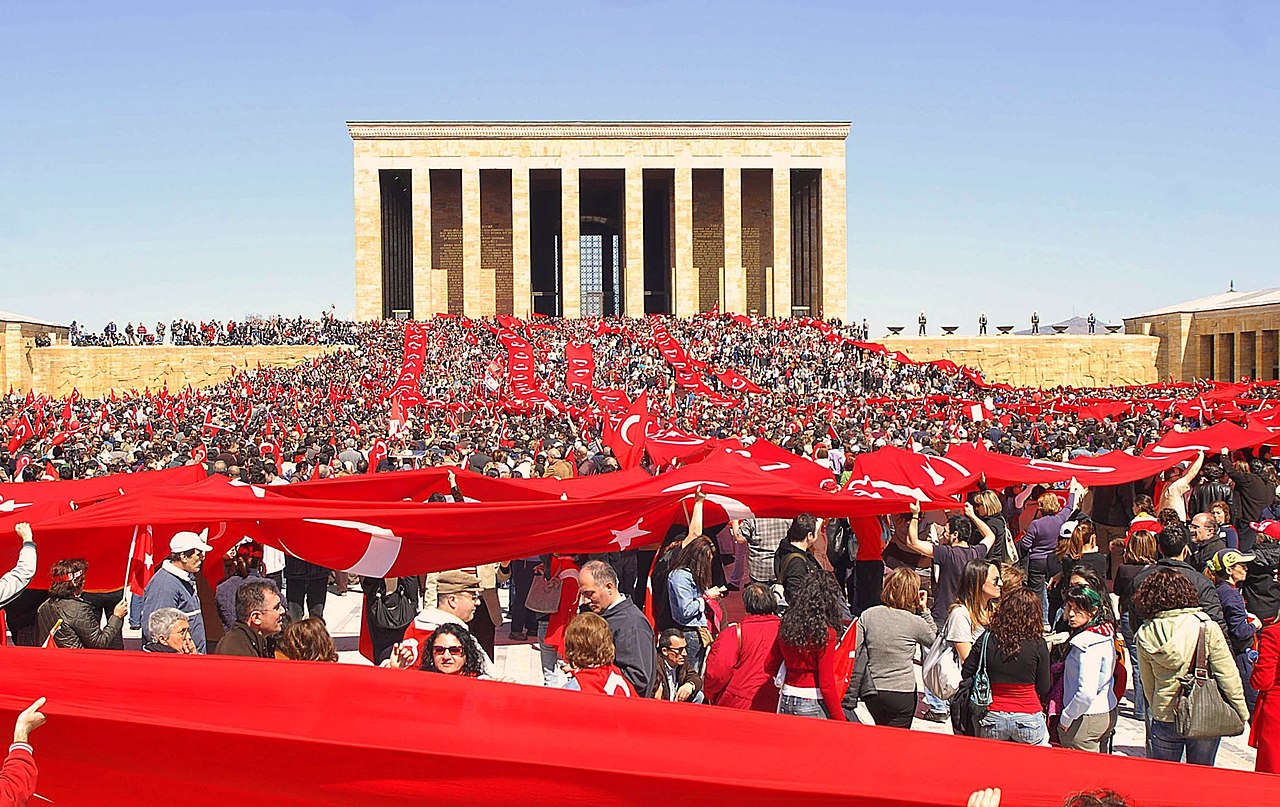
Atatürk’s death on 10 November 1938 is commemorated annually in Turkey, and his mausoleum, Anıtkabir, remains a focal point of national memory. Public spaces, educational curricula and state ceremonies continue to reflect the central place he occupies in Turkish public life. Debates about the proper balance between secularism and religion, the scope of state-led modernization, and the interpretation of national identity remain active subjects of scholarship and public discussion in Turkey and abroad.
Further reading and sources
For primary documents, speeches and legislation, consult national collections and official repositories such as the presidential archives and chronologies available in historical timelines (historical timelines). Comparative studies of legal and institutional reform may be found at academic centers focusing on European and comparative law (comparative law) and in specialized monographs on Republican Turkey. General introductions to his life and the Republican period are widely available in scholarly and popular formats for readers seeking further context.
Questions and answers
Q: Who was Kemal Atatürk?
A: Kemal Atatürk was a Turkish marshal and statesman who was the first President of Turkey from 1923 to his death in 1938. He is known for being a leader who freed his people from being controlled by other countries and then for starting changes that founded Turkish nation state based on social and economic nationalism, more modern and similar to Western civilization.
Q: What were Mustafa's birth name and father's name?
A: Mustafa's birth name was Mustafa Kemal Pasha until 1934, and his father's name was Ali Rıza Efendi.
Q: Where did he take the name "Kemal"?
A: He took the name "Kemal" as a schoolboy.
Q: What are some of the changes that Atatürk put in place?
A: Atatürk put in place changes that set Turkey on the road to becoming a new and developing nation, such as establishing a unitary republic based on a constitution and introducing secularism called laïcité.
Q: How did visitors to Turkey often react to Atatürk?
A: Visitors to Turkey are often surprised by the importance given to Atatürk in Turkey, as few countries have such an influential person in their history.
Q: Who were some of the leaders inspired by Atatürk?
A: Some of the leaders inspired by Atatürk include Amānullāh Khān, Reza Shah Pahlavi, Adolf Hitler, Habib Bourguiba, Gamal Abdel Nasser, Sukarno, Muhammad Ali Jinnah, and John F. Kennedy.
Q: What are Ataturks six principles used for today?
A: TodayAtaturks six principles serve as sign posts for establishing democratic government.
Author
AlegsaOnline.com Mustafa Kemal Atatürk: Founder and Reformer of Modern Turkey Leandro Alegsa
URL: https://en.alegsaonline.com/art/127327