
Muhammad Yunus
Bangladeshi economist and social entrepreneur who pioneered microcredit and founded Grameen Bank; Nobel Peace Prize laureate known for poverty-alleviation lending models.
Overview
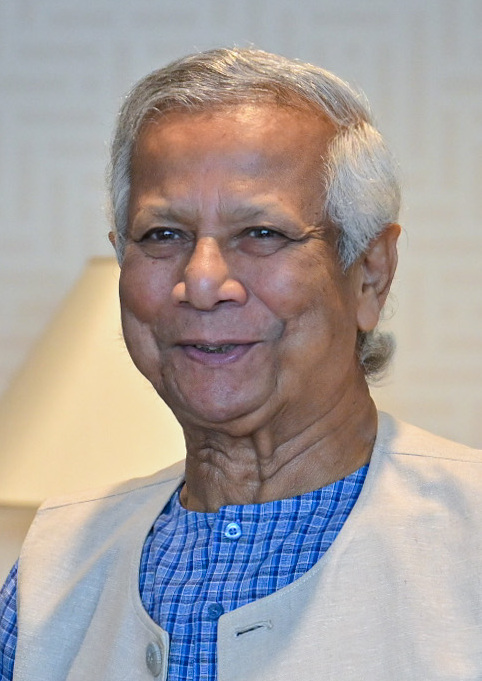
Muhammad Yunus (born 28 June 1940) is a Bangladeshi economist and social entrepreneur best known for developing and popularizing microcredit and microfinance as tools to reduce poverty. Trained as an academic and economist, Yunus combined field research and small-scale lending experiments to build an alternative banking model that targets the very poor, especially women. He is the founder of the Grameen Bank and shared the Nobel Peace Prize in 2006 with the institution for "their efforts to create economic and social development from below." Many accounts describe him as both a banker and an economist, and he has been active as a professor and public figure.
Image gallery
10 Images


Model and characteristics
The approach Yunus advanced focuses on providing very small, collateral-free loans to people who lack access to conventional banking services. Known broadly as microcredit or microfinance, these loans are typically sized as small loans and emphasize repayment discipline, peer support, and frequent, manageable repayment schedules. Grameen-style lending also places strong emphasis on lending to women and creating social incentives for repayment rather than relying on physical collateral. The formal institution he created to scale the approach is the Grameen Bank.
History and development
Yunus began experimenting with tiny loans to artisans and small entrepreneurs in the mid-1970s while working as an economics teacher and researcher. These pilot efforts led to the creation of a structured lending program and eventually to the formal establishment of a rural bank that could provide sustainable credit services to the poorest villagers. His background included university study and teaching in economics, and his ideas grew out of field work, observation of local livelihoods, and a critique of conventional banking's inability to serve the poor. Over time the Grameen model spread to other countries and informed a global microfinance movement.
Impact, recognition and institutions
The Grameen model has been widely influential in development policy, inspiring nonprofits, social enterprises, and mainstream financial institutions to design products for low-income clients. Yunus has written about his experience in books such as Banker to the Poor and helped establish organizations including the Grameen Foundation to adapt the model internationally. His work earned international honors and placed him among prominent public intellectuals and laureates; he has been associated in different initiatives with figures such as Peter Agre, Nadine Gordimer, Elinor Ostrom, Werner Arber, and James Mirrlees.
Notable collaborations and public roles
Beyond the bank, Yunus has promoted social business concepts—enterprises that aim for social benefit rather than profit distribution—and participated in global dialogues on development, climate, and social justice. He was a founding member of informal groups of elder statespersons and global figures, and he has been linked to other laureates and innovators including Mario J. Molina, Amartya Sen, Walter Kohn, Douglass North, John Sulston, and Murray Gell-Mann.
Uses, distinctions and open questions
Microcredit as practiced by Grameen-style institutions is valued for enabling income-generating activities, increasing women's financial participation, and building repayment-based group accountability. Critics and scholars continue to debate its limits: whether small loans alone can lift households out of poverty, the proper regulation of microfinance providers, and how best to combine credit with savings, insurance, training, and markets. Yunus's legacy is therefore both practical and conceptual: he popularized a poverty-focused form of finance and stimulated ongoing research and policy work on inclusive financial services.
Further reading and related terms
- Key concepts: economics, banking
- Institutions and initiatives: Grameen Bank, private sector, microcredit
- Selected associates and signatories mentioned in global forums: see links above for individual names.
Questions and answers
Q: Who is Muhammad Yunus?
A: Muhammad Yunus is a Bangladeshi banker and economist who was born on 28 June 1940.
Q: What is microcredit?
A: Microcredit is a name for giving small loans to people with very little money.
Q: What is Grameen Bank?
A: Grameen Bank is a bank that provides microcredit to people with very little money. It was started by Muhammad Yunus.
Q: What was Muhammad Yunus awarded the Nobel Peace Prize for?
A: Muhammad Yunus and Grameen Bank were awarded the Nobel Peace Prize in 2006 "for their efforts to create economic and social development from below."
Q: What is Nagorik Shakti?
A: Nagorik Shakti is a political group that Muhammad Yunus planned to start in Bangladesh in 2007 but chose not to start.
Q: What is the Stockholm memorandum?
A: The Stockholm memorandum is a document that was signed by 20 Nobel Laureates, including Muhammad Yunus, at the 3rd Nobel Laureate Symposium on Global Sustainability in Stockholm, Sweden on 18 May 2011.
Q: What is Banker to the Poor?
A: Banker to the Poor is a book that Muhammad Yunus published.
Author
AlegsaOnline.com Muhammad Yunus Leandro Alegsa
URL: https://en.alegsaonline.com/art/127296