
Muhammad Ali Pasha: Founder of Modern Egypt (1769–1849)
Ottoman commander who became Wāli and self-styled Khedive of Egypt; initiated sweeping military, administrative and economic reforms that shaped modern Egyptian state institutions.
Overview
Muhammad Ali Pasha (1769–1849) was an Ottoman military commander who became the dominant ruler of Egypt and extended authority into parts of the Levant and Sudan. Appointed as Wāli in 1805, he later used the title of Khedive in practice, though the full legal recognition of that title came later. He pursued far-reaching reforms aimed at centralizing administration, building a modern military, and transforming the economy. The household he founded became a ruling dynasty that remained influential in Egypt and Sudan until the mid-20th century.
Image gallery
10 Images


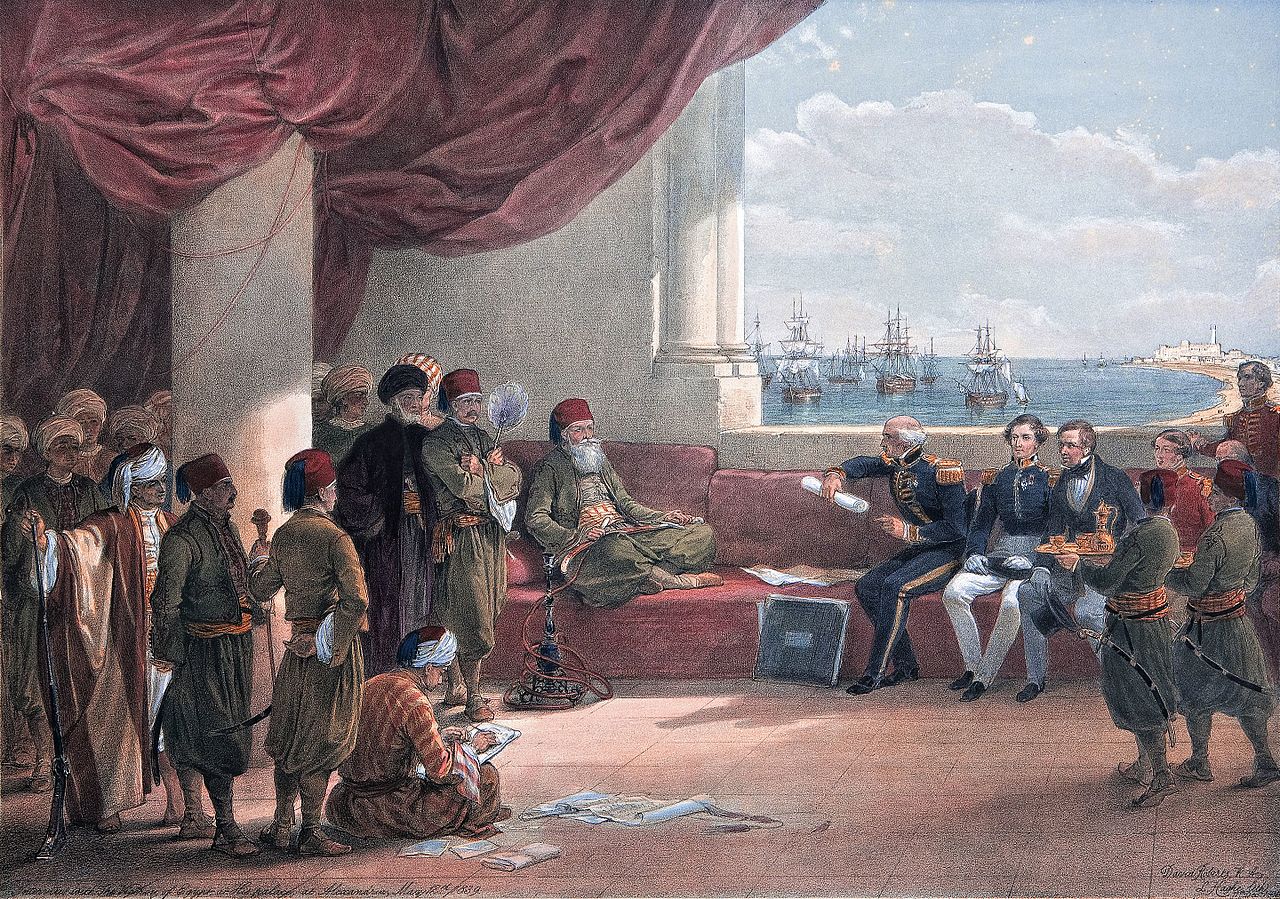


Origins and early career
Born in the port town of Kavala in 1769, then part of the Ottoman Empire, Muhammad Ali arrived in Egypt as the commander of a corps drawn largely from Albanian and other Ottoman troops. His background and ethnic origins have been discussed in scholarship, but his rise was achieved through military skill, political maneuvering and the ability to exploit opportunities in a province undergoing rapid change. The broader region of his birth is sometimes identified with the historical area known as Macedonia.
Rise to power
The withdrawal of French forces after the expeditions of Napoleon left Egypt politically unstable. The French capitulation at Alexandria and the collapse of French administration created a power vacuum that pitted Ottoman regulars, local notable families and the indigenous Mamluk military elite against one another. Muhammad Ali skillfully navigated these rivalries, building popular support in Cairo and among key social groups. In 1805 a coalition of leading Egyptians secured his formal appointment as governor. The Mamluk elite remained a serious rival, and in 1811 he moved decisively to eliminate the principal Mamluk leaders, an action that consolidated his control but was also marked by brutality (see Mamluk accounts).
Reforms and state building
Muhammad Ali set out to create a centralized state capable of projecting power and raising revenue. His approach combined coercive measures and institutional innovation. Central features included:
- Military reform: He reorganized the army along European lines, established new training institutions, and employed foreign instructors to modernize tactics and weaponry.
- Administrative centralization: Traditional intermediaries and decentralized authorities were reduced in influence as provincial officials were made directly accountable to Cairo.
- Economic policy: The government introduced state monopolies on certain crops and trades to increase revenue, promoted the production of exportable commodities such as cotton, and sponsored workshops and manufactories to supply the army and domestic markets.
- Education and technical training: He founded military and medical schools, encouraged technical instruction, and sent students and officers to study in Europe to acquire modern skills.
- Public works and infrastructure: Investments in irrigation, shipyards, state-operated factories and transport facilities were intended to increase agricultural productivity and support military logistics.
These policies helped shift the balance of economic and political power within the province but also placed heavy burdens on peasants and local communities through obligatory cultivation, taxes and requisitions.
Economic and social effects
The drive to raise revenue and supply a modern army led the state to impose new demands on rural producers. Encouragement of cash-crop agriculture and the imposition of state monopolies altered traditional patterns of land use and market exchange. While these measures generated resources for state-building and created some early industrial activity, they also produced social tensions, episodic resistance, and long-term changes in peasant livelihoods. Historians note that Muhammad Ali's policies integrated Egypt more closely into international markets, often with mixed consequences for different social groups.
Military campaigns and foreign relations
Under Muhammad Ali and his son Ibrahim Pasha, Egyptian forces campaigned beyond the Nile Valley into the Levant and the Arabian interior. These advances alarmed the Ottoman central government and the European powers, which intervened diplomatically and militarily to limit territorial expansion. The complex interplay of local ambition, Ottoman sovereignty and European intervention in the 1830s and 1840s shaped Egypt's semi-autonomous status: Muhammad Ali retained substantial internal authority while being constrained in external affairs by agreements with the Porte and the Great Powers.
Administration, succession and the dynasty
Muhammad Ali reorganized provincial administration to strengthen Cairo's control and to create a more professional bureaucracy. He promoted members of his own household and loyal officers to key positions. His descendants continued to rule Egypt as hereditary governors in practice, and later as holders of the Khedival title, until the political changes of the 20th century. The dynamics of succession, palace politics and the adaptation of state institutions to new fiscal and military realities were central to the later history of the dynasty.
Death and legacy
Muhammad Ali died in 1849 leaving a transformed polity. He is widely regarded as the architect of modern Egyptian institutions for establishing a centralized bureaucracy, a reorganized military, nascent industry and new forms of education. At the same time, his rule was authoritarian and prioritized state interests and military strength over representative politics. His consolidation of power took place in a context of local anarchy, imperial competition and the evolving power of European states. For an understanding of his titles and offices, see entries on the office of the Wāli and the later development of the Khedivate.
Further reading and resources can examine Egypt's 19th-century transformation, biographies of Muhammad Ali, the role of foreign advisors, and the social impact of economic policies on peasants and urban artisans. For context on the broader imperial setting consult works on the Ottoman Empire, regional histories of the Macedonia area and military campaigns linked to the era of Napoleon. For local sources and accounts refer to materials dealing with the Mamluk legacy and the events around the Capitulation of Alexandria. Contemporary analyses often situate Muhammad Ali between the categories of reforming ruler and military despot, emphasizing both innovation and coercion in his methods (Egypt, Sudan).
Selected topics for deeper study include the social consequences of forced cultivation and monopolies, the emergence of an educated administrative elite through new schools, the technological and organizational challenges of early industry, and the long-term consequences of Muhammad Ali's priorities for Egypt's role in global economic networks.
Questions and answers
Q: Who was Muhammad Ali Pasha?
A: Muhammad Ali Pasha was an Ottoman commander in the Ottoman army who became Wāli, and self-declared Khedive of Egypt and Sudan. He is considered the founder of modern Egypt due to the dramatic reforms he made to its army, economy, and culture.
Q: Where was Muhammad Ali Pasha born?
A: Muhammad Ali Pasha was born in Kavala, a city in what is now the Greek province of Macedonia. His ancestors migrated from a village of İliç in Eastern Turkey.
Q: What caused a power vacuum in Egypt at this time?
A: The French Capitulation of Alexandria left a power vacuum in the Ottoman province as Mamluk power had been weakened but not destroyed. This created an opportunity for Muhammad Ali to gain power and prestige for himself by playing both sides during this period of anarchy.
Q: How did Muhammad Ali become Wāli?
A: A group of prominent Egyptians demanded that Ahmad Khurshid Pasha step down and that Muhammad Ali be installed as the new Wāli in 1805.
Q: How did he deal with opposition from Mamluks?
A: In 1811, he massacred their leaders and sent troops to chase their followers out of Egypt.
Q: Was it true that Muhammed Ali was Albanian?
A: No, it is not true that Muhammed Ali was Albanian although he led a group of Albanian troops sent to Egypt who were part of an Ottoman force reoccupying Egypt after Napoleon's French troops left.
Q: What happened after 1952 regarding his dynasty ruling over Egypt and Sudan?
A: After 1952, his dynasty no longer ruled over Egypt or Sudan due to the Egyptian Revolution which took place at this time.
Author
AlegsaOnline.com Muhammad Ali Pasha: Founder of Modern Egypt (1769–1849) Leandro Alegsa
URL: https://en.alegsaonline.com/art/127285