
Mi Fei (Mi Fu) — Song dynasty painter, calligrapher, and poet
Mi Fei (1051–1107) was a Chinese Song dynasty scholar-artist known for misty landscape painting, distinctive calligraphy, poetry, collecting, and the “Mi dot” ink technique.
Mi Fei (also written Mi Fu; 1051–1107) was a prominent Chinese scholar-artist of the Northern Song dynasty. He is best known as a painter of atmospheric landscapes, an original calligrapher, and a cultivated poet and connoisseur. His work exemplifies the literati ideal in which painting, poetry and calligraphy are closely linked and serve as expressions of personal taste and temperament.
Image gallery
5 Images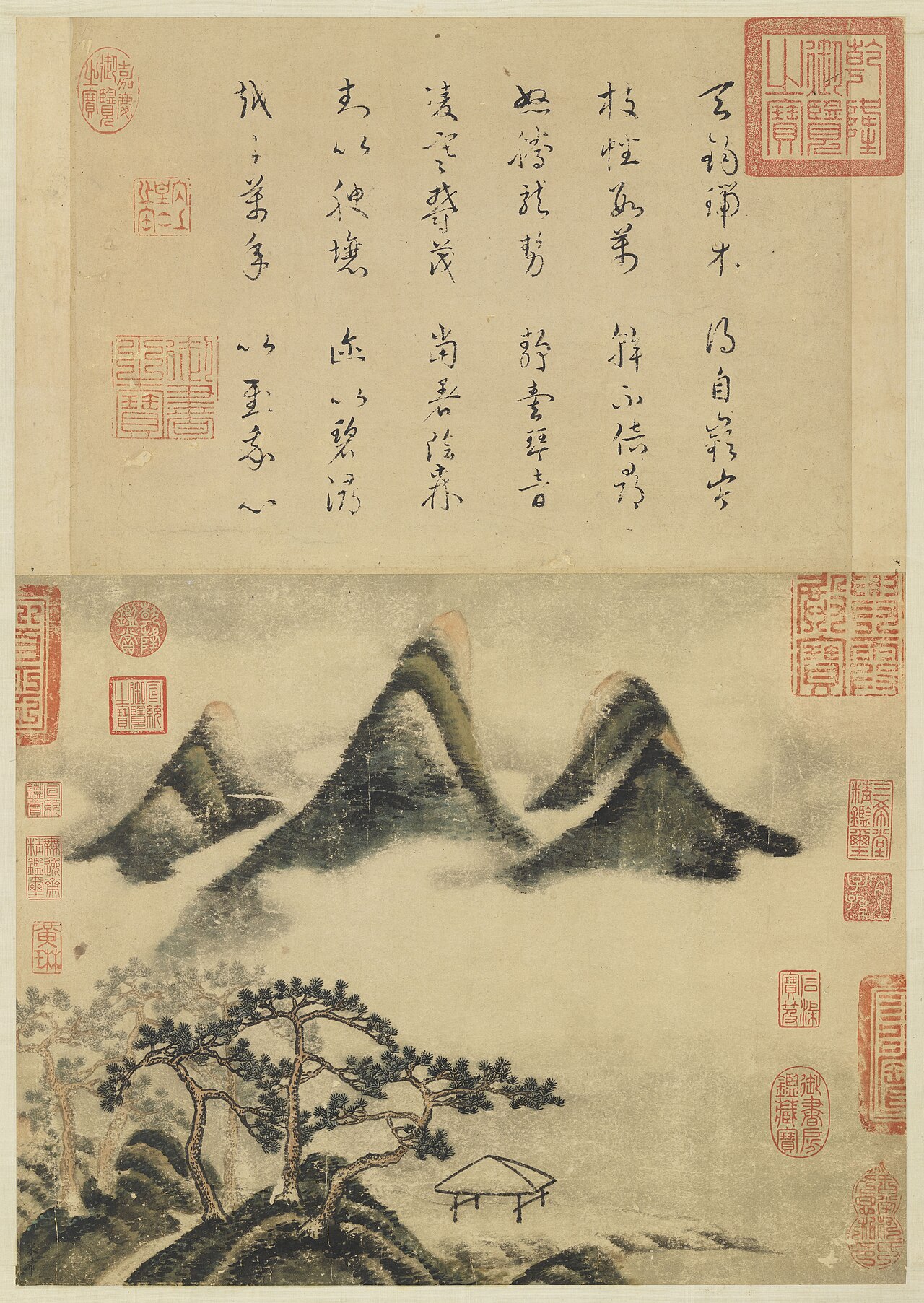


Artistic style and painting technique
Mi Fei developed a hallmark approach to landscape painting that emphasized mood and suggestion over detailed representation. He is associated with a technique often called the "Mi dot" or "Mi dian" method: the application of large, wet dots and washes of ink to create mist, cloud and rock textures. These broad, rounded ink marks—sometimes applied with a flat brush—produce soft, diffuse forms that evoke atmospheric depth rather than precise detail. His compositions frequently balance empty space with clustered inked areas, inviting the viewer to complete the scene mentally.
Calligraphy, poetry and connoisseurship
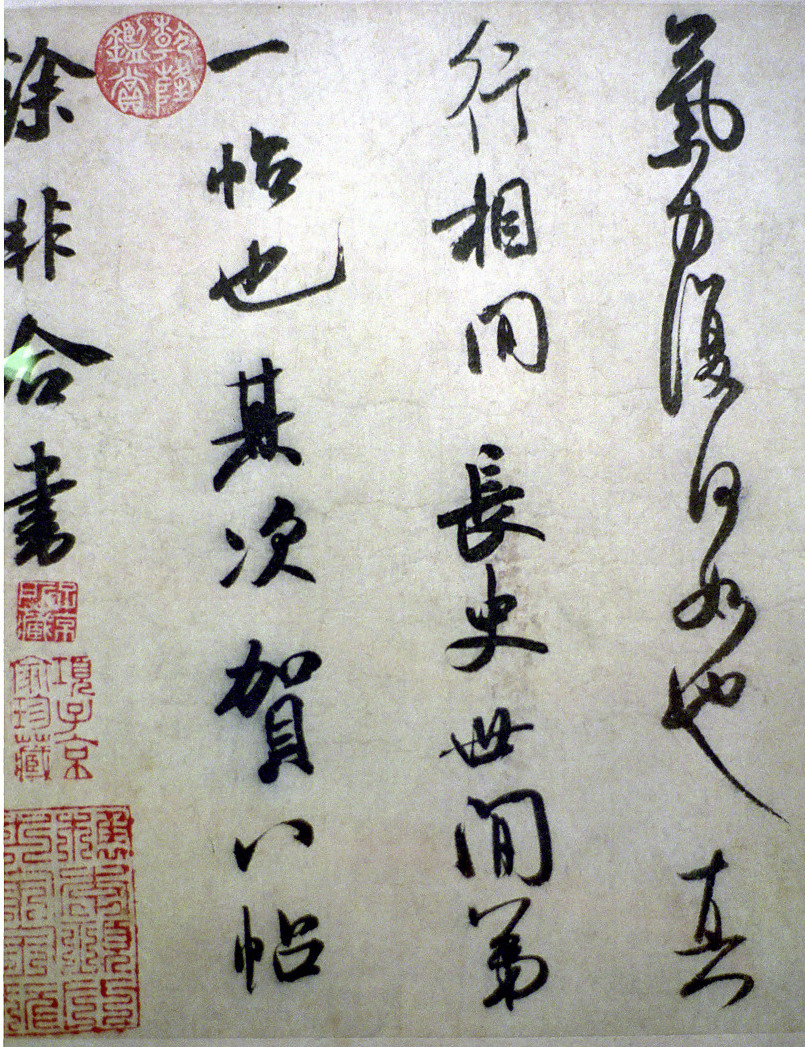
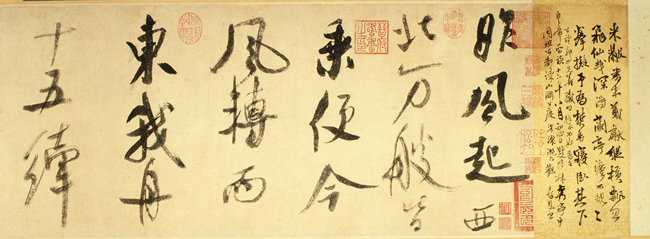
In calligraphy, Mi Fei earned a reputation for a highly individual running-cursive script that combined freedom with studied reference to earlier masters. He is often mentioned among the leading Song calligraphers and is credited with influencing later generations of scholar-calligraphers. Poetry and inscribed colophons complemented his paintings; many surviving works are valued as much for their calligraphic verses and collector's notes as for pictorial content. Mi was also an active connoisseur and collector who wrote about painting practice and the history of artworks.
Life and context
Mi Fei lived during a culturally rich period of the Northern Song dynasty when scholar-officials produced art as a form of personal cultivation. He was born in 1051 in what is now the Shanxi region and later served in various court and local appointments. His background as a scholar-official shaped the literati character of his art: painting was an intellectual, expressive pursuit rather than merely a professional craft.
Legacy and influence
- Technique: The "Mi dot" treatment of ink influenced later landscapists who sought atmospheric effects.
- Calligraphy: His energetic, idiosyncratic scripts became a model for later scholar-calligraphers.
- Connoisseurship: His taste and writings contributed to the Song culture of collecting and art criticism.
For those interested in exploring Mi Fei's work further, look for reproductions and studies that highlight his ink-dot techniques and surviving calligraphic pieces. Many museum catalogues and scholarly essays discuss his role in shaping the classical literati aesthetic and situate his work within broader Song painting developments.
Related topics: paintings, poetry, calligraphy, Taiyuan, Shanxi.
Questions and answers
Q: Who was Mi Fu?
A: Mi Fu was a Chinese painter, poet, and calligrapher born in Taiyuan, Shanxi during the Song Dynasty.
Q: What was Mi Fu's style of painting?
A: Mi Fu's style of painting was misty landscapes using large wet dots of ink. This style is known as the "Mi Fu" style.
Q: What type of brush did Mi Fu use to put ink on his paintings?
A: Mi Fu used a flat brush to put ink on his paintings.
Q: When was Mi Fu born?
A: Mi Fu was born in 1051.
Q: Where was Mi Fu born?
A: Mi Fu was born in Taiyuan, Shanxi.
Q: What dynasty was Mi Fu born in?
A: Mi Fu was born during the Song Dynasty.
Q: Which forms of art did Mi Fu practice?
A: Mi Fu practiced painting, poetry, and calligraphy.
Author
AlegsaOnline.com Mi Fei (Mi Fu) — Song dynasty painter, calligrapher, and poet Leandro Alegsa
URL: https://en.alegsaonline.com/art/127134