
Mikhail Chigorin: Russian Chess Master and Founder of a Practical School
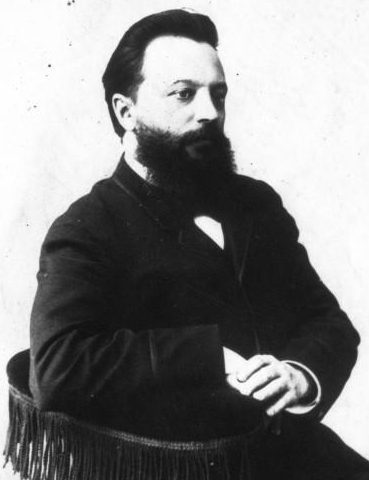
Mikhail Chigorin (1850–1908), leading Russian chess player, two-time World Championship challenger and influential founder of the practical, active play tradition that fed into the Soviet school.
Mikhail Ivanovich Chigorin (born in Gatchina, 12 November 1850; died in Lublin, Poland, 25 January 1908) was the foremost Russian chess figure of his generation. A combative and imaginative player, he rose to the top ranks internationally in the late 19th century and became a major influence on the later Soviet school. His approach emphasized active piece play, initiative and resourceful counterplay.
Image gallery
4 Images


Early life and background
Chigorin’s origins and early education in chess were modest by the standards of Western European masters of his time. He developed his strength through practical play, study of contemporary masters and frequent participation in events. Although formal professional support for chess in Russia was limited then, Chigorin became the country’s leading representative on the international stage and worked to create institutions that would sustain the game at home.
Career highlights and world championship matches
During his peak years Chigorin belonged to the world’s leading handful of players. He twice challenged Wilhelm Steinitz for the World Chess Championship; both matches were staged in Havana. In the 1889 match Steinitz won by 10½–6½, and in the 1892 rematch Steinitz again prevailed by 12½–10½. In 1893 Chigorin played an even match with Siegbert Tarrasch in Saint Petersburg, finishing 11–11, a result that underlined his ability to hold his own against the strongest contemporary rivals.
Playing style
Chigorin favored dynamic and direct play. He preferred active piece deployment, open lines and tactical complications over slow, abstract maneuvers. Willing to accept structural concessions for the sake of initiative, he sought to generate concrete threats and unbalance the position. This practical style made his games rich in ideas and instructive for players who aim to seize the initiative rather than passively protect small advantages.
Opening contributions
Chigorin contributed several ideas to opening theory that remain in modern use. The Chigorin Defence to the Queen’s Gambit (1.d4 d5 2.c4 Nc6) is a direct and flexible challenge to White’s plan. He also gave his name to a line in the Ruy Lopez that questions Black’s queenside and central setup; a commonly cited sequence for the Chigorin Variation of the Ruy Lopez runs 1.e4 e5 2.Nf3 Nc6 3.Bb5 a6 4.Ba4 Nf6 5.O-O Be7 6.Re1 b5 7.Bb3 d6 8.c3 O-O 9.h3 Na5. These choices exemplify his preference for piece activity and counterplay rather than passive defense.
Writings, teaching and organization
Beyond his tournament career, Chigorin was active as a lecturer, columnist and supporter of chess periodicals. He subsidized and edited chess publications to keep them running and helped popularize the game across the Russian Empire. He founded a chess club in Saint Petersburg and campaigned for a national chess association. Although his efforts met resistance in his lifetime, the organizational foundations he helped lay were important for the later development of Russian chess.
Representative games and instructive themes
- Matches with Steinitz and the drawn match with Tarrasch are often studied for Chigorin’s willingness to pursue complications against positional rivals.
- Many of his tournament and match games illustrate sacrifices for activity, imaginative piece play and finely judged attacks on the kingside or in the centre.
- Opening lines that bear his name continue to be used at club and professional levels as practical weapons with independent strategic aims.
Later years and death
Chigorin’s final years were marred by illness. He suffered from diabetes at a time when effective treatment was not available, and the disease led to his premature death in 1908. Despite the absence of a world title, his competitive achievements, writings and organizational work secured him a lasting place in chess history.
Legacy and assessment
Chigorin is remembered less for having held formal world championship status than for shaping a tradition of active, tactical and resourceful chess that influenced later Russian and Soviet masters. His practical approach to the game, combined with efforts to promote chess institutions and publications, helped create a culture in which systematic training and competitive excellence could flourish in the 20th century.
Further reading and resources
Readers wishing to explore Chigorin’s life and games can consult contemporary tournament reports and later game collections. General chess histories and opening manuals discuss his contributions to the Ruy Lopez and the Queen’s Gambit. For biographical context see materials associated with his birthplace (Gatchina) and places tied to his career and death (Lublin, Poland), and surveys of 19th-century chess (chess) that relate his work to the emergence of the Soviet tradition. Historical match records with Steinitz, notes on the match with Tarrasch, and accounts of events in Havana and Saint Petersburg provide further study material for players and researchers.
Questions and answers
Q: Who was Mikhail Ivanovich Chigorin?
A: Mikhail Ivanovich Chigorin was a leading Russian chess player who inspired the "Soviet school of chess" and was one of the world's top four players.
Q: How many times did Chigorin challenge Wilhelm Steinitz for the World Chess Championship?
A: Chigorin challenged Wilhelm Steinitz for the World Chess Championship twice.
Q: Where were both matches held?
A: Both matches were held in Havana, Cuba.
Q: What other match did Chigorin participate in?
A: Chigorin drew an 1893 match with Siegbert Tarrasch in Saint Petersburg (11–11).
Q: What are some of his contributions to the theory of chess openings?
A: Some of his contributions to the theory of chess openings include the Chigorin Variation of the Ruy Lopez and the Chigorin Defence to the Queen's Gambit.
Q: What else did he do besides playing chess?
A: Besides playing chess, he gave lectures, wrote magazine articles and chess columns, subsidised or otherwise supported a number of periodicals to keep them afloat despite low readership levels, founded a chess club in Saint Petersburg and tried for many years to establish a chess association.
Q: What caused his early death?
A: His early death was caused by diabetes, for which there was no remedy at that time.
Author
AlegsaOnline.com Mikhail Chigorin: Russian Chess Master and Founder of a Practical School Leandro Alegsa
URL: https://en.alegsaonline.com/art/127035