
African National Congress (ANC)
The African National Congress is South Africa's long-standing centre-left political party, formed in 1912 to advance the rights of Black South Africans and later central to the anti-apartheid struggle and post-1994 government.
Overview
The African National Congress (ANC) is a South African political organization founded in 1912 to campaign for the rights and political representation of the country's Black population. It describes itself as a disciplined force of the left and has been the dominant party of national government since the advent of majority rule in 1994. The ANC operates within a broader alliance that includes the South African Communist Party and the Congress of South African Trade Unions.
Image gallery
5 Images


Origins and history
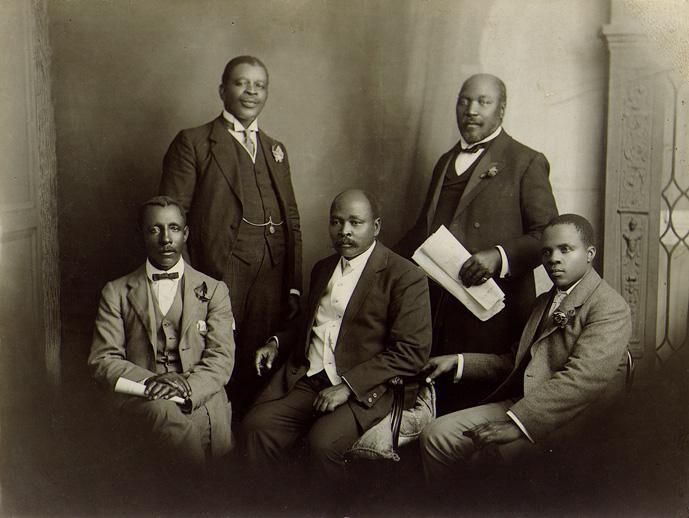
The ANC began life as the South African Native National Congress (SANNC) on 8 January 1912 in Bloemfontein, founded by figures such as John Dube and Sol Plaatje. It adopted the name African National Congress in 1923 and gradually moved from a lobby group to a mass movement opposing racial segregation. After the Sharpeville events and a period of state repression, the ANC established an armed wing, Umkhonto we Sizwe (Spear of the Nation) in 1961 and continued resistance from exile and underground. Negotiations in the early 1990s culminated in the first non-racial national elections and ANC victory in 1994.
Organization and ideology
The ANC defines itself as centre-left, combining elements of African nationalism, social democracy and a commitment to redressing historical inequalities. It participates in a tripartite alliance with the SACP and labour unions and maintains internal bodies such as a National Executive Committee, provincial structures, and affiliated leagues (youth, women, veterans). Policy priorities commonly include broad-based economic empowerment, land reform, social welfare expansion, and transformation of the public sector.
Role in government and society
Since becoming the governing party of South Africa in 1994, the ANC has overseen the transition from apartheid-era institutions to a constitutional democracy and led major reconstruction efforts in health, education and housing. Its tenure has also involved contested policy choices about economic strategy, affirmative action, and the pace of land and wealth redistribution. The party has maintained substantial electoral support through multiple cycles, though critics cite governance challenges and allegations of corruption that have affected public trust.
Electoral record and notable leaders
The ANC won the first post-apartheid elections and secured large parliamentary majorities in subsequent contests, consolidating its position as the principal political force in the country. Prominent leaders associated with the party include Nelson Mandela, who became president after the 1994 transition, as well as Thabo Mbeki, Jacob Zuma and Cyril Ramaphosa. Debate over leadership, internal factionalism and reforms has been a recurring feature of its modern history.
Distinctive facts and contemporary issues
- The ANC traces its origins to a small early-20th-century organization that sought to protect the rights of Black South Africans; it evolved into the main vehicle of nationwide liberation struggle.
- Its alliance with labour and communist formations gives it a distinctive mix of nationalist and social-democratic policy influences.
- While the party delivered important social gains after 1994, it now faces the tasks of economic renewal, combating inequality, and addressing governance and integrity concerns to retain popular support.
For further reading on affiliated organizations and historical events see the party's political profile, material on the Black freedom movement, and specific archives on Umkhonto we Sizwe. Additional context and analyses are available from scholarly and contemporary sources linked through public repositories and research collections (origins, national politics).
Questions and answers
Q: What is the African National Congress?
A: The African National Congress (ANC) is a centre-left political party in South Africa that has been governing since the establishment of non-racial democracy in April 1994.
Q: When was the ANC founded?
A: The ANC was founded on 8 January 1912 as the South African Native National Congress (SANNC).
Q: Who were some of its founding members?
A: John Dube and Sol Plaatje were two of its founding members.
Q: Does the ANC have a military wing?
A: Yes, it has had a military wing called Umkhonto we Sizwe (Spear of the Nation) since 1961.
Q: How much support did it gain in 1999 elections?
A: It gained significant support in 1999 elections.
Q: How much support did it receive in 2004 elections? A: In 2004, it received 69.7% of votes.
Q: How much support did it receive in 2009 elections?
A: In 2009, its share of votes reduced slightly but remained dominant with 65.9% of votes.
Tags
Related articles
Author
AlegsaOnline.com African National Congress (ANC) Leandro Alegsa
URL: https://en.alegsaonline.com/art/1267
Sources
- anc.org.za : "The ANC and the Socialist International"
- anc.org.za : "ANC Party Declaration"
- bbc.co.uk : "ANC at 100: South Africa celebrations begin with golf"
- sahistory.org.za : SAhistory.org.za
- marxists.org : "The South African Working Class and the National Democratic Revolution"
- anc.org.za : "Understanding the tasks of the moment"
- anc.org.za : "The anatomy of capital and the national democratic revolution"
- ever-fasternews.com : "ANC 'At Fork in the Road'"
- disa.ukzn.ac.za : "How the Tripartite Alliance works"
- southafrica.indymedia.org : "The ideological differences within the Tripartite Alliance: What now for the left?"
- anc.org.za : "The Flag of the African National Congress"
- politicsweb.co.za : Politicsweb.co.za
- student.britannica.com : Student.britannica.com