
Medgar Evers (1925–1963) — American civil rights activist
Medgar Evers, NAACP field secretary from Mississippi, organized voter registration, school desegregation efforts and publicized racial violence. His 1963 assassination galvanized national attention and lasting memorials.
Medgar Wiley Evers (July 2, 1925 – June 12, 1963) was an African American civil rights activist and a leading organizer in Mississippi during the 1950s and early 1960s. A World War II veteran, Evers served as a field secretary for the National Association for the Advancement of Colored People (NAACP), based in the deeply segregated South. Born near Decatur, Mississippi, he focused on dismantling Jim Crow barriers to voting, education, employment and access to public facilities for Black citizens.
Image gallery
6 Images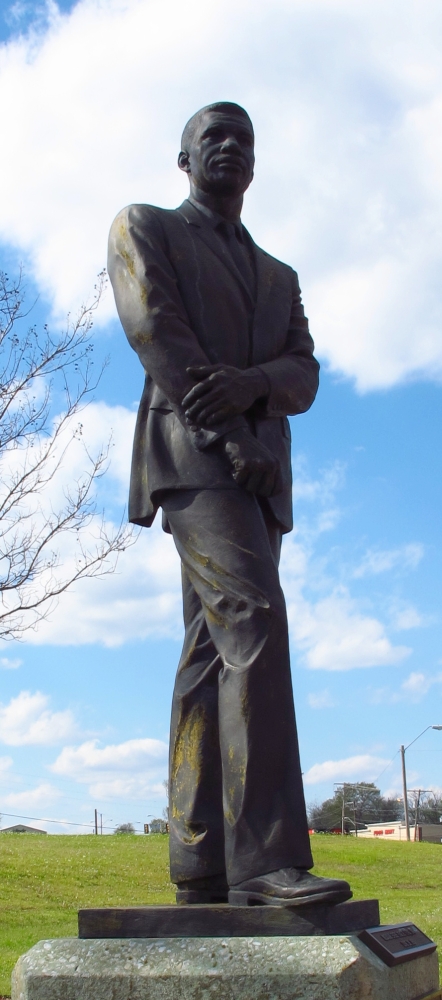


Activism and work
Evers combined grassroots organizing with high-profile legal and media strategies. After the U.S. Supreme Court's 1954 decision in Brown v. Board of Education, which declared segregated public schools unconstitutional, he worked to translate legal rulings into practical gains in Mississippi. He assisted African Americans seeking admission to white institutions, encouraged voter registration drives, and supported economic boycotts to pressure discriminatory businesses. He also publicized instances of racial violence—helping to draw national attention to cases such as the 1955 murder of Emmett Till—and he documented intimidation and reprisals that local officials often ignored.
Evers’s role required steady personal courage: he routinely faced threats, economic retaliation, and surveillance. His duties included investigating complaints, recruiting members for the NAACP, counseling families, and coordinating with attorneys when civil rights cases reached the courts. Evers worked to build networks of volunteers and local leaders in communities across Mississippi, seeking both immediate relief for victims of discrimination and longer-term legal and social changes.
Assassination and legal aftermath
On June 12, 1963, Evers was shot and killed outside his home in Jackson, Mississippi, by Byron De La Beckwith, who was associated with segregationist groups such as the White Citizens' Council. The killing drew widespread outrage and intensified national scrutiny of Southern segregation and racial violence. Two criminal trials in the 1960s, held before all-white juries, failed to produce a conviction. Decades later, renewed investigation and newly presented evidence led to a state trial in 1994 in which De La Beckwith was convicted of murder. Evers’s death and the long struggle for justice became emblematic of the persistence of racial animus and the challenges of accountability in the Jim Crow era.
Legacy and honors
The impact of Evers’s life and death continues to be reflected in institutions, memorials and public memory. His wife, Myrlie Evers, became a prominent activist and later served in leadership roles with the NAACP. His brother Charles Evers became a prominent political figure, serving as mayor of Fayette, Mississippi, and continuing work on civil rights and local politics. Medgar Evers’s home in Jackson is preserved as a site of remembrance, and his name has been given to schools, streets and Medgar Evers College in New York. He was interred with military honors at Arlington National Cemetery, and his story has been retold in books, films and music that aim to preserve the history of the civil rights struggle.
- Key roles: NAACP field secretary, voter-registration organizer, investigator of racial violence.
- Turning point: His assassination in 1963 increased national pressure for civil rights reforms and greater federal attention to violence in the South.
- Remembrance: Institutions and memorials, legal retrial and conviction in 1994, continued public commemoration.
Medgar Evers is remembered as a determined local organizer whose steady, often perilous work helped turn national law into local change and whose death underscored the human cost of the struggle for racial equality. His life illustrates how local activism connected to broader legal and political movements, and why community organizing remained central to the civil rights campaign in the United States.
Questions and answers
Q: Who was Medgar Wiley Evers?
A: Medgar Wiley Evers was an American civil rights activist from Decatur Mississippi. He is best known for his work to overturn racial segregation in the United States in the 1950s and early 1960s.
Q: What did he do?
A: He became a field secretary for the National Association for the Advancement of Colored People (NAACP) and worked to get African Americans admitted to the all-white University of Mississippi. He also worked for other changes in the nation's then-segregated society, such as voting rights and registration, economic opportunity, and access to public facilities for African Americans.
Q: When was he assassinated?
A: Medgar Wiley Evers was assassinated by Byron De La Beckwith on June 12th, 1963.
Q: What group did De La Beckwith belong to?
A: Byron De La Beckwith belonged to a group called “White Citizens' Council” which was formed in 1954 to resist integration of schools and civil rights activity in America.
Q: Was De La Beckwith convicted?
A: An all-white jury failed to convict De La Beckwith in his first two trials; however, he was finally convicted 30 years later in 1994 based on new evidence.
Q: Who were some of Medgar Wiley Evers' family members who went on become activists?
A: His wife Myrlie Evers became a noted activist serving as national chair of the NAACP while his brother Charles Evers became the first African-American mayor elected in Mississippi state 1969 Fayette, Mississippi.
Author
AlegsaOnline.com Medgar Evers (1925–1963) — American civil rights activist Leandro Alegsa
URL: https://en.alegsaonline.com/art/126555