
Max Planck: founder of quantum theory and influential German physicist
Overview of Max Planck (1858–1947), his role in establishing quantum theory, main contributions, career highlights, Nobel recognition, and lasting scientific legacy.
Max Karl Ernst Ludwig Planck was a German physicist born in Kiel in 1858 and who died in Göttingen in 1947. Trained in the traditions of 19th‑century German science, he became one of the central figures in the transition from classical physics to the quantum era. He is widely credited with introducing a new way of thinking about energy at microscopic scales and with establishing ideas that led to quantum theory (quantum mechanics).
Image gallery
10 Images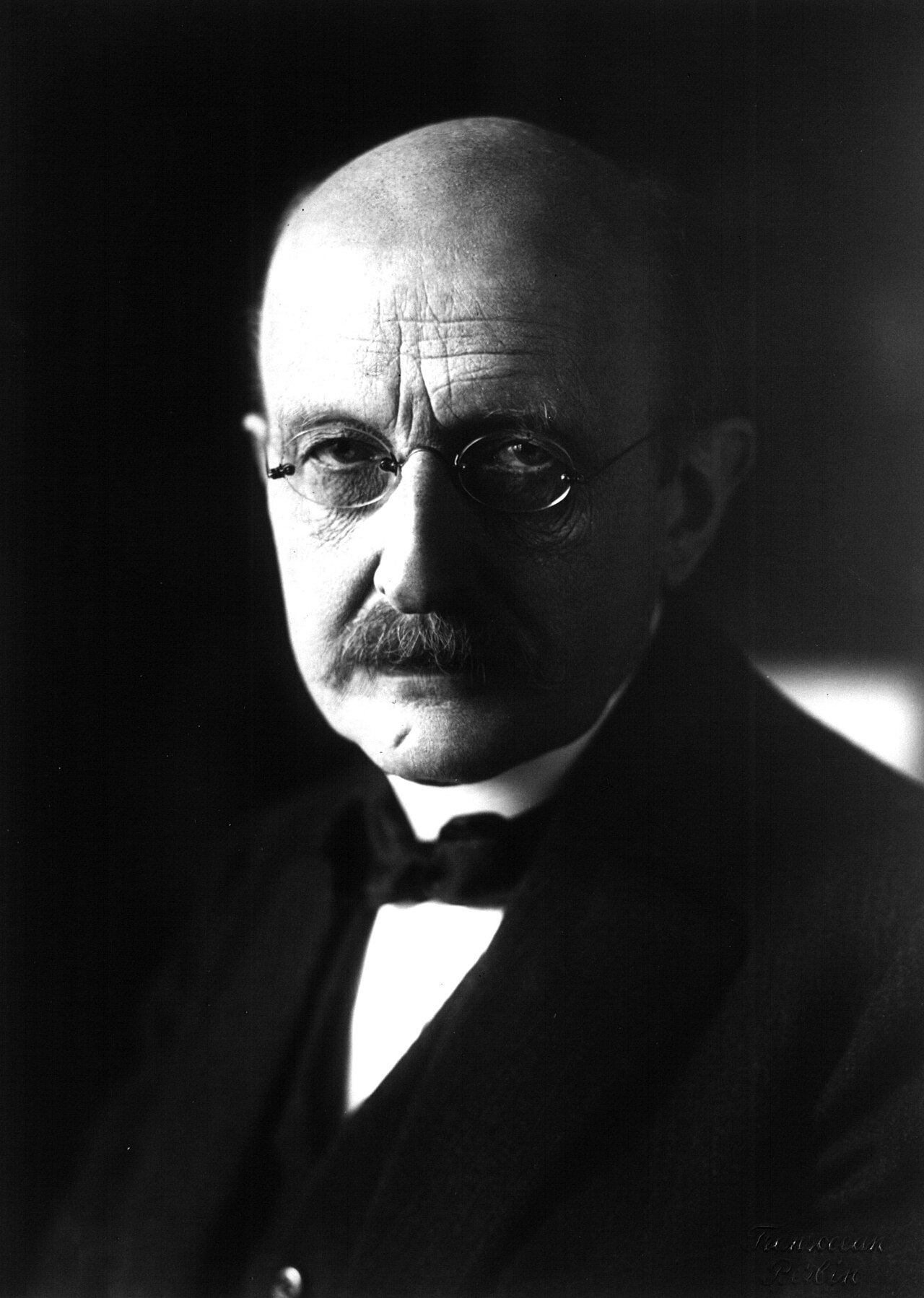




Major contributions
Planck's work began with the study of black‑body radiation: he proposed that electromagnetic energy could be emitted or absorbed only in discrete packets, or quanta. From this hypothesis he introduced a fundamental constant (now called Planck's constant) that links the energy of a quantum to its frequency. His analysis resolved a serious inconsistency between experiment and classical predictions and provided a mathematical foundation for later developments by other scientists.
Key achievements include:
- Formulation of the quantum hypothesis and derivation of the black‑body radiation law.
- Introduction of Planck's constant as a new fundamental physical quantity.
- Work that opened the way for subsequent quantum theory by scientists such as Einstein, Bohr and others.
Career and recognition
Planck held professorships at major German universities and served in prominent scientific roles during his career. In recognition of his foundational contributions to theoretical physics he was awarded the Nobel Prize in Physics; his work remains one of the cornerstones of modern physics and is often cited as the starting point of quantum theory (Nobel Prize).
Beyond specific results, Planck's legacy includes influence on how physicists conceive of energy and matter at small scales, the use of natural constants to define units of measure, and the establishment of institutions and research cultures in Germany that carried forward twentieth‑century physics. His name is commemorated in scientific institutions and in terms such as the Planck constant and Planck units.
For further biographical detail and scientific context see general scientific histories and institution pages that summarize his life and work, including resources tied to his birthplace and later academic centers in Germany and related archival material (Kiel, Göttingen). These sources provide accessible introductions to both the technical content and the broader historical impact of his ideas.
Questions and answers
Q: Who is Max Planck?
A: Max Planck was a physicist from Germany.
Q: When was Max Planck born?
A: Max Planck was born on April 23, 1858, in Kiel.
Q: What did he discover?
A: He discovered quantum mechanics.
Q: When did he discover quantum mechanics?
A: The discovery of quantum mechanics was made by Max Planck during the early 1900s.
Q: What was his contribution to science?
A: Max Planck's contribution to science lies in his pioneering work on the quantum theory, which revolutionized the field of physics.
Q: Did he receive any awards for his contributions?
A: Yes, he won the Nobel Prize in Physics for his contributions to the field of physics.
Q: When did he pass away?
A: Max Planck passed away on October 4, 1947, in Göttingen.
Tags
Related articles
Author
AlegsaOnline.com Max Planck: founder of quantum theory and influential German physicist Leandro Alegsa
URL: https://en.alegsaonline.com/art/126519