
Boeing 727: Three‑Engine Short‑ to Medium‑Haul Airliner
A three‑engine jet introduced in the 1960s, the Boeing 727 served short- and medium-haul routes with rear-mounted engines, a distinctive T-tail and built‑in airstair, and later many were freighter‑converted.
Overview
The Boeing 727 is a narrow‑body jet airliner produced by Boeing Commercial Airplanes and introduced in the early 1960s. Designed for short‑ to medium‑haul routes, it combined good short‑field performance with the range and speed of a jet, allowing airlines to serve smaller airports and higher‑frequency schedules. Typical passenger capacity varied by configuration, commonly accommodating roughly 149 to 189 passengers, and range figures depended on model and payload but were often cited in the 2,400 to 2,700 nautical mile band.
Image gallery
10 Images



Design and characteristics
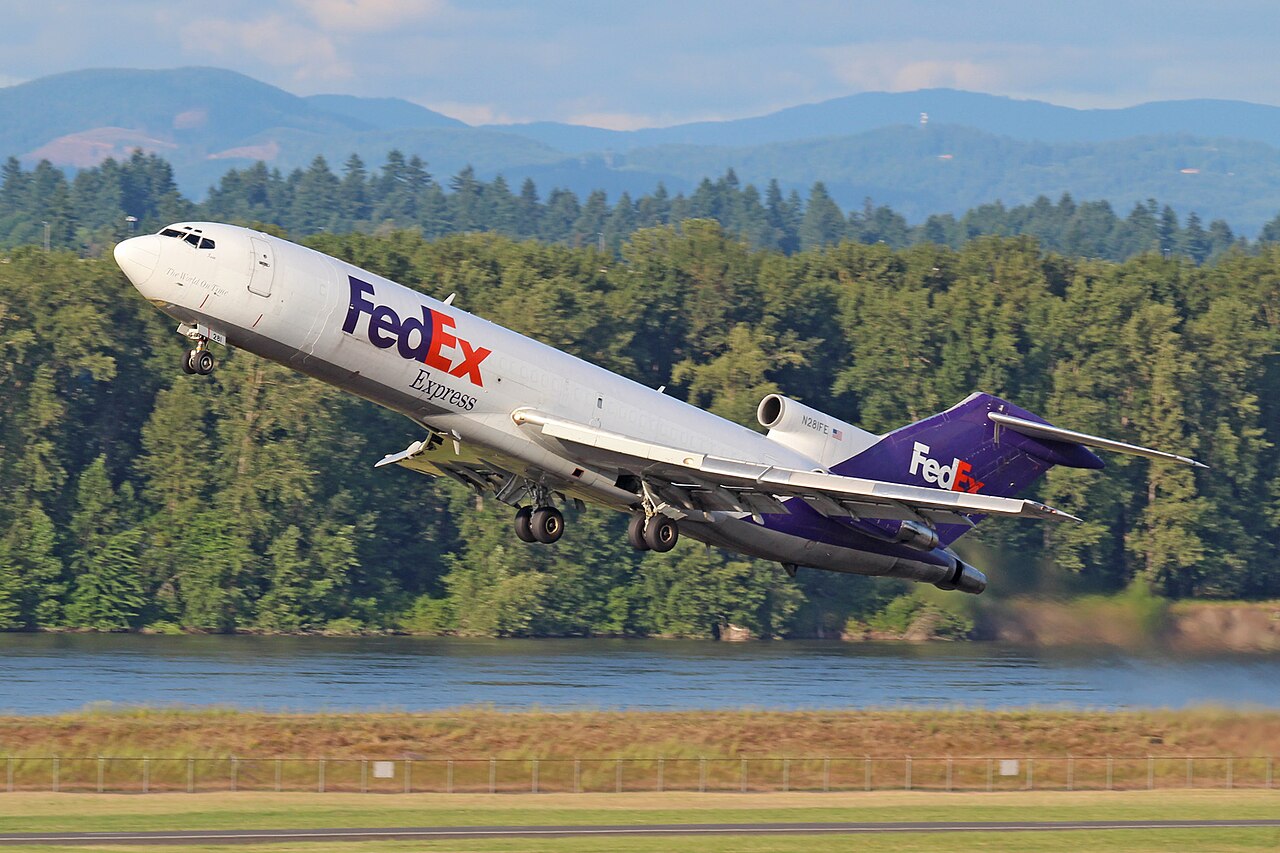
The 727 is best known as a trijet with three Pratt & Whitney JT8D turbofan engines mounted at the rear fuselage—two on the sides and one at the base of the vertical tail fed through an intake path. It uses a T‑tail arrangement and high‑lift devices such as triple‑slotted flaps, which helped give the type strong short‑runway performance. A distinctive operational feature was an integrated rear airstair that allowed the aircraft to embark and disembark passengers without airport jetways, useful when operating to smaller airfields.
- Engines: three JT8D turbofans, with the center engine intaking through a curved duct.
- Structure: single‑aisle fuselage, T‑tail, rear‑mounted engines.
- Performance: optimized for short sectors and quick turnarounds.
Development and variants
The 727 was developed after Boeing's earlier jets; it shares the company's design lineage that includes the four‑engined 707. The original 727‑100 first flew in February 1963 and entered service with its launch customer, Eastern Air Lines, shortly thereafter. A stretched fuselage version, the 727‑200, appeared later and offered higher capacity; it entered service with carriers such as Northeast Airlines in the late 1960s. Production continued into the 1980s, with the model produced in large numbers worldwide and many examples later converted to freighters or corporate transports.
Operational history and legacy
During its heyday the 727 was a workhorse for airlines on domestic and regional networks, prized for its ability to operate from short runways and smaller terminals (smaller airports). Its build and engine design reflected jet technologies of the era, which also meant the aircraft was relatively noisy by modern standards; many have been retrofitted with "hush kits" to reduce noise and meet newer standards. Over time, more efficient twinjets and advancing airport infrastructure reduced demand for a three‑engine short‑haul jet, and major passenger operators gradually retired their fleets; however, the type continued in cargo, charter and remote operations into the 21st century.
Uses and notable facts
The 727's mix of short‑field capability and jet performance made it popular for scheduled passenger services, charter operations, and later freight work. Its built‑in airstair and ability to use shorter runways allowed airlines to open routes into airports that previously required turboprops. Although powered by older JT8D engines that produced higher noise and fuel consumption than later designs, the aircraft's flexibility and large production run made it one of Boeing's most recognizable airliners. It remains notable as the manufacturer's only three‑engine narrow‑body jet in widespread commercial use and an important step in the transition from piston and turboprop regional operations to all‑jet networks (short distances, short runways).
For further technical details, historical timelines, and lists of operators, see additional resources and dedicated archives: overview, specifications, performance, operational uses, airports and routes, related Boeing types, airline histories, launch customers.
Questions and answers
Q: What type of aircraft is the Boeing 727?
A: The Boeing 727 is a jet airliner.
Q: How many passengers can it carry?
A: The Boeing 727 can carry 149 to 189 passengers.
Q: How far can it fly?
A: The Boeing 727 can fly for 2,400 to 2,700 nautical miles (4,400 to 5,000 km).
Q: What was the purpose of making the 727?
A: The Boeing 727 was made to fly short distances and take off from short runways at smaller airports.
Q: How many engines does it have?
A: The Boeing 727 has three Pratt & Whitney JT8D engines; one engine is at the back, and the other two are on the sides of the plane.
Q: When did the first airline use it?
A: Eastern Air Lines was the first airline to use it in February 1963.
Q: When was the last one made? A: The last Boeing 727 was made in 1984.
Related articles
Author
AlegsaOnline.com Boeing 727: Three‑Engine Short‑ to Medium‑Haul Airliner Leandro Alegsa
URL: https://en.alegsaonline.com/art/12639
Sources
- boeing.com : "727 Family"
- flightglobal.com : "World Airliner Census"
- flightglobal.com : ""Boeing 727" ANALYSING THE 727"
- flightglobal.com : "Boeing's Trimotor: BACKGROUND TO THE DEVELOPMENT OF THE 727"
- portal.aircraft-info.net : Beyond Fear: Thinking Sensibly about Security in an Uncertain World
- fedex.com : "Boeing 727 - Stage 3 Kits"
- fedex.com : "Case Study - Plane Quiet"
- flightglobal.com : "Flight International hush kit survey"
- theaustralian.com.au : "Noisy Boeing 727s will be banned"
- ch-aviation.ch : ch-aviation.ch
- ch-aviation.ch : "Aircraft"
- about.van.fedex.com : "About FedEx " FedEx Express"
- ch-aviation.ch : "Aircraft"