
Mathematical constant
A mathematical constant is a specific number with fixed value that arises in mathematical formulas and structures. Examples include π, e, and the golden ratio; many have special algebraic or analytic properties.
A mathematical constant is a number that has a fixed, well-defined value and that occurs naturally in mathematical statements, formulas, or structures. Unlike quantities that depend on measurement, a mathematical constant retains the same value in any context where its defining relation holds. For background reading see overview materials.
Image gallery
3 Images

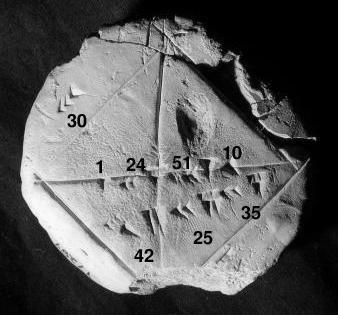
Characteristics and classification
Constants can be classified by algebraic or analytic properties. Common categories include:
- Rational numbers (e.g., 1/2) and integers — exact, finite representations.
- Irrational numbers — not expressible as a ratio of integers (for example π).
- Algebraic numbers — roots of nonzero polynomials with integer coefficients.
- Transcendental numbers — not algebraic; many important constants such as e and π are transcendental.
Other useful distinctions relate to computability (whether digits can be generated algorithmically), normality (statistical distribution of digits), and whether a constant is definable in a closed form or only by a limit, series, or integral.
Common examples and roles
Several constants recur across many areas of mathematics and applications. Examples include π (geometry, trigonometry), e (base of natural logarithms), the golden ratio φ (geometry, aesthetics), and the Euler–Mascheroni constant γ (analysis and number theory). Special constants also arise from sums and products, zeta values, and bifurcation theory.
Mathematical constants often serve as bridges between different fields: π links geometry and analysis, e connects calculus and exponential growth, and specific zeta values appear in number theory and physics. In computational mathematics, constants are used as test cases for high-precision arithmetic and algorithmic development — for instance, digit-extraction algorithms have been designed specifically for π and other constants.
For accessible treatments and historical context see popular expositions and specialized sources such as textbooks or survey articles (research summaries).
History, computation, and open questions
Some constants have been studied for millennia: approximations to π appear in ancient cultures, while the formal study of e and γ developed with calculus and series expansions in the 17th–19th centuries. Over the last century computing advances have produced billions of digits of many constants, yielding both practical algorithms and theoretical insights.
Despite much progress, several basic questions remain open. For example, the normality (whether digits are uniformly distributed) of most famous constants is unknown, and the irrationality of some constants, such as the Euler–Mascheroni constant, is still unproven. Such unresolved problems show that even simple-seeming numbers can conceal deep mathematics.
Notable practical facts: mathematical constants are dimensionless and arise from definitions or limiting processes rather than empirical measurement. They therefore differ in nature from physical constants, which are determined experimentally. Together, mathematical constants both summarize key mathematical relationships and provide targets for numerical and theoretical exploration.
Questions and answers
Q: What is a mathematical constant?
A: A mathematical constant is a number that has a special meaning for calculations.
Q: What is an example of a mathematical constant?
A: An example of a mathematical constant is π, which represents the ratio of a circle's circumference to its diameter.
Q: Is the value of π always the same?
A: Yes, the value of π is always the same for any circle.
Q: Are mathematical constants integral numbers?
A: No, mathematical constants are usually real, non-integral numbers.
Q: Where do mathematical constants come from?
A: Mathematical constants do not come from physical measurements like physical constants do.
Author
AlegsaOnline.com Mathematical constant Leandro Alegsa
URL: https://en.alegsaonline.com/art/126382