
Mary Arthur McElroy — Acting White House Hostess for Chester A. Arthur
Mary Arthur McElroy (1841–1917) was the sister of President Chester A. Arthur and acted as White House hostess during his 1881–1885 administration, performing many social and ceremonial duties usually associated with a first lady.
Mary Arthur McElroy (July 5, 1841 – January 8, 1917) was the younger sister of President Chester A. Arthur and is best known for serving as the White House hostess during his term in office (1881–1885). When Arthur assumed the presidency after the death of President James A. Garfield, his wife Ellen Lewis Herndon Arthur had already died, and Mary stepped into the social role that helped define the administration's public face.
Image gallery
4 Images
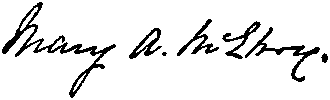


Early life and family context
Born into the Arthur family in the mid-19th century, Mary grew up in the same household that shaped her brother's career in law and public service. She was part of a generation when relatives commonly performed the ceremonial duties of the presidential household if a president was unmarried or widowed. Her choice to act as hostess reflected both family loyalty and contemporary expectations for women in prominent social positions.
Role as White House hostess
As acting hostess, Mary McElroy undertook the customary responsibilities associated with the first lady's office: receiving visitors, organizing receptions, supervising domestic staff and the social calendar, and representing the president at ceremonies. She presided over formal dinners, called on diplomatic spouses, and maintained the White House as a center for official hospitality. Contemporary accounts emphasize her steadiness and decorum during a presidency that began under sudden and difficult circumstances.
Public response and influence
Mary's presence in the White House helped shape public perceptions of the Arthur administration. Newspapers and social observers of the day noted that having a female relative in the hostess role softened some of the political edges of the new presidency and provided continuity with established White House social practices. While not a policymaker, she contributed to the administration's public relations through carefully managed entertainments and courteous attention to visitors.
Later life and legacy
After the end of her brother's term, Mary McElroy returned to private life. She remained part of the circle of women who had taken on important but informal roles in American political life before the first ladyship became a more institutionalized position. Her service is one of several historical examples of sisters, daughters or other relatives who filled the ceremonial duties of the White House when the president's spouse was unable to do so.
Significance and context
- Acting hostess: Mary represents the practice of family members fulfilling White House domestic and social duties in place of a spouse.
- Historical pattern: Her role illustrates how 19th-century presidencies relied on private networks to manage public hospitality.
- Related figures: Her service is often discussed in tandem with the presidency of Chester A. Arthur, when social functions played a part in stabilizing the administration after sudden change.
Mary Arthur McElroy's contribution was primarily social and ceremonial, but it helped set the tone for a White House recovering from national trauma and adjusting to an unplanned leadership transition. Her work exemplifies how women outside formal political office shaped the public life of the presidency in the 19th century.
Questions and answers
Q: Who was Mary McElroy?
A: Mary McElroy was the sister of the 21st President of the United States, Chester A. Arthur.
Q: What was Mary McElroy's role during her brother's presidency?
A: Mary McElroy served as a hostess for her brother's administration, as his wife had died only a year and a half earlier.
Q: When was Mary McElroy born?
A: Mary McElroy was born on July 5, 1841.
Q: When did Mary McElroy die?
A: Mary McElroy died on January 8, 1917.
Q: How long did Mary McElroy serve as a hostess for her brother's administration?
A: Mary McElroy served as a hostess for her brother's administration from 1881 to 1885.
Q: Who was Chester A. Arthur?
A: Chester A. Arthur was the 21st President of the United States.
Q: Why did Mary McElroy assume the role of hostess for her brother's administration?
A: Mary McElroy assumed the role of hostess for her brother's administration because his wife had died only a year and a half earlier.
Author
AlegsaOnline.com Mary Arthur McElroy — Acting White House Hostess for Chester A. Arthur Leandro Alegsa
URL: https://en.alegsaonline.com/art/126333