
Mary Cassatt: American Impressionist Painter and Printmaker
Mary Cassatt (1844–1926) was an American painter and printmaker who lived in France. Renowned for intimate depictions of women and children, she worked in oils, pastel and printmaking and exhibited with the Impressionists.
Overview
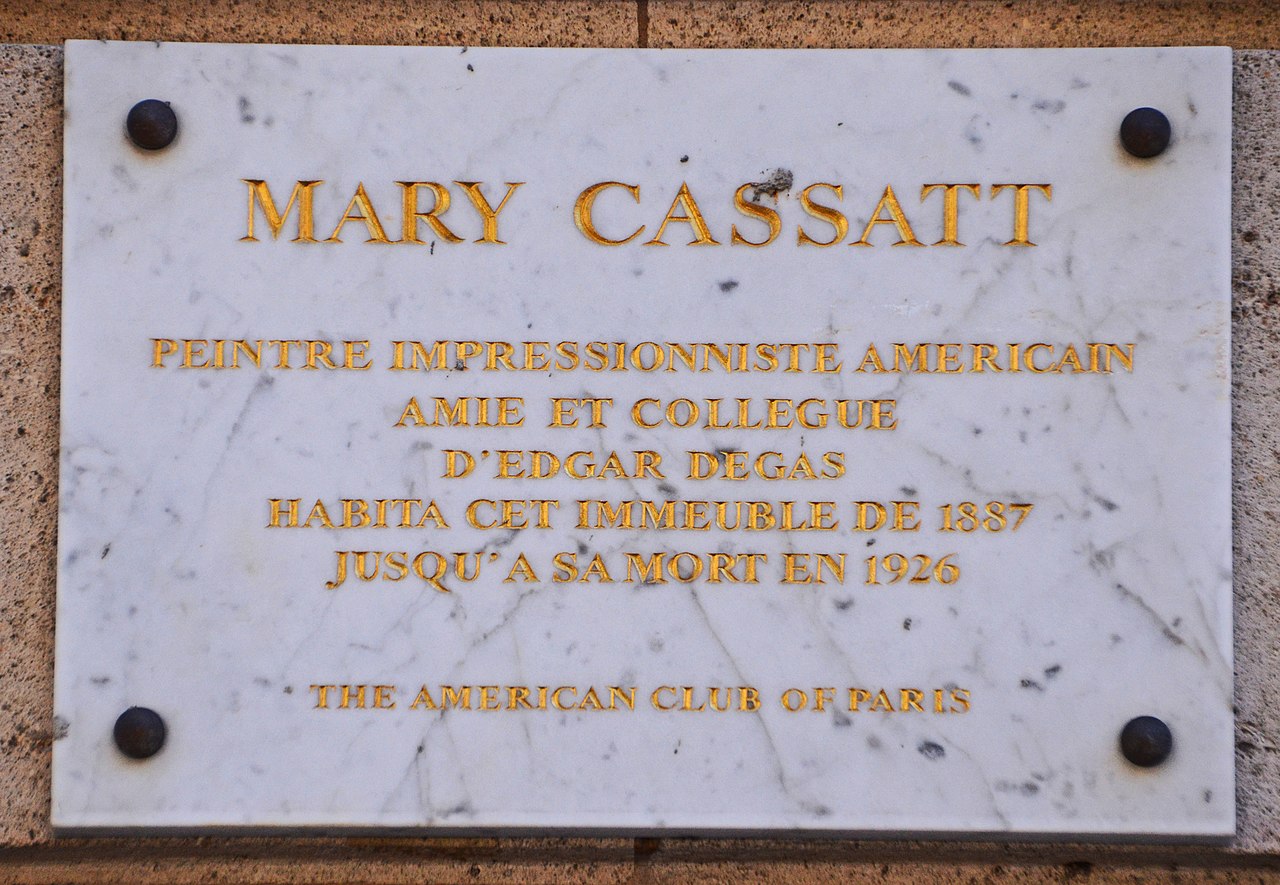
Mary Stevenson Cassatt (May 22, 1844 – June 14, 1926) was an American artist who spent most of her professional life in France and abroad. She became best known for quiet, closely observed scenes of mothers and children and for her contributions to modern printmaking and pastel technique. Born into a prosperous family in Allegheny City, now part of Pittsburgh, she traveled widely in Europe as a youth and trained formally in the United States before establishing herself in Paris.
Image gallery
10 Images


Early life and training
Cassatt was one of seven children and grew up with the means and family encouragement to pursue art. As a young woman she visited major cultural centers — London, Paris and Berlin — and later studied at the Pennsylvania Academy of the Fine Arts in Philadelphia before relocating to Paris in 1866. She returned to the United States briefly during the upheaval of the Franco-Prussian War, but the French capital remained her base for much of her career.
Style, subjects and techniques
Cassatt favored domestic interiors and private moments, producing images that emphasize tenderness, attention and quiet dignity. Her most frequent subjects were women and children engaged in everyday activities — feeding, bathing, reading and resting. She used oil paint and became particularly admired for work in pastel, a medium that allowed vibrant color and textured surfaces. Under the influence of Degas and the wider Impressionist movement, she simplified compositions, explored unusual vantage points and incorporated flattened patterns drawn from Japanese prints and contemporary decorative arts.
Prints, exhibitions and public commissions
From the 1870s Cassatt associated with the group of painters known as the Impressionists and showed in their exhibitions. She also embraced etching and drypoint, experimenting with states and hand-coloring to expand the expressive range of printmaking. In the early 1890s she accepted a major public commission and painted a large allegorical mural for the 1893 Chicago World's Fair, the Columbian Exposition. The work, with a central panel titled "Young Women Plucking the Fruits of Knowledge or Science," was installed in sections that included "Young Girls Pursuing Fame" and "Arts, Music, Dancing," but the mural was lost after the fair closed (Chicago World's Fair).
Legacy and influence
Cassatt acted as a bridge between French and American art worlds. She helped acquaint American collectors and museums with Impressionist works and supported younger artists. Her friendship and working relationship with Edgar Degas influenced both artists: he encouraged her use of pastel and taught her print techniques, and she returned his interest with a distinctive sensibility focused on women’s experience. Later in life she advised other American painters, including younger figures such as Lucy A. Bacon, and remained a respected voice in transatlantic art circles.
Notable works and facts
- The Child's Bath — a celebrated study of maternal care and patterned composition.
- Little Girl in a Blue Armchair — an informal, psychologically acute portrait of childhood.
- The Boating Party — a larger outdoor scene showing social leisure with careful attention to form and color.
- She never married and continued working and exhibiting into the late 19th and early 20th centuries; she died at the Château de Beaufresne near Paris and was buried in the family vault at Le Mesnil-Théribus, France.
Cassatt’s art remains valued for its humane focus, technical inventiveness in pastel and print, and its role in shaping the international reception of Impressionism. For further contextual reading and resources, see links to biographical and institutional materials: biography, works, Paris years, birthplace, Pittsburgh history, European travel, London visits, Paris resources, Berlin references, US connections, Franco-Prussian War, pastel technique, World's Fair mural.
The material above presents a concise portrait of Mary Cassatt’s career, emphasizing her pictorial focus, technical adaptations, and cultural importance as an American expatriate artist who left a lasting imprint on modern art.
Questions and answers
Q: Who was Mary Stevenson Cassatt?
A: Mary Stevenson Cassatt was an American artist who lived in France for many years and often painted mothers and children.
Q: Where was she born?
A: She was born in Allegheny City, Pennsylvania, which is now part of Pittsburgh.
Q: How many siblings did she have?
A: She had six siblings; she was one out of seven kids.
Q: What kind of art did she use to create her works?
A: She used pastels to make important works, and Degas taught her etching as well.
Q: What did she paint for the 1893 Chicago World's Fair (Columbian Exposition)?
A: For the 1893 Chicago World's Fair (Columbian Exposition), she painted a large mural with three parts - the central theme being Young Women Plucking the Fruits of Knowledge or Science, with the left panel being Young Girls Pursuing Fame and the right panel Arts, Music, Dancing.
Q: What happened to this mural after the fair ended?
A: The mural was lost after the fair ended.
Q: When did Mary Stevenson Cassatt die?
A: Mary Stevenson Cassatt died on June 14th 1926 at Château de Beaufresne near Paris, and was buried in the family vault at Le Mesnil-Théribus, France.
Author
AlegsaOnline.com Mary Cassatt: American Impressionist Painter and Printmaker Leandro Alegsa
URL: https://en.alegsaonline.com/art/126306