
Marshall McLuhan: Pioneer of Media Theory and the 'Global Village'
Overview of Marshall McLuhan (1911–1980), his major ideas—'the medium is the message', 'global village', hot/cool media—key works, influence on media studies, and continuing relevance.
Marshall McLuhan (1911–1980) was a Canadian scholar who began as a professor of English and became one of the most influential and debated thinkers about media in the 20th century. He shifted attention from content to the nature of the technologies that carry content, arguing that forms of communication themselves reshape human perception, social organization, and cultural life. His writing combined literary scholarship, cultural history, and striking aphorisms that entered popular discourse.
Image gallery
10 Images





Key ideas and concepts
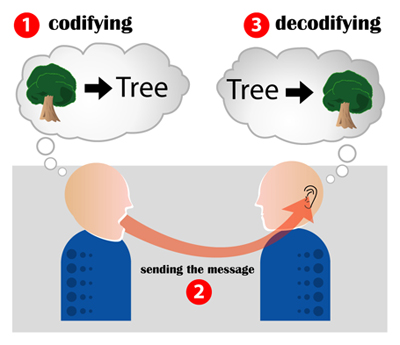
McLuhan's work is best known for several concise and provocative concepts. He insisted that "the medium is the message," meaning the characteristics of a communication medium influence society more profoundly than the particular information it transmits. He described media as "extensions of man," tools that extend human senses and capacities. Another enduring idea is the "global village," the notion that electronic media compress time and space and reconnect people into an intensively shared public sphere.
- Medium is the message — emphasis on form over content.
- Extensions of man — technologies as sensory or bodily extensions.
- Hot and cool media — a distinction about participation and sensory engagement.
- Global village — electronic media's role in creating interconnected communities.
Works and intellectual development
McLuhan produced a series of books and essays that brought his ideas to a wide audience. Two of his most cited works are The Gutenberg Galaxy and Understanding Media: The Extensions of Man, which examine the cultural consequences of print and electronic technologies, respectively. His mode of argument often used historical examples, literary references, and aphoristic formulations rather than systematic empirical studies. That style helped make his work accessible beyond academia and influenced journalists, advertisers, and television producers.
Applications, influence, and criticism
During the 1960s McLuhan became a public intellectual and a resource for industries that needed to think about new mass communications. His frameworks were applied in advertising, broadcasting, and early forms of media planning. Critics have argued that his theories lean toward technological determinism, sometimes overgeneralize, and lack empirical testing. Others defended his approach as a way to see patterns and strategies rather than offer predictive social science.
Legacy and contemporary relevance
After an ebb of academic attention in the 1970s, McLuhan's reputation revived as scholars and practitioners revisited his observations in light of digital networks and the internet. His phrases and concepts remain widely cited in discussions of social media, networked culture, and the changing relationship between technology and everyday life. For further reading and archival materials see complementary resources linked here: further commentary and collections.
While debated, McLuhan's central insight—that the form and reach of communication technologies shape human experience—remains a touchstone for media studies and for anyone trying to understand how changing technologies reconfigure public life.
Questions and answers
Q: Who was Herbert Marshall McLuhan?
A: Herbert Marshall McLuhan was a Canadian Professor of English literature who turned his attention to media.
Q: What was McLuhan interested in?
A: McLuhan was interested in the ways different media affected society.
Q: What was McLuhan's best-known work?
A: McLuhan's best-known work was Understanding Media: The Extensions of Man.
Q: What are some expressions that McLuhan coined?
A: McLuhan coined the expressions the medium is the message and the global village.
Q: Was McLuhan influential in media discourse in the late 1960s?
A: Yes, McLuhan was a fixture in media discourse in the late 1960s.
Q: Did McLuhan's influence continue to grow in the early 1970s?
A: No, McLuhan's influence began to wane in the early 1970s.
Q: Was there renewed interest in McLuhan's work and perspective with the arrival of the internet?
A: Yes, with the arrival of the internet, there was renewed interest in McLuhan's work and perspective.
Author
AlegsaOnline.com Marshall McLuhan: Pioneer of Media Theory and the 'Global Village' Leandro Alegsa
URL: https://en.alegsaonline.com/art/126194