
Marcus Aemilius Lepidus (c. 88–12 BC) — Roman statesman and triumvir
Roman politician and ally of Julius Caesar, member of the Second Triumvirate with Octavian and Mark Antony; later marginalized but retained the pontificate; his career was entwined with the Republic's final transformation.
Overview
Marcus Aemilius Lepidus (born 88/89 BC, died 12/13 BC) was a Roman aristocrat and politician whose career intersected with the final decades of the Roman Republic. He was a close associate of Julius Caesar and served as one of Caesar's leading supporters in Rome during the civil war that followed. After Caesar's assassination Lepidus joined Octavian and Mark Antony to form the Second Triumvirate, a formal political alliance intended to defeat the assassins and reorganize control of the state.
Image gallery
8 Images



Career and responsibilities
During the civil conflict between Caesar and the senatorial faction led by Pompey, Lepidus operated as one of Caesar's deputies in the capital, handling civic administration while military campaigns took place abroad. Caesar's decisive victory in the Battle of Pharsalus and the wider campaigns in Greece strengthened Lepidus's standing in Rome. In the turbulent years that followed the assassination of Caesar, Lepidus acquired the religious title of Pontifex Maximus, the chief priesthood of Rome, a position that would outlast his political power.
The Second Triumvirate and consolidation of power
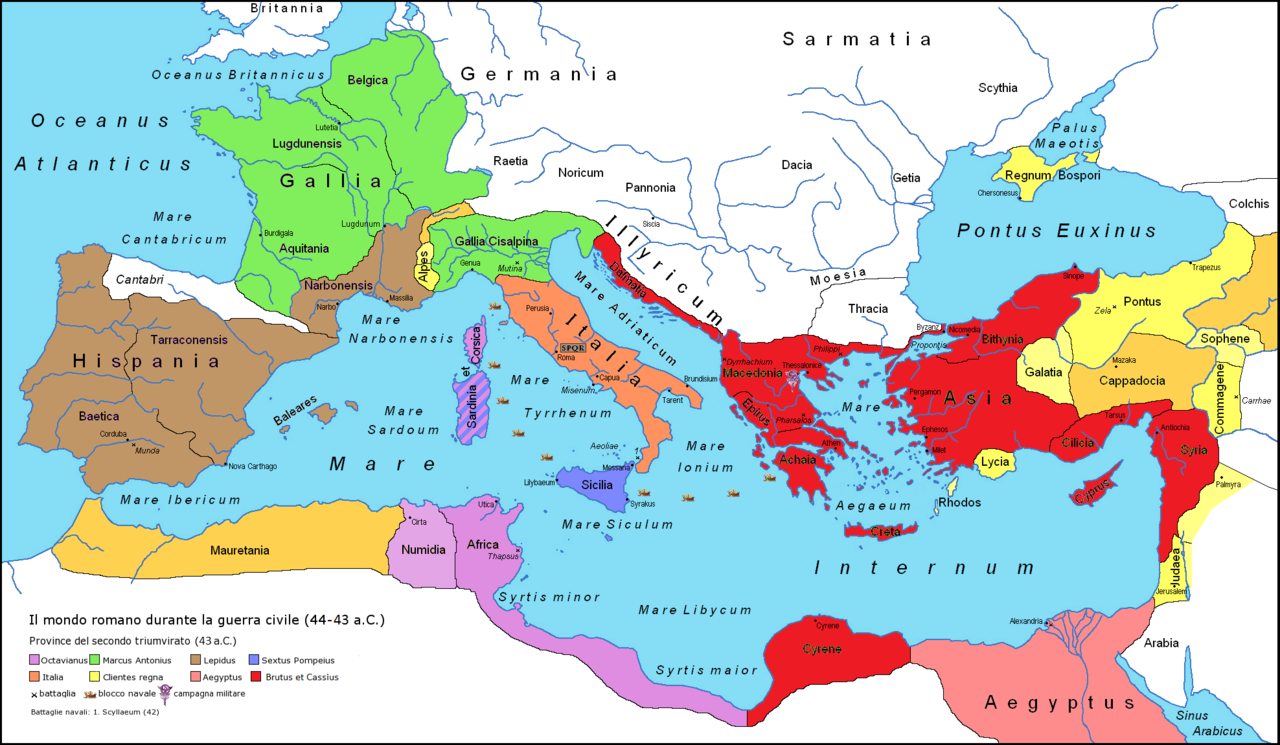
In 43 BC Lepidus allied with Octavian and Mark Antony to form the Second Triumvirate, a legally sanctioned three-man commission that effectively sidelined the traditional magistracies, including the Consuls, and severely reduced the authority of the Senate. Historians view this arrangement as a decisive step in the eclipse of the Roman Republic, since it concentrated military and political power in the hands of a small ruling group and authorized extraordinary measures against opponents.
Later commands, decline, and retirement
After the triumvirs defeated the republican conspirators at the Battle of Philippi, Lepidus assumed control of significant provinces and responsibilities, including authority in Spain and portions of North Africa. His reputation suffered when a revolt in Sicily was attributed to his negligence or poor choice of subordinates. Political rivalry — especially with the politically ambitious Octavian — culminated in Lepidus being stripped of most of his powers; he was allowed to retain only the title of Pontifex Maximus. He spent his final years removed from public office and died peacefully at Circeii.
Role and historical assessment
Lepidus is often portrayed in ancient and modern accounts as the least dominant member of the triumvirate: older than his partners, less successful in securing independent military prestige, and vulnerable to intrigue. Yet his survival as pontifex symbolized the continuing importance of Rome's religious institutions even as political authority shifted. His life illustrates how military victories, political alliances, and judicial powers reshaped governance in Rome and paved the way for imperial rule.
Key points and legacy
- Close ally and deputy to Julius Caesar; later Pontifex Maximus.
- Member of the Second Triumvirate with Octavian and Mark Antony, which concentrated executive power.
- Governed provinces after Philippi, but lost political authority following the Sicily crisis.
- His removal from office marks a step in Octavian's consolidation of power and the decline of republican institutions.
Questions and answers
Q: Who was Marcus Aemilius Lepidus?
A: Marcus Aemilius Lepidus was a Roman politician who was one of the closest men to Julius Caesar.
Q: What was Lepidus' role when Caesar defeated Pompey in the battle of Pharsalus in Greece?
A: Lepidus was Caesar's deputy in Rome when Caesar was away from Rome defeating Pompey in the battle of Pharsalus in Greece.
Q: What position did Lepidus hold after Caesar's death?
A: After Caesar's death, Lepidus served as Pontifex Maximus (High Priest).
Q: Who did Lepidus team up with to oppose the conspirators?
A: Lepidus teamed up with Octavian and Mark Antony to form the Second Triumvirate to oppose the conspirators.
Q: What did the Second Triumvirate aim to do?
A: The Triumvirate was set up to sideline the Consuls and Senate, which means it was the effective end of the Roman Republic.
Q: What did Lepidus do after the Battle of Philippi?
A: After the Battle of Philippi, Lepidus governed Spain and part of North Africa.
Q: Why was Lepidus stripped of his offices by Octavian?
A: Lepidus was blamed for a revolt in Sicily, which gave Octavian the excuse to strip him of his offices, except for Pontifex Maximus. He died peacefully in Circeii in Italy about end 12 to early 13 BC.
Author
AlegsaOnline.com Marcus Aemilius Lepidus (c. 88–12 BC) — Roman statesman and triumvir Leandro Alegsa
URL: https://en.alegsaonline.com/art/125869