
María Capovilla — Ecuadorian supercentenarian (1889–2006)
María Esther de Capovilla (1889–2006) was an Ecuadorian supercentenarian who became the world's oldest living person and held multiple longevity records validated by Guinness and other researchers.
María Esther de Capovilla (14 September 1889 – 27 August 2006) was an Ecuadorian woman who attained international attention in her later years as a validated supercentenarian. She became widely recognized as the world's oldest living person during the mid-2000s and held several longevity distinctions that were confirmed by independent researchers and the Guinness World Records. Reports state that she died of pneumonia at age 116; her longevity and the process of official validation drew public interest in demographic research and the study of extreme human lifespan.
Image gallery
1 Image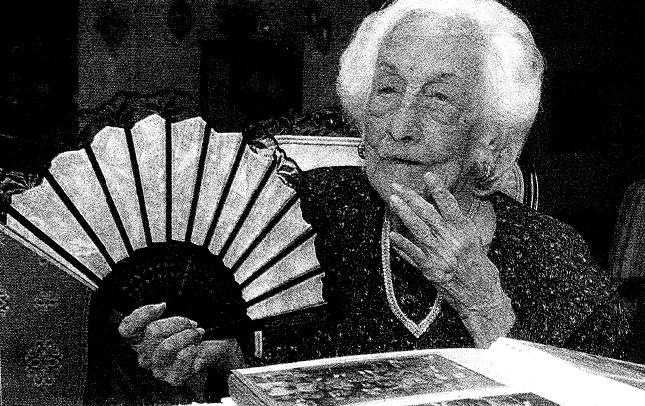
Biography and longevity records
Capovilla was born in 1889 and lived across three centuries, witnessing vast social and technological changes during her life. She was declared the world's oldest living person on 29 May 2004 and retained that status until her death on 27 August 2006. Official recognition by Guinness World Records followed careful documentation and validation of birth and life records; the organization named her the World's Oldest Person on 9 December 2005 after corroborating available evidence.
Notable distinctions
- One of the last known people born in the 1880s and, at the time of her death, often described as the final surviving person from that decade.
- Holds the record as the oldest person ever born in Ecuador and the oldest person to have died in Ecuador, according to validated longevity lists.
- Recognized as the oldest validated person in South America and Latin America until that regional record was later surpassed in 2021 by Francisca Celsa dos Santos.
- Her case illustrates the distinction between provisional claims of extreme age and ages that have been rigorously validated by gerontological researchers and record institutions.
Researchers who study extreme longevity differentiate between living claims and validated records. Validation typically requires contemporary birth documentation, identity records across the life course, and corroborating civil or church records. Capovilla's recognition involved such scrutiny, which is why official acknowledgement by organizations like Guinness sometimes follows years after a person first attracts media attention.
Life and public interest
Media interest in Capovilla rose as she entered her 110s and beyond, a phenomenon common for supercentenarians because they represent extreme outliers in demographic statistics. Coverage often focused on her long life span, the limited number of verified supercentenarians worldwide, and the historical span of her lifetime. While some profiles attempted to summarize her daily habits, such accounts vary and are often anecdotal; researchers caution against assuming that any single lifestyle explains exceptional longevity.
Capovilla's longevity contributed to broader public conversations about aging, medical care for the very old, and the importance of careful record-keeping for historical demographics. After her death, the title of world's oldest living person passed to Elizabeth Bolden and other successors, reflecting the continually updated nature of validated supercentenarian lists. For general information about the concepts and terminology used in longevity research, see references on supercentenarian studies and historical demographic methods. For context about her nationality and region, consult sources on Ecuador and the historical period of the 1880s. Reports on her cause of death are available in contemporaneous news accounts noted under pneumonia.
Further reading and external databases that track validated longevity cases can provide more detail and updated records: see linked resources for researchers and curated lists of supercentenarians for comparison and verification.
Questions and answers
Q: Who was María Esther de Capovilla?
A: María Esther de Capovilla was an Ecuadorian supercentenarian who held the title of world's oldest living person from May 29, 2004 until her death on August 27, 2006.
Q: How old was she when she became the world's oldest living person?
A: She was 114 years and 258 days old when she became the world's oldest living person.
Q: When did Elizabeth Bolden become the world's oldest person?
A: Elizabeth Bolden became the world's oldest person following Capovilla's death in August 2006.
Q: What is María Esther de Capovilla still all-time record-holder of?
A: María Esther de Capovilla is still all-time record-holder of being both the oldest person born in Ecuador and also the oldest person to die in Ecuador.
Q: When did Francisca Celsa dos Santos surpass her age?
A: Francisca Celsa dos Santos surpassed her age in October 2021.
Q: On what date did María Esther de Capovilla become the World’s Oldest Person according to Guinness World Records?
A: María Esther de Capovilla became the World’s Oldest Person according to Guinness World Records on December 9, 2005.
Author
AlegsaOnline.com María Capovilla — Ecuadorian supercentenarian (1889–2006) Leandro Alegsa
URL: https://en.alegsaonline.com/art/125805