
Bocage: hedgerow landscapes, their form, ecology, and historical role
Bocage describes a patchwork of fields enclosed by hedges, trees and earth banks—common in parts of Normandy and western Europe—known for its agricultural, ecological and wartime significance.
Overview
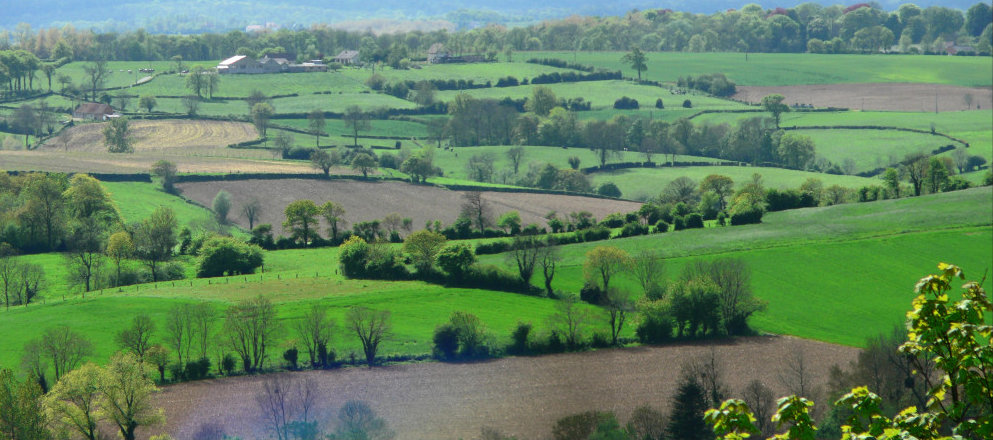
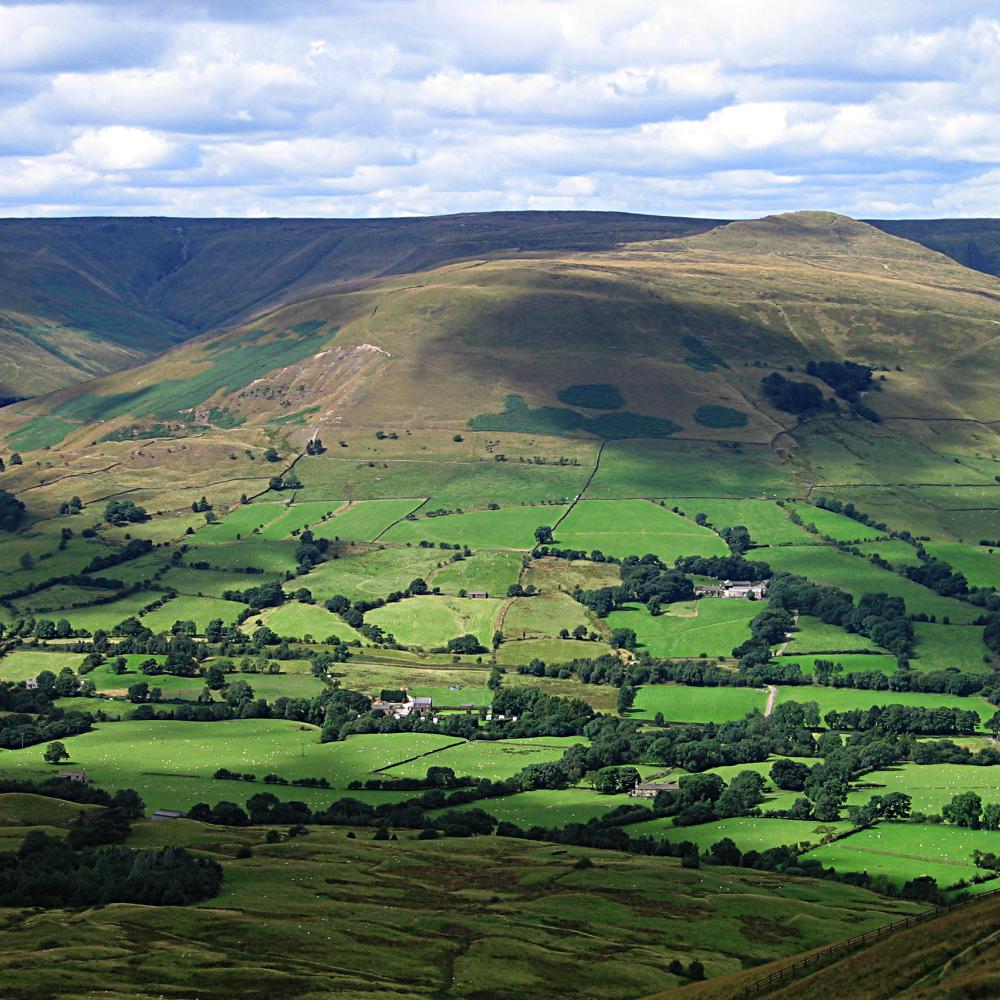
Bocage (from a Norman word) denotes a type of rural landscape marked by small fields, pastures and lanes enclosed by hedges, belts of trees and raised earth banks. The term is used in both French and English to describe this mosaic-like countryside. Bocage landscapes are especially associated with parts of western Europe and figure prominently in regional place names; several towns and districts contain the element in their names.
Image gallery
8 Images



Physical characteristics
Bocage is characterized by a network of narrow parcels of land divided by living fences: hedgerows often grown on earthen banks, with trees planted along them. Between these sheltered strips of vegetation lie sunken lanes and small fields. Typical features include:
- Raised hedgerow banks (often called "borders") that separate fields.
- A high density of trees and shrub layers providing continuous cover.
- Winding, enclosed lanes that may be set lower than adjacent fields.
- Small-scale, mixed farming patterns adapted to the sheltered plots.
History and regional use
The bocage developed over centuries as farmers enclosed and managed land for grazing and crop diversity. In regions such as Lower Normandy the pattern became entrenched in local agriculture and settlement, shaping the appearance of countryside around centers like Saint-Lô and Vire. The layout supported livestock rearing, provided firewood and wind protection, and helped control soil erosion.
Wartime significance
The dense hedgerow terrain acquired global attention during World War II when forces advancing from invasion beaches encountered it. The enclosed fields and high banks offered strong concealment and defensive positions that defenders could use to mask movements and ambush attackers. During the fighting, Allied troops faced well-prepared positions held by German forces, with hedgerows capable of hiding infantry and of concealing armored vehicles such as tanks and pieces of artillery. Attackers adapted by developing techniques and equipment to breach or bypass the hedgerows, and the bocage influenced tactics, logistics and the pace of operations.
Ecology and conservation
Beyond agriculture and military history, bocage systems are important for biodiversity. Hedgerows act as corridors for wildlife, supporting birds, small mammals, pollinators and a range of plants. They also contribute to landscape connectivity and soil and water protection. In recent decades, farmland intensification, hedgerow removal and changes in land use have threatened bocage habitats, prompting conservation measures to restore and maintain hedgerows for ecological and cultural reasons.
Distinctions and legacy
Bocage differs from open-field or marshland systems by its enclosed, tree-lined parcels and earthen boundaries. Its legacy is visible in regional identities, historic place names and in how modern planners and conservationists value hedgerow networks for both heritage and ecosystem services. Whether described in rural planning, natural history or military studies, the bocage remains a vivid example of how human land use and natural features combine to shape a distinctive landscape.
For further reading or regional case studies, consult local archives and landscape research resources. See also links to language and regional pages referenced above for terminology and place-name contexts: Norman, French, English, Lower Normandy, Saint-Lô, Vire, World War II, Allied, German, tanks, artillery.
Questions and answers
Q: What does the word "bocage" mean?
A: Bocage is a Norman word which may refer to a small forest or a decoration that includes leaves, but most often it refers to pastures bordered by thick forest or hedges.
Q: Where is the term Bocage Normandy used?
A: The term Bocage Normandy is used in parts of Lower Normandy, specifically around Saint-Lô and Vire.
Q: How were the German troops able to use the bocage during World War II?
A: The hedgerows of the bocage were thick enough for German troops to hide in and not be seen until it was too late. They could also hide tanks and artillery pieces within them.
Q: How long did it take for Allied forces to break out of the bocage into open country?
A: It took over eight weeks of fighting for Allied forces to break out of the bocage into open country.
Q: What type of vegetation makes up a bocage?
A: A bocage consists of trees and hedges planted in earth mounds with sunken lanes between them.
Q: Is there any other way that "bocage" is used besides referring to pastures and fields?
A: Yes, "bocage" may also refer to a small forest or a decoration that includes leaves.
Tags
Related articles
Author
AlegsaOnline.com Bocage: hedgerow landscapes, their form, ecology, and historical role Leandro Alegsa
URL: https://en.alegsaonline.com/art/12578