
Mamie Eisenhower: First Lady, Style Icon, and White House Steward
Mamie Eisenhower (1896–1979) was First Lady of the United States (1953–1961), famed for her social grace, role in public life, and influence on mid‑20th century American ceremonial culture.
Mary Geneva Doud "Mamie" Eisenhower served as First Lady of the United States from 1953 to 1961 during the presidency of her husband, Dwight D. Eisenhower. She became a familiar public figure known for her warm hospitality, careful management of the White House household, and a conservative, approachable public image that resonated with many Americans during the 1950s. Her life combined domestic stewardship with moments of public service and ceremonial prominence.
Image gallery
10 Images
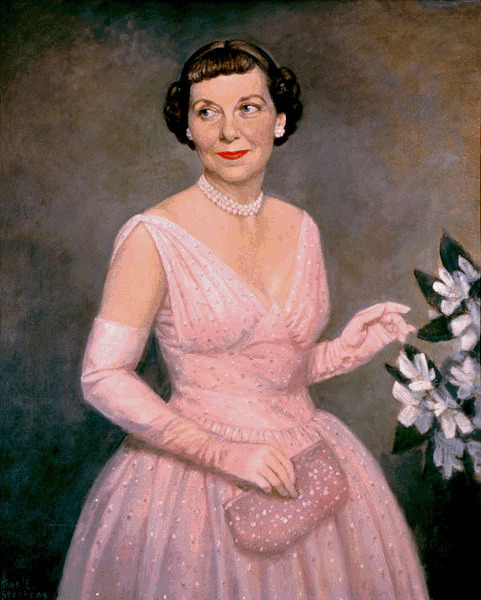


Early life and personal background
Born in 1896 in Iowa, Mamie grew up in a well‑connected Midwestern family and later moved in social circles that prepared her for the public roles she would assume. She married Dwight D. Eisenhower after his rise as a military officer. Her private life—marked by devotion to family and attention to social detail—helped shape her later role in Washington. For more on the institutional role she occupied, see the First Lady entry.
As First Lady: style and responsibilities
In the White House, Mamie Eisenhower oversaw official entertaining, state dinners, and day‑to‑day hospitality. She was noted for a signature sense of style, often wearing pastel suits and pearls, and for promoting a comfortable, family‑oriented image of the presidency. Her approach balanced private tastes with public expectations at a time of heightened media attention.
Her tenure included attention to preservation and decoration of the presidential residence, and she hosted countless social functions that were widely covered by the press. She supported veteran and wartime families informally and was viewed as a reassuring presence during the Cold War era. For context about her husband and the administration she represented, see Dwight D. Eisenhower.
Notable aspects
- Emphasis on hospitality and domestic management of the White House
- A highly photographed personal style that influenced 1950s fashion
- A private temperament that nevertheless adapted to public ceremonial duties
After leaving the White House, Mamie continued to be an emblematic figure of mid‑century American life. Her legacy is often discussed in relation to the evolving role of presidential spouses and the cultural expectations of women in public life. Additional biographical and archival resources are available for readers who wish to explore further, including materials associated with the Eisenhower family and presidency.
Questions and answers
Q: Who was Mamie Eisenhower?
A: Mary Geneva Doud "Mamie" Eisenhower was the First Lady of the United States from 1953 to 1961 as the wife of the 34th President of the United States Dwight D. Eisenhower.
Q: What was Mamie Eisenhower's full name?
A: Mamie Eisenhower's full name was Mary Geneva Doud "Mamie" Eisenhower.
Q: When was Mamie Eisenhower born?
A: Mamie Eisenhower was born on November 14, 1896.
Q: Who was Mamie Eisenhower married to?
A: Mamie Eisenhower was married to the 34th President of the United States, Dwight D. Eisenhower.
Q: When was Mamie Eisenhower the First Lady of the United States?
A: Mamie Eisenhower was the First Lady of the United States from 1953 to 1961.
Q: When did Mamie Eisenhower pass away?
A: Mamie Eisenhower passed away on November 1, 1979.
Q: How many years was Mamie Eisenhower the First Lady of the United States?
A: Mamie Eisenhower was the First Lady of the United States for 8 years, from 1953 to 1961.
Related articles
Author
AlegsaOnline.com Mamie Eisenhower: First Lady, Style Icon, and White House Steward Leandro Alegsa
URL: https://en.alegsaonline.com/art/125745