
Toronto subway and RT stations: overview, lines, and notable stations
Overview and organization of Toronto’s subway and RT stations, covering lines, station types, history, major interchanges, expansions and recent changes in service.
The Toronto subway and RT network serves as the core rapid transit system for the City of Toronto and nearby suburbs. Operated by the Toronto Transit Commission, the system began as Canada’s first subway and has grown into one of the continent’s most extensive urban rapid transit networks. Stations range from simple local stops to large, multi-level interchanges that connect subway lines with surface transit, regional rail and pedestrian networks.
Image gallery
7 Images



Network and lines
The heavy-rail network is organized into several numbered lines, each with distinct corridors and service patterns. Key lines include:
- Line 1 Yonge–University — the original and busiest corridor, running in a U-shaped route through the city and first built beneath Yonge Street.
- Line 2 Bloor–Danforth — an east–west trunk that connects many neighbourhoods across midtown Toronto.
- Line 4 Sheppard — a shorter east–west line in the northern part of the city.
- Line 3 Scarborough RT — a light rapid transit line originally serving eastern Scarborough; it was a unique technology within the system and has seen major service changes in recent years.
Beyond these, the network has been expanding with light-rail projects designed to extend rapid transit reach and add nearly 30 kilometres of new track in the 2020s. For background on the system’s length and technical data, see the network summary at system information.
Stations: types, design and accessibility
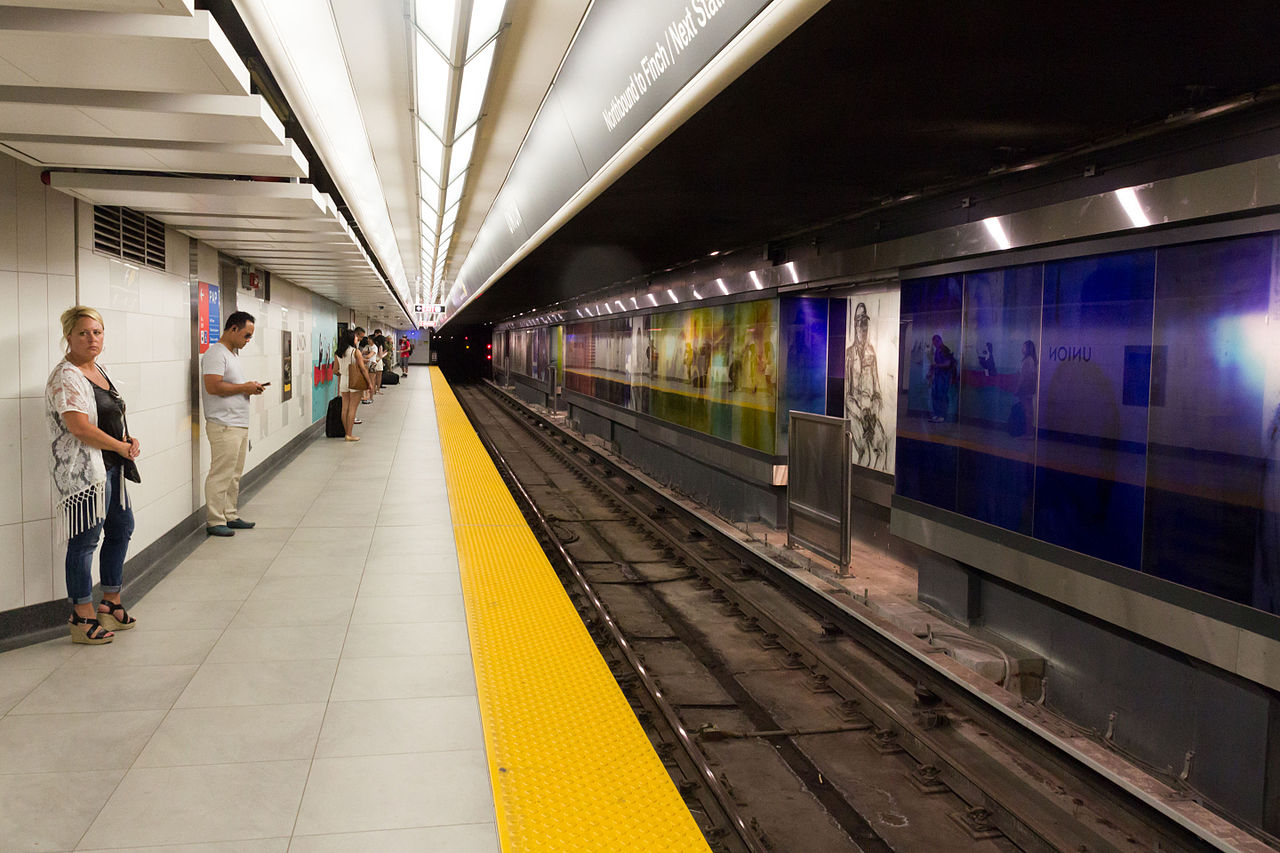
Stations vary in design according to era and location. Older stations on the original routes tend to feature tilework and compact mezzanines, while newer stations incorporate larger concourses, heated platforms, public art and easier step-free access. Accessibility upgrades have been a long-term priority: elevators, tactile wayfinding, and improved signage are being added incrementally to meet modern standards.
History and development
Toronto’s subway began service in the mid-20th century and expanded through successive phases of postwar growth and late-20th-century investment. Major interchange stations—such as Bloor–Yonge, St. George and Union—developed into transit hubs linking subway platforms with commuter rail, bus terminals and pedestrian pathways. The city’s rapid-transit plan in the 21st century emphasizes light-rail corridors and infill stations to serve denser, transit-supportive corridors.
Uses, importance and notable stations
The system carries millions of passenger trips annually and supports economic activity, commuting and tourism. Notable stations include Union Station, Toronto’s principal intermodal hub and gateway for regional rail; Bloor–Yonge, the system’s busiest interchange; and Kennedy, a major transfer point with suburban bus services. Service changes, station refurbishments and network extensions are often staged to minimize disruption while improving capacity.
Current projects, changes and further reading
Several expansion and modernization projects have been undertaken or planned to increase capacity, improve accessibility and extend rapid transit to growing neighbourhoods. New light-rail lines and station additions are part of a broader regional strategy to expand rapid transit coverage. For project overviews and updates about light rail initiatives, see resources on light rail projects and regional rankings at North American transit comparisons. Additional technical and station-level information can be found in system planning documents and publicly available station lists at network information and the operator’s pages at the TTC.
Questions and answers
Q: What is the Toronto Transit Commission's subway and RT system?
A: The Toronto Transit Commission's subway and RT system is a rapid transit system in Toronto, Canada.
Q: When was the first subway line in Toronto built and how many stations did it have?
A: The first subway line in Toronto was built under Yonge Street and it opened in 1954 with 12 stations.
Q: How did the Toronto subway and RT system grow to become Canada's largest subway system?
A: The Toronto subway and RT system grew to become Canada's largest subway system because it has the most stations.
Q: How many lines does the Toronto subway and RT system have?
A: The Toronto subway and RT system has four lines.
Q: How many stations are there in the Toronto subway and RT system?
A: There are currently 75 stations open in the Toronto subway and RT system, with 39 more being built.
Q: What are the Line 5 Eglinton and the Line 6 Finch West in Toronto?
A: The Line 5 Eglinton and Line 6 Finch West are two light rail lines being built in Toronto.
Q: When will the Line 5 Eglinton and Line 6 Finch West open in Toronto?
A: The Line 5 Eglinton and Line 6 Finch West in Toronto will be opening in 2021 and 2023, respectively.
Related articles
Author
AlegsaOnline.com Toronto subway and RT stations: overview, lines, and notable stations Leandro Alegsa
URL: https://en.alegsaonline.com/art/125191