
Rivers of Ghana — major waterways, basins and uses
Overview and organized list of Ghana's rivers, their basins, uses and environmental issues, with major tributaries of the Volta and principal coastal rivers draining to the Gulf of Guinea.
Ghana's river network shapes the country's landscapes and economy. Most rivers flow southward from the interior highlands to the Gulf of Guinea, while much of the inland drainage converges into the Volta river system and Lake Volta, one of the world's largest artificial reservoirs. For a general index of rivers in Ghana see further resources; this article summarizes the main basins, notable rivers and their human and ecological roles within Ghana.
Image gallery
2 Images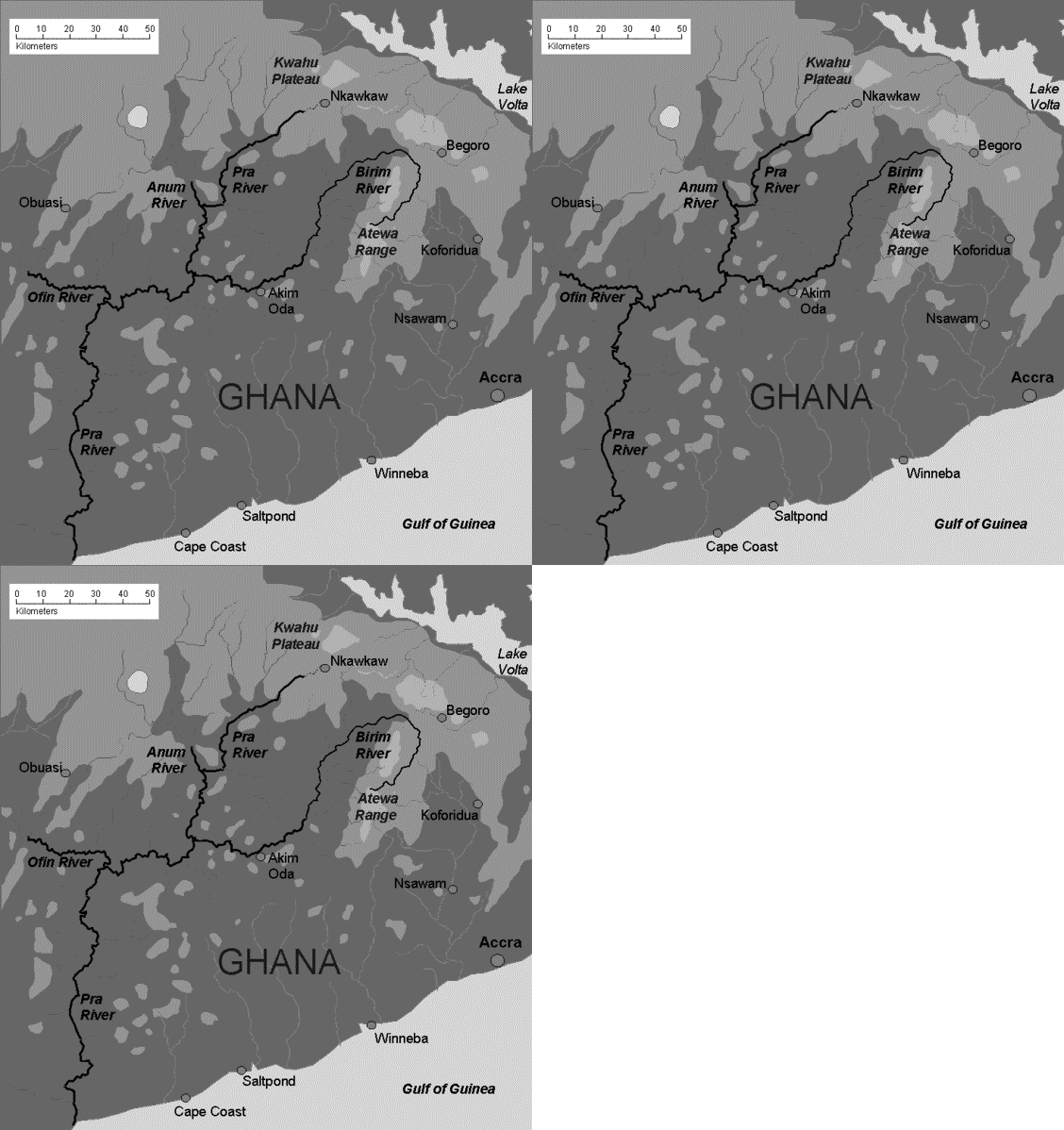

Major basins and representative rivers
The country's waterways can be grouped by basin. The Volta basin dominates eastern and central Ghana. Western and central coastal basins contain shorter rivers that reach the Atlantic. Many smaller streams and seasonal rivers drain the forest and savanna belts.
- Volta basin: Volta River (including Lake Volta), White Volta, Black Volta, Red Volta, Oti River, Afram, Pru, Daka.
- Western and central coastal rivers: Pra, Ankobra, Tano, Bia, Bonsa, Offin.
- Eastern and Greater Accra area: Densu, Ayensu, Oda (and other short coastal streams).
These names are representative rather than exhaustive; many smaller tributaries and seasonal streams exist across ecological zones from the savanna north to the forested south.
Uses, ecology and infrastructure
Rivers supply water for domestic use, agriculture and industry, and support fisheries and wetlands that sustain biodiversity. The Akosombo Dam on the Volta, completed in the 1960s, created Lake Volta and is central to Ghana's electricity supply. Navigation is generally limited to smaller craft on rivers and on Lake Volta; irrigation, sand mining and local transport are common uses.
Riparian habitats host diverse fish and bird species, while floodplains and estuaries provide important ecological services. Management of these systems balances energy production, water supply and conservation needs.
History, challenges and notable facts
Rivers have informed settlement patterns and trade routes for centuries. Modern interventions such as dams and mining have altered flows and habitats. Environmental pressures include siltation, pollution from urban runoff and small-scale mining, and seasonal variability that affects water availability. The Volta system links international catchment areas—some tributaries have headwaters beyond Ghana's borders—so transboundary water cooperation is an ongoing concern.
For readers seeking full alphabetical lists or detailed maps and hydrological data, consult specialized references and national water authorities. This article gives an organized introduction to the principal rivers, basins and issues shaping Ghana's freshwater landscape.
Questions and answers
Q: What is the focus of the text?
A: The focus of the text is to provide a list of rivers in Ghana.
Q: Is the list exhaustive?
A: It cannot be determined from the given text whether the list is exhaustive or not.
Q: What is the order of the list?
A: The order of the list is alphabetical.
Q: Are the rivers listed according to their size or location?
A: The rivers are not listed according to their size or location, but only alphabetically.
Q: Are there any subheadings in the list?
A: Yes, there are subheadings for letters of the alphabet.
Q: How many rivers are listed?
A: The text does not specify how many rivers are listed in the article.
Q: Does the article discuss the importance or history of the rivers?
A: No, the article only provides a list of rivers in Ghana and does not elaborate on their importance or history.
Related articles
Author
AlegsaOnline.com Rivers of Ghana — major waterways, basins and uses Leandro Alegsa
URL: https://en.alegsaonline.com/art/125007
Sources
- countrystudies.us : Rivers and Lakes of Ghana