
List of rivers of Connecticut
Overview and organized listing of Connecticut's rivers by drainage basin, with notes on geography, history, uses, and conservation.
Overview
This article provides a concise guide to the principal rivers of Connecticut, a U.S. state whose waterways are organized by drainage basin. Nearly all rivers in the state empty into Long Island Sound and from there their waters reach the Atlantic Ocean. Rivers range from the large, multi‑state Connecticut River to short coastal streams and tidal estuaries.
Image gallery
7 Images




Major drainage basins and examples
Connecticut’s rivers are commonly grouped by the large basins that collect runoff and tributaries. The most prominent basins and some representative rivers are listed below.
- Connecticut River basin: Connecticut River (principal channel), with important tributaries such as the Farmington River.
- Housatonic basin: Housatonic River and tributaries including the Naugatuck River in western Connecticut.
- Thames basin: Thames River in eastern Connecticut and its feeder rivers such as the Shetucket, Yantic, Willimantic and Natchaug.
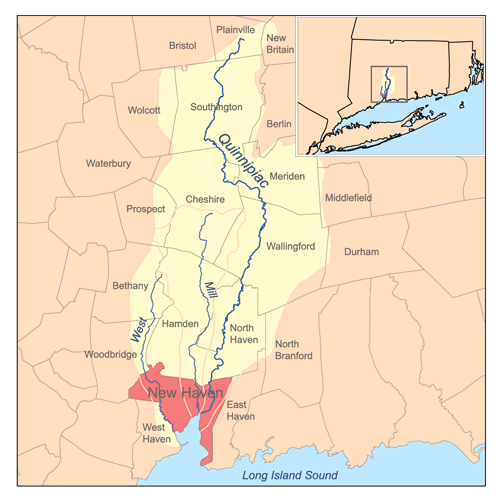
- Coastal rivers: Numerous smaller rivers and tidal streams that flow directly into Long Island Sound, including the Quinnipiac, Mystic and other local waterways.
Geographic characteristics
Many Connecticut rivers begin in upland areas of New England, descend through forested valleys and pass through urban centers before reaching tidal zones. The character of a river can change quickly from freshwater headwaters to brackish estuary where it meets the Sound. Dams, reservoirs and tidal restrictions have shaped flow regimes, navigation and fish passage.
History, uses and importance
Rivers played central roles in the region’s history: they provided routes and resources for Native American peoples, powered mills during the colonial and industrial eras, and supported shipping and local economies. Today these waterways supply drinking water, generate hydropower at some sites, support fisheries and offer recreation such as boating, fishing and riverside trails.
Ecology and conservation
Over the last century many Connecticut rivers faced pollution and habitat fragmentation. Recent decades have seen concerted efforts at cleanup, dam removal or modification, restoration of migratory fish runs and improved wastewater controls. Local watershed organizations and state agencies continue to monitor water quality and promote habitat recovery.
Notable distinctions
The Connecticut River is the state’s largest and most influential waterway, flowing south through a broad valley. Western Connecticut is dominated by the Housatonic watershed, while eastern basins feed the Thames system. Although relatively compact, Connecticut’s river network supports a rich mix of ecological communities and remains central to the state’s cultural and economic life.
For more detailed lists organized by county or town, or to explore individual river articles, consult regional resources and watershed maps provided by state and local organizations.
Questions and answers
Q: What is the List of rivers in Connecticut sorted by?
A: The List of rivers in Connecticut is sorted by drainage basin.
Q: Where do all of Connecticut's rivers flow into?
A: All of Connecticut's rivers flow into Long Island Sound.
Q: What happens to the waters from Long Island Sound?
A: The waters from Long Island Sound mix into the Atlantic Ocean.
Q: Is Long Island Sound a river?
A: No, Long Island Sound is not a river. It is a body of water located between Connecticut and Long Island, New York.
Q: Is Connecticut's geography characterized by its many rivers?
A: While Connecticut has a number of rivers, its geography is more commonly associated with the hills and valleys of the Appalachian Mountains.
Q: Can you swim in Connecticut's rivers?
A: It is possible to swim in Connecticut's rivers, but be sure to check swimmer safety advisories and be aware of any potential hazards.
Q: Are Connecticut's rivers used for transportation?
A: While some of Connecticut's rivers have been used historically for transportation, they are more commonly used now for fishing, water sports, and leisure activities.
Related articles
Author
AlegsaOnline.com List of rivers of Connecticut Leandro Alegsa
URL: https://en.alegsaonline.com/art/124989
Sources
- geonames.usgs.gov : "USGS Geographic Names Information Service"
- streammaps.com : "Professor Higbee's Stream Maps of New England"