
Regions of Japan: traditional divisions, list and significance
An overview of Japan's traditional regional divisions, their names, origins, uses in geography and weather reporting, and how they differ from official prefectures.
Overview
The Regions of Japan are long-standing geographical groupings used to describe broad parts of the country. They are not formal administrative units but convenient categories that appear in education, media and planning. These regional divisions help organize information for travel, commerce and statistical comparison.
Image gallery
3 Images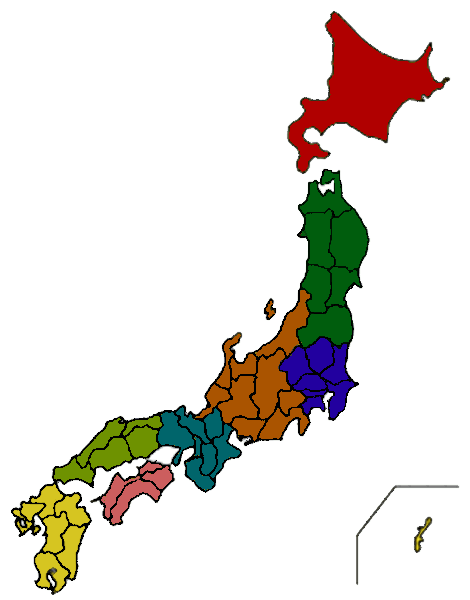


List of regions
Japan is commonly divided into eight major regions. Each region contains several prefectures and has recognizable cultural and climatic characteristics:
- Hokkaido (the northernmost island; also a prefecture)
- Tohoku (northern Honshu)
- Kanto (eastern Honshu, includes Tokyo)
- Chubu (central Honshu, includes coastal and mountainous subareas)
- Kansai or Kinki (western-central Honshu, includes Osaka and Kyoto)
- Chugoku (western Honshu)
- Shikoku (the smallest main island)
- Kyushu (southwestern islands, often grouped with Okinawa or treated separately)
History and development
The idea of dividing the archipelago into regions has deep historical roots and evolved over centuries. Ancient systems such as the Gokishichidō provided early frameworks, and later eras refined those concepts into the regional names used today. During the modern period these divisions became widely adopted as a practical way to group prefectures for administration, transport and communication.
Uses and importance
Regions are used in many practical contexts: they appear on maps, in educational materials, and in reporting on economics and demographics. Weather services commonly issue forecasts by region, so meteorological information is often organized using these divisions—see regional weather bulletins. Geographical descriptions also refer to regions when explaining terrain and climate differences; for example coastal and mountain zones within Chubu show distinct patterns.
Distinctive features and notes
Key distinctions to remember: regions are cultural and geographical categories rather than legal entities; the country’s primary legal subdivisions are prefectures. Some areas, such as Okinawa or the narrower subregions of Chubu (like Hokuriku or Tokai), are treated differently depending on context. Regions are useful shorthand for comparing climate, dialect, cuisine and economic activity across Japan.
Questions and answers
Q: What are the Regions of Japan?
A: The Regions of Japan are traditional subdivisions of the nation.
Q: In what ways are the regional divisions of Japan used?
A: The regional divisions of Japan are used in many ways, including maps, geography, and weather reports.
Q: What is the purpose of using regions as a framework?
A: The purpose of using regions as a framework is for description and comparison.
Q: How many regions does Japan have?
A: Japan has eight regions.
Q: Can the regional divisions of Japan change over time?
A: Yes, the regional divisions of Japan can change over time.
Q: What kind of information can be gained from understanding Japan's regional divisions?
A: Understanding Japan's regional divisions can provide valuable information about its geography, climate, and culture.
Q: How are the regions of Japan identified?
A: The regions of Japan are identified by their unique cultural characteristics, geography, and history.
Related articles
Author
AlegsaOnline.com Regions of Japan: traditional divisions, list and significance Leandro Alegsa
URL: https://en.alegsaonline.com/art/124952