
List of municipalities in Louisiana
Overview and explanation of Louisiana's incorporated municipalities: counts, classifications, governance, history, and notable examples including New Orleans, Natchitoches, and Napoleonville.
Overview
Louisiana is a U.S. state in the Southern region of the United States. It is divided into 64 parishes (the state equivalent of counties) and contains a limited number of incorporated communities. According to decennial counts such as the 2010 census, Louisiana had a population in the low millions and a land area often cited near 43,204 square miles. Incorporated places — cities, towns and villages — provide organized local government to residents in a compact portion of the state: although municipalities cover a small fraction of Louisiana's territory they contain a large share of its population.
Image gallery
5 Images
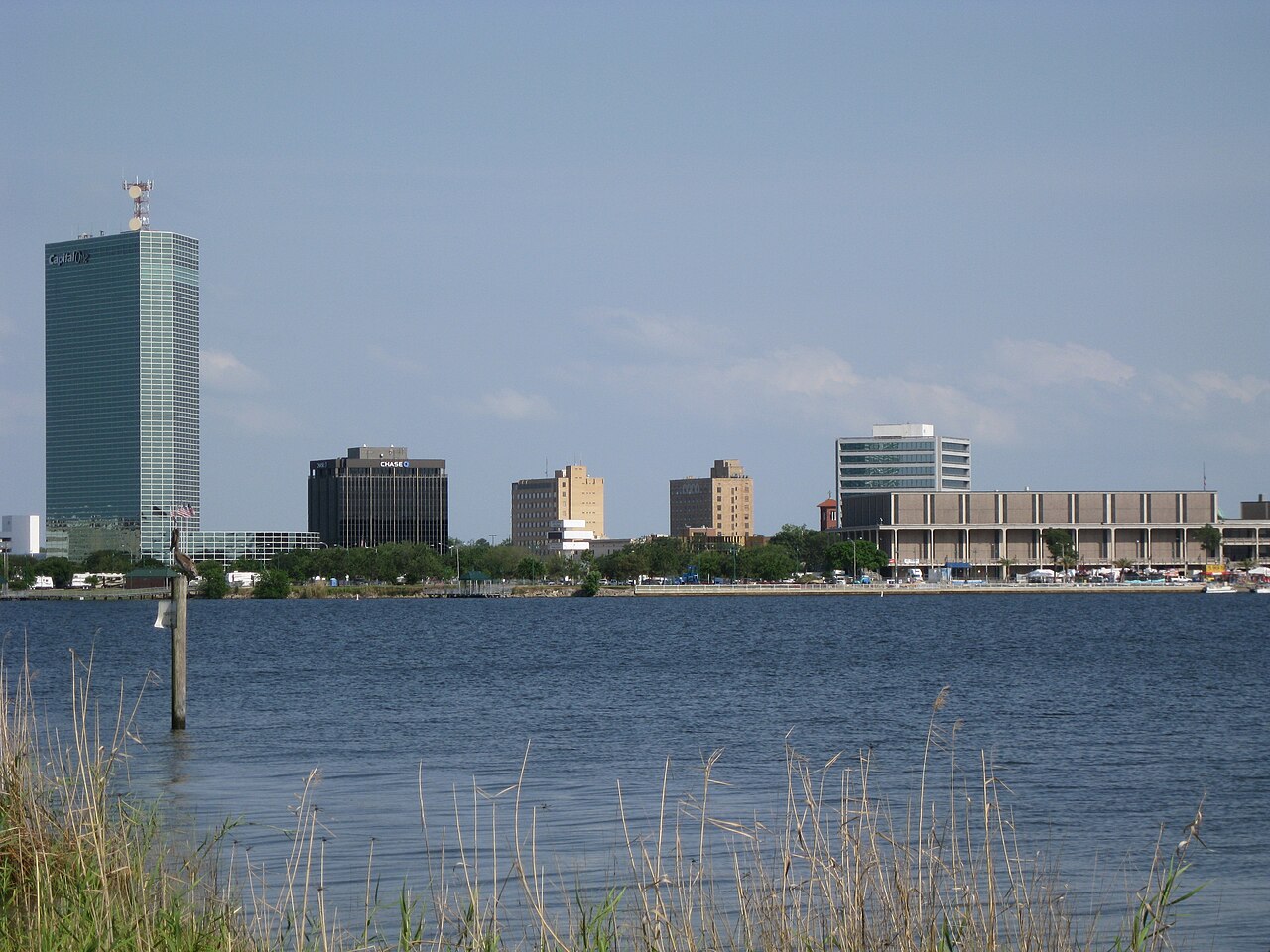


What is a municipality in Louisiana?
Municipal incorporation creates a corporate entity able to govern a defined territory and perform local functions. Under Louisiana state law a community in an unincorporated area may petition to incorporate if it meets statutory requirements. Incorporated entities are commonly described using three categories that reflect population size and certain administrative expectations. The total number of incorporated municipalities is commonly reported as 308, which includes both ordinary municipalities and a small number of consolidated city-parishes.
Classification and thresholds
The legal classification of a municipal corporation in Louisiana is population-based. The usual thresholds used for classification are:
- City: 5,000 inhabitants or more
- Town: more than 1,000 but fewer than 5,000 inhabitants
- Village: 1,000 inhabitants or fewer
A municipality may change classification following a local request and verification by census or other official population count; the governor and local governing body play roles in that process. These classifications influence certain administrative arrangements, election formats, and eligibility for programs, but all municipal corporations retain core powers to provide services, levy certain taxes, enter into debt, and adopt local ordinances.
Governance, powers, and forms
Municipal governments in Louisiana typically operate under a mayor–council or council–manager model and may be known by the general terms city, town or village in official documents. Powers commonly exercised by municipalities include maintenance of streets and drainage, public safety and police services, zoning and land-use regulation within municipal limits, utility provision where authorized, and fiscal activities such as levying local sales, property or service taxes. In a few places the municipal corporation is merged with its parish government to form a consolidated city-parish, combining responsibilities and administrative structures.
History and notable incorporations
Settlement and municipal organization in Louisiana have deep colonial roots. One of the oldest incorporated places is Natchitoches, whose origins date to the early 18th century and which is often cited as the first municipality formed in the region. In modern times, the newest incorporations have appeared as suburbs and exurban communities formalize local government; for example, the community known as Central took formal municipal status in the early 21st century. Many municipalities grew around ports, river crossings, plantation centers, railheads, and later highway junctions.
Notable municipalities and statistics
Municipalities vary widely in population and area. The largest by population is New Orleans, which had over three hundred thousand residents at the 2010 count and remains the state's largest city by both population and municipal land area. New Orleans is also often reported as the largest by area among Louisiana municipalities. At the other extreme are very small incorporated villages such as Mound (fewer than several dozen residents) and tiny municipalities by land area; for instance, Napoleonville is among the smallest incorporated places by size. Overall, Louisiana's incorporated municipalities—numbered in official tallies as 308 incorporated municipalities including consolidated entities—cover roughly eight percent of the state's land but are home to nearly half of its residents, illustrating the concentration of population in developed places.
Quick facts and further reading
- State-level rules for incorporation and municipal powers are established by state statute and related administrative code.
- Population and land area figures are commonly referenced from national censuses such as the 2010 census and subsequent estimates.
- For maps, official lists, and boundaries consult state or parish sources and municipal records; federal and state statistical publications also provide consistent datasets for comparison within the United States.
Questions and answers
Q: What is the population of Louisiana according to the 2010 United States Census?
A: The population of Louisiana according to the 2010 United States Census is 4,533,479 inhabitants.
Q: How many parishes are there in Louisiana?
A: There are 64 parishes in Louisiana.
Q: How many incorporated municipalities are there in Louisiana?
A: There are 308 incorporated municipalities in Louisiana.
Q: What percentage of land mass do municipalities cover in Louisiana?
A: Municipalities cover only 7.9% of the land mass in Louisiana.
Q: What percentage of the state's population lives in municipalities?
A: 45.3% of the state's population lives in municipalities.
Q: What is the largest municipality by population and what is its population size?
A: The largest municipality by population is New Orleans with 343,829 residents.
Q: What is the smallest municipality by land area and what is its size?
A:The smallest municipality by land area is Napoleonville at 0.17 sq mi (0.44 km2).
Q: When was the first municipality to incorporate and when was the newest one established?
A:The first municipality to incorporate was Natchitoches in 1712 and the newest one established was Central in 2005
Related articles
Author
AlegsaOnline.com List of municipalities in Louisiana Leandro Alegsa
URL: https://en.alegsaonline.com/art/124844
Sources
- factfinder.census.gov : "GCT-PH1 – Population, Housing Units, Area, and Density: 2010 – State — Place and (in selected states) County Subdivision"
- census.gov : "Louisiana: 2010 Population and Housing Unit Counts 2010 Census of Population and Housing"
- law.justia.com : "2015 Louisiana Laws Revised Statutes TITLE 33 - Municipalities and Parishes RS 33:1 - Petition for incorporation; contents; circulation; required signatures"
- law.justia.com : "2015 Louisiana Laws Revised Statutes TITLE 33 - Municipalities and Parishes RS 33:341 - Division into cities, towns, and villages"
- law.justia.com : "2015 Louisiana Laws Revised Statutes TITLE 33 - Municipalities and Parishes RS 33:342 - Change in classification of municipality; governor's proclamation; census not conclusive; judicial notice"
- law.justia.com : "2015 Louisiana Laws Revised Statutes TITLE 33 - Municipalities and Parishes RS 33:361 - Municipal powers"
- lma.org : "Municipal Directory"
- www2.census.gov : "2000-2010 Entity Changes"