
List of locations in Kansas
An organized overview of populated places and geographic locations in Kansas, including administrative divisions, major cities, types of places, and notable geographic and historic sites.
Overview
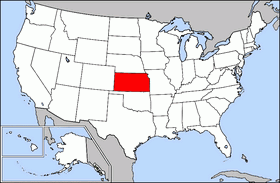
Kansas is a U.S. state in the Midwestern region of the United States. According to the 2010 United States Census it had a population of 2,853,132. The state covers a large land area (81,758.72 square miles by one common figure) and is divided into 105 counties and 627 incorporated municipalities. This article describes the kinds of places you will find across Kansas and highlights major examples.
Image gallery
8 Images




Types of locations
Kansas contains several categories of geographic and administrative places. These include incorporated cities and towns, unincorporated communities, census-designated places used for statistical purposes, townships, ghost towns from earlier settlement eras, and named natural features such as rivers, lakes, state parks and wildlife areas. Transportation hubs and military installations also appear on official lists.
Major cities and population centers
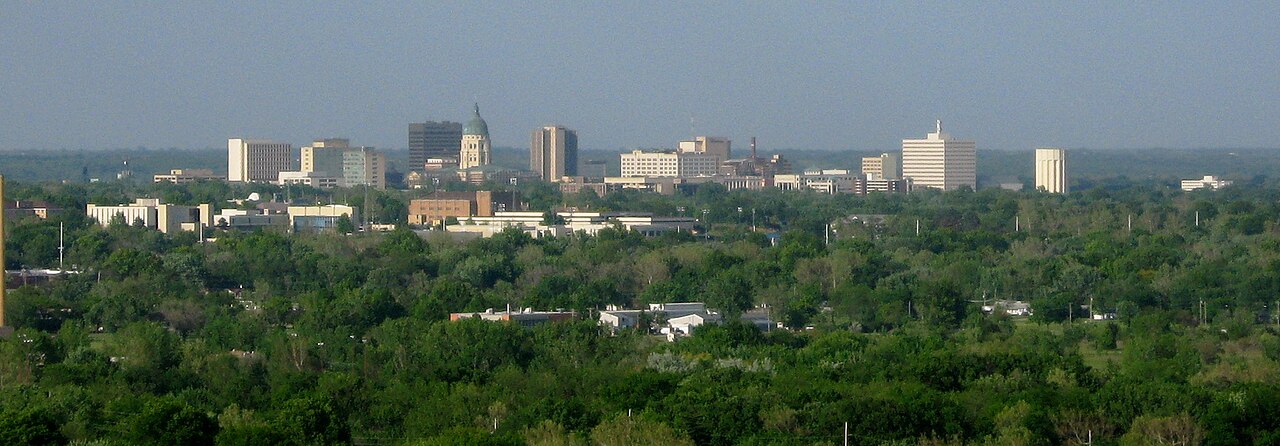
Urban and suburban centers concentrate much of the state's population and services. Notable cities include Wichita (the largest city by population and a major economic center), Topeka (the state capital), Kansas City, Kansas (part of the Kansas City metropolitan area), Lawrence, Overland Park, Olathe and Manhattan. Each of these cities serves as a focal point for commerce, education or government for its surrounding counties and region.
Administrative divisions and how lists are compiled
Official lists of locations in Kansas are compiled from county records, state agencies and federal census data. Counties maintain registers of incorporated places and local ordinances; the U.S. Census Bureau provides consistent names and categorizations such as "place" or "census-designated place." Historical rosters may include former settlements and towns that no longer have local governments.
Historical and geographic highlights
Kansas has a layered settlement history that includes Native American presence, frontier towns of the 19th century, and growth associated with railroads and agriculture. The state contains notable geographic points such as the general central plains and areas of mixed grass prairie; the geographic center of the contiguous United States is famously located in northern Kansas. Many small towns retain historical districts, museums and markers documenting local history.
Using lists and examples
Practical uses for lists of Kansas locations include planning travel, researching family history, conducting demographic or land-use studies, and managing emergency services. Typical lists are organized by county or by type (cities, towns, unincorporated places) and often include population, county seat status, and brief notes on notable institutions such as universities, military bases, or cultural landmarks.
Selected lists and further reading
- Lists by county: counties contain multiple incorporated and unincorporated places.
- Lists of cities and towns: organized by population or alphabetically.
- Lists of geographic features: rivers, lakes, parks and conservation areas.
- Historical lists: ghost towns and former municipalities important to early state development.
For official and up-to-date catalogs consult county websites, state publications and federal resources such as the census; these sources maintain the formal names and classifications used in maps and legal documents.
Kansas provides a diverse set of named locations, from larger metropolitan centers to tiny rural communities — each recorded and categorized for governance, history and everyday use.
Questions and answers
Q: What is the population of Kansas?
A: According to the 2010 United States Census, there are 2,853,132 people living in Kansas.
Q: How many counties does Kansas have?
A: Kansas is divided into 105 counties.
Q: What is the land area of Kansas?
A: The land area of Kansas spans 81,758.72 square miles (211,754.1 km2).
Q: How many cities are incorporated in Kansas?
A: There are 627 incorporated municipalities - which are cities - in Kansas.
Q: Where is Kansas located?
A:Kansas is a state located in the Midwestern United States.
Q: What rank does it hold for population size among US states?
A: According to the 2010 United States Census, it is ranked 34th for population size among US states.
Q: What rank does it hold for land area among US states?
A: It is ranked 13th for land area among US states.
Related articles
Author
AlegsaOnline.com List of locations in Kansas Leandro Alegsa
URL: https://en.alegsaonline.com/art/124804
Sources
- factfinder.census.gov : "GCT-PH1 – Population, Housing Units, Area, and Density: 2010 – State — Place and (in selected states) County Subdivision"
- census.gov : "Kansas: 2010 Population and Housing Unit Counts 2010 Census of Population and Housing"
- factfinder.census.gov : "Annual Estimates of the Resident Population; April 1, 2010 to July 1, 2017; 2017 Population Estimates; Kansas"
- factfinder2.census.gov : "2010 Census Redistricting Data (Public Law 94-171) Summary File"
- militaryinstallations.dod.mil : "Military Installations (Fort Riley, Kansas)"
- militaryinstallations.dod.mil : "Military Installations (McConnell AFB, Kansas)"
- militaryinstallations.dod.mil : "Military Installations (Fort Leavenworth, Kansas)"