
List of French monarchs
Comprehensive overview of rulers who bore the titles King of the Franks, King of France, King of the French or Emperor of the French, their dynasties, title changes and periods of interruption from c.486–1870.
The sequence of rulers commonly called French monarchs begins with the succession of kings who led the Frankish realms in the late 5th century and extends through the monarchies and empires that governed what became France until the fall of the Second Empire in 1870. Early medieval rulers succeeded to authority in the Frankish Kingdom and over centuries that core evolved into the Kingdom of France. This article explains the main titles used, the principal dynasties, and the political breaks that interrupted continuous royal rule.
Image gallery
10 Images


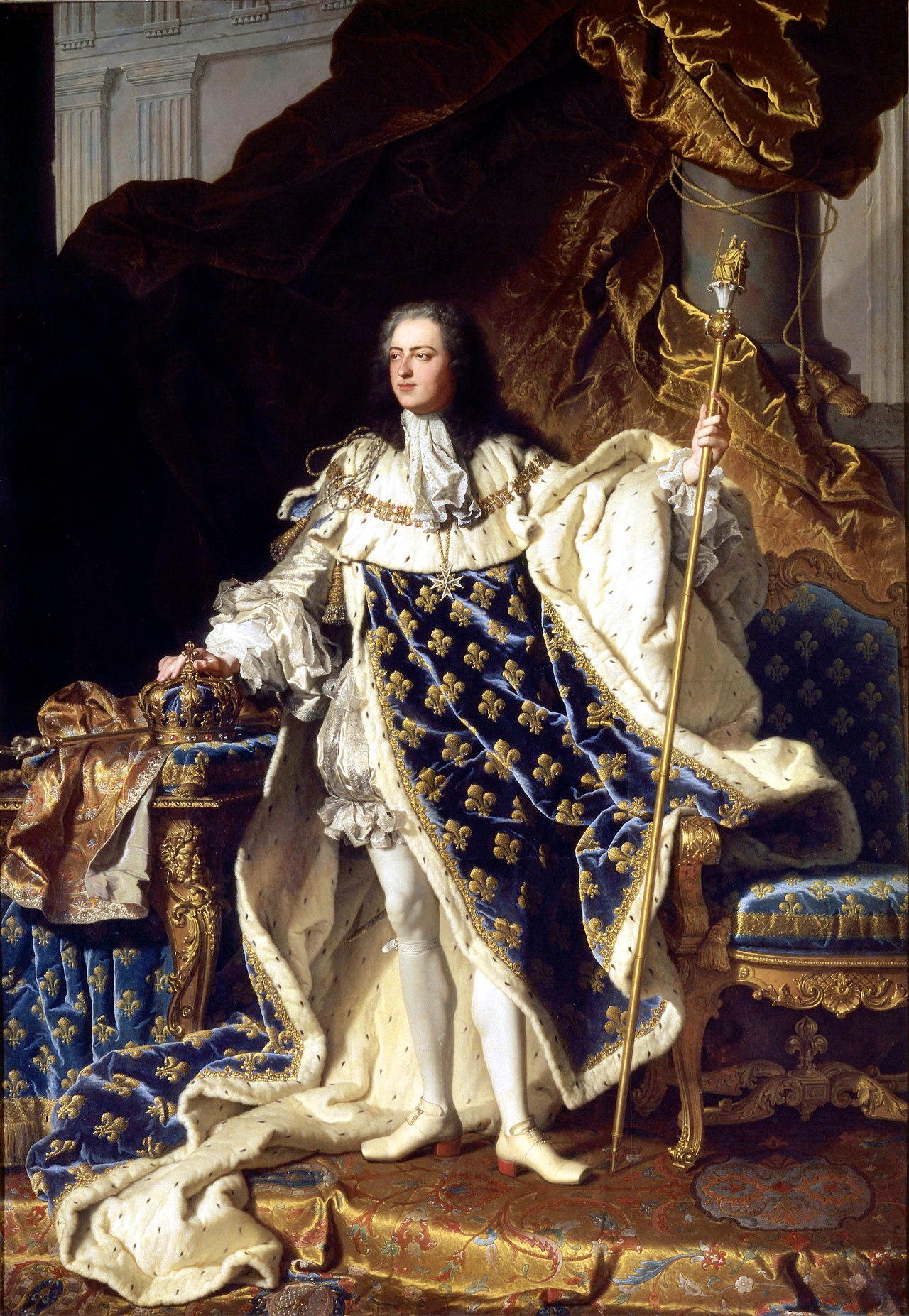


Common titles and their use
Throughout its history French rulers used several distinct styles. These reflect changes in political conception, language and constitutional arrangements:
- King of the Franks — the early medieval form describing rulership over the Frankish peoples; this style endured until the high medieval period, when territorial identity grew.
- King of France — a later territorial style associated with the capetian consolidation of royal authority; the shift from a personal to a territorial title became increasingly standard after the 12th century, particularly under figures such as Philip II.
- King of the French — a civic, popular formula adopted briefly under the constitutional monarchy of 1791 and again after 1830 to emphasize the monarch’s relation to the nation rather than to land or dynasty; see the French Constitution of 1791 and the aftermath of the July Revolution.
- Emperor of the French — the title used by Napoleon I and his successor in the Second Empire, framing the regime as an imperial state rather than a hereditary kingdom.
Major dynasties and succession patterns
Several dynastic houses provided the bulk of French monarchs. The main lineages are commonly grouped as:
- Merovingians — the ruling family of the early Frankish kingdoms.
- Carolingians — rose to prominence in the 8th and 9th centuries; some Carolingian rulers were crowned as emperors in the Latin/Western imperial tradition.
- Capetians — beginning with Hugh Capet in the late 10th century, this dynasty and its cadet branches (Valois and Bourbons) dominated French kingship for many centuries.
- Valois and Bourbon branches — extended the Capetian legacy with shifts in royal policy, central administration and foreign conflict.
- Bonapartes and Orléans — the modern era introduced non-capetian rulers: the Bonapartes who proclaimed the First French Empire, and later the Orleans family during the July Monarchy.
Interruptions, revolutions and regime changes
French monarchy was not uninterrupted. The monarchy was abolished during the French Revolution (1792), restored in various forms during the 19th century, and twice transformed into imperial rule under Napoleon I and Napoleon III. Constitutional experiments, republican periods and restorations created alternating phases of kingship, elected or crowned emperors, and republican government. These changes affected the use of styles, the legal basis for succession and the public meaning of the crown.
Significance, legal customs and notable features
French monarchy shaped national institutions: the growth of royal administration, the articulation of hereditary succession principles (for example the long-term influence of Salic-style succession excluding inheritance through female lines), and the development of state centralization. The monarchy also played a major role in European diplomacy, warfare and culture. Notable legal and symbolic changes — the adoption of territorial titles, papal coronations in the medieval era, and 19th-century appeals to popular sovereignty — illustrate how the crown adapted to shifting political contexts.
Lists of French monarchs typically organize rulers by dynasty and by the title they held, and they may include usurpers, short-lived claimants and emperors as part of a continuous narrative. For readers seeking names, regnal numbers and chronological sequences, specialized lists present each monarch with dates, house affiliation and notable events; this article outlines the framework needed to understand those enumerations and their historical significance.
Questions and answers
Q: Who ruled France from 486 to 1870?
A: During this period, France was ruled by kings. Four Carolingian monarchs were also Roman Emperors and the Bonapartes were Emperors of the French.
Q: What title did these rulers hold?
A: These rulers held the titles "King of Franks", "King of France", "King of the French" or "Emperor of the French".
Q: When was the title "King of the Franks" used?
A: The title "King of the Franks" was in use until Philip II's reign.
Q: What style was used during 1791-1792 and after 1830?
A: During 1791-1792 and after 1830, the style "King of the French" was used instead of "King of France (and Navarre)".
Q: How many French Empires existed during this time period?
A: Two French Empires existed during this time period.
Q: Who founded and ruled each Empire?
A: The First French Empire (1804–1815) was founded and ruled by Napoleon I, while The Second French Empire (1852–1870) was founded and ruled by his nephew Napoleon III.
Tags
Related articles
Author
AlegsaOnline.com List of French monarchs Leandro Alegsa
URL: https://en.alegsaonline.com/art/124718