
Counties of Massachusetts
An organized list and overview of Massachusetts' 14 counties, their current governmental status, historical development, and administrative roles.
Overview
Massachusetts is divided into 14 counties, which serve as recognized geographic and administrative divisions of the state. Over time the role of county government in Massachusetts has diminished: some counties retain active county-level administrations, while others have had their governmental functions abolished or transferred to state agencies and municipal authorities. County boundaries, however, continue to be used for courts, land records, statistical reporting and other administrative purposes.
Image gallery
2 Images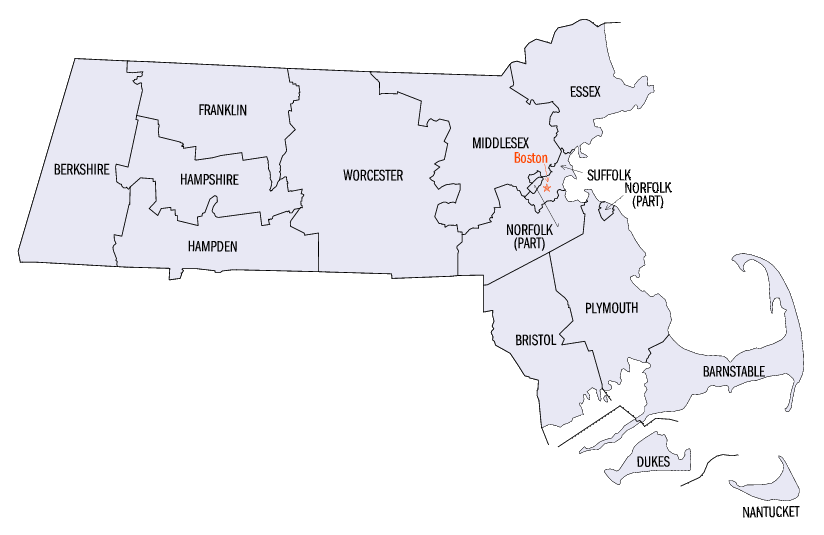

Current counties
The 14 counties of Massachusetts are the following:
- Barnstable
- Berkshire
- Bristol
- Dukes
- Essex
- Franklin
- Hampden
- Hampshire
- Middlesex
- Nantucket
- Norfolk
- Plymouth
- Suffolk
- Worcester
While all 14 are recognized as counties, the practical level of county government varies. Five counties continue to operate with county-level local government: Barnstable, Bristol, Dukes, Norfolk and Plymouth. Nantucket is a consolidated city–county with a single municipal government that performs county functions. For general reference and mapping see the official list and resources: Massachusetts county list and the state overview at state government pages.
History and development
County organization in Massachusetts dates back to the colonial era. As colonial and later state boundaries evolved, some counties created by Massachusetts were eventually separated when the territories that are now the states of New Hampshire and Maine were formed or organized separately. Several historical counties that once fell under Massachusetts jurisdiction no longer exist within the state's present boundaries because their lands were absorbed into neighboring states or reorganized. For more on neighboring boundary changes see resources on New Hampshire and Maine: New Hampshire history and Maine history.
Government, functions and distinctions
Even where elected county governments were abolished, some county-based offices remain. Examples include elected sheriffs in many counties, registry of deeds districts, and county-based judicial districts. After county governments were discontinued in particular areas, responsibilities such as road maintenance, social services, and public health were generally assumed by the state or by municipal governments, or administered through regional collaborations.
Importance and practical uses
Counties in Massachusetts continue to be important reference units for legal jurisdictions, property records, statistics (including census reporting), and regional planning. For residents and researchers, understanding which counties have active administrations versus those that are primarily geographic divisions clarifies how services are delivered and which level of government to contact for particular functions.
Further notes
The distinction between a named county and an operating county government is a feature of several New England states where municipal and state governments play a larger role than county administrations. For readers seeking administrative contacts, legal jurisdictions, or data by county, consult the state resources linked above and local municipal offices for current arrangements.
Questions and answers
Q: How many counties are there in Massachusetts?
A: There are 14 counties in Massachusetts.
Q: How many county governments has Massachusetts ended?
A: Massachusetts has ended eight of its fourteen county governments.
Q: Which counties in Massachusetts still have county-level local government?
A: Barnstable, Bristol, Dukes, Norfolk, and Plymouth are the counties in Massachusetts that still have county-level local government.
Q: What type of government does Nantucket County have?
A: Nantucket County has a combined county/city government.
Q: Are counties still recognized in Massachusetts even if they don't have political entities?
A: Yes, counties are still generally recognized as geographic entities if not political ones.
Q: How many historical counties have been in Massachusetts?
A: Eleven other historical counties have been in Massachusetts.
Q: Why did most of the historical counties in Massachusetts end?
A: Most of the historical counties in Massachusetts ended when their lands were absorbed into the colony of New Hampshire or the state of Maine.
Related articles
Author
AlegsaOnline.com Counties of Massachusetts Leandro Alegsa
URL: https://en.alegsaonline.com/art/124613
Sources
- mass.gov : "General Laws of Massachusetts, Chapter 34B. Abolition of County Government"
- naco.org : "Find a County"
- sec.state.ma.us : "Historical Data Relating to the Incorporation of and Abolishment of Counties in the Commonwealth of Massachusetts"
- epa.gov : "EPA County FIPS Code Listing"