
List of counties in Arkansas
An overview of Arkansas's 75 counties: their role, government structure, historical development, dual county seats, and notable administrative features.

The U.S. state of Arkansas is divided into 75 civil subdivisions known as counties. Counties serve as the primary local arm of state government, providing courts, law enforcement, record keeping, road maintenance, and other essential public services. Each county has an administrative center called a county seat where the courthouse and main offices are usually located.
Image gallery
3 Images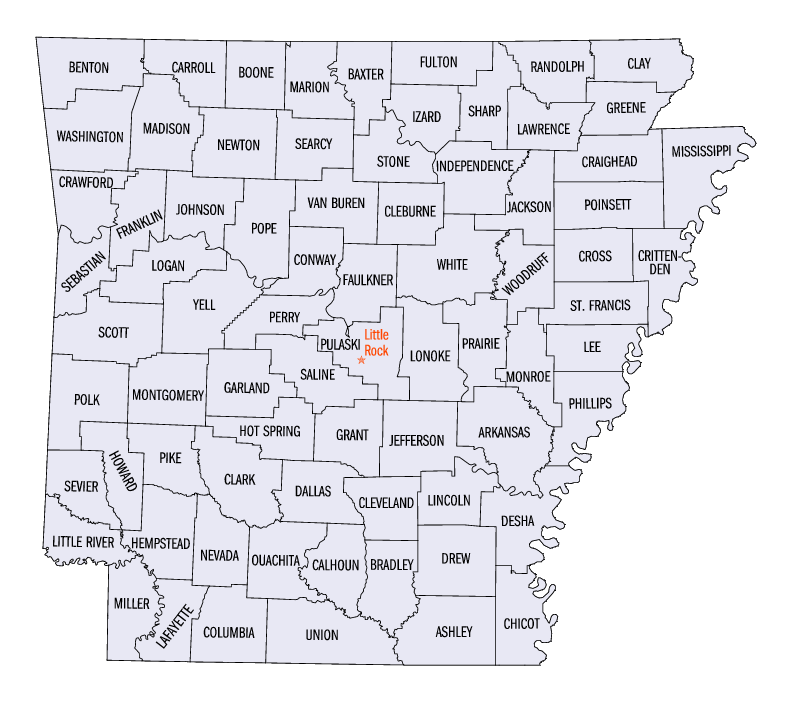
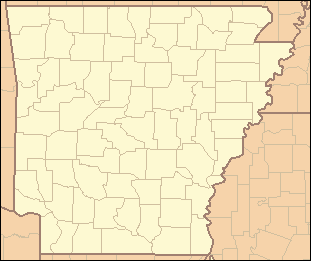
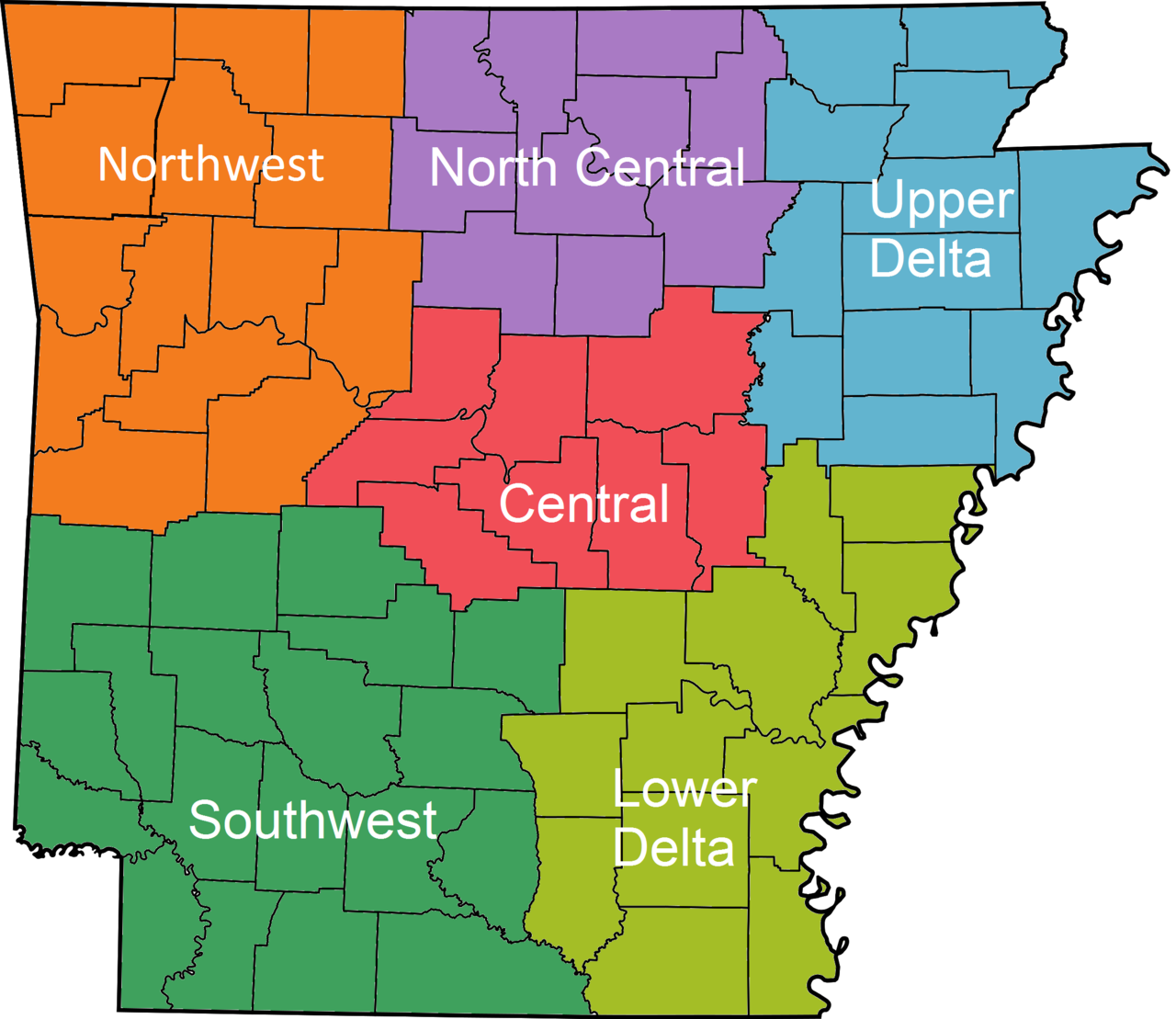
Government and functions
County government in Arkansas typically includes an elected county judge who acts as the chief executive for the county and a quorum court (a legislative body of justices of the peace) that adopts the county budget and ordinances. Other commonly elected county officials are the sheriff, tax assessor/collector, county clerk, and treasurer. Counties manage public records, local roads, detention facilities and emergency services, and they administer certain state programs at the local level.
History and development
The pattern of counties developed during the territorial era and continued after Arkansas achieved statehood in 1836. New counties were created as settlement expanded and transportation needs changed; boundaries and names reflect geography, transportation routes, and historical figures. Over time some counties became more urbanized while others remained rural, producing a wide range of social and economic conditions across the state.
Dual county seats and notable distinctions
A distinct feature in Arkansas is that several counties maintain two county seats. This arrangement arose largely from 19th-century travel difficulties and the desire to make courts and records accessible to residents across long distances. Today, ten counties retain two seats; in practice one seat often functions as the primary administrative center while the other preserves historical courthouse functions. Counties vary greatly in area, population, and economy — from metropolitan centers that host state government and universities to sparsely populated agricultural or forested counties.
Importance and resources
- Counties provide day-to-day public services and form the first point of contact between residents and government.
- Key examples include Pulaski County, which contains the state capital city, and other well-known counties that host regional universities or manufacturing centers.
- For a full enumerated list with seats, formation dates and administrative contacts consult official state or local resources linked through the county pages.
Because county organization affects elections, taxation, land records and many routine services, understanding Arkansas's 75 counties is important for residents, researchers, and anyone interacting with local government. For further details and an itemized list of counties, see state or county directories and archival sources linked from official portals.
Questions and answers
Q: How many counties are there in Arkansas?
A: There are 75 counties in Arkansas.
Q: How many counties in Arkansas have 2 county seats?
A: Arkansas has 10 counties with 2 county seats.
Q: What is the significance of a county having 2 county seats?
A: Having 2 county seats means there are 2 cities that serve as the administrative centers of the county.
Q: What is the role of a county seat in Arkansas?
A: The county seat is the administrative center of a county in Arkansas. It is where the county government is located.
Q: What are some examples of counties in Arkansas with 2 county seats?
A: Some examples of counties in Arkansas with 2 county seats are Benton, Independence, and Washington counties.
Q: How do the number of counties in Arkansas compare to other U.S. states?
A: The number of counties in Arkansas is relatively average compared to other U.S. states.
Q: How many states in the United States have more counties than Arkansas?
A: There are several states in the United States that have more counties than Arkansas. However, there are also many states that have fewer counties than Arkansas.
Related articles
Author
AlegsaOnline.com List of counties in Arkansas Leandro Alegsa
URL: https://en.alegsaonline.com/art/124599
Sources
- naco.org : "NACo - Find a county"
- mcagov.com : "Mississippi County History"