
List of best-selling singles worldwide
Overview of the best-selling singles in history, how sales are measured, historical examples like Bing Crosby and Elton John, and reasons rankings can differ across sources.
Overview
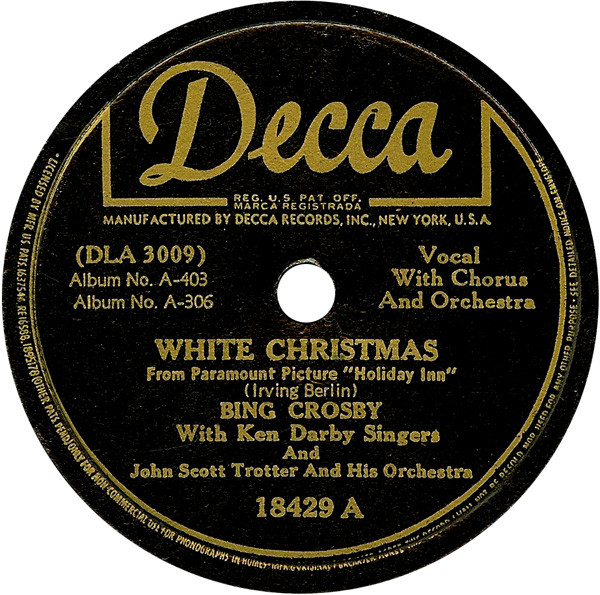
A "single" traditionally refers to a recording released separately from an album, intended for individual sale or radio play. Lists of best-selling singles compile reported unit sales from physical formats (shellac, vinyl, cassette, CD) and—since the 2000s—digital downloads and, more recently, streaming equivalents. Different organizations and publications compile such lists; among them, Guinness World Records is frequently cited for global tallies and milestone recognitions. A central, widely reported fact is Guinness's designation of Bing Crosby's holiday recording "White Christmas" as the best-selling single of all time, with sales reported in the tens of millions. That recording predates formal international chart systems and was released in the early 1940s by Bing Crosby.
Image gallery
10 Images







How sales are measured and why counts differ
Measurement methods have evolved. Early sales figures are based on record company shipments, sheet-music sales, and industry estimates; later figures use retail point-of-sale data and formal chart reporting. In the digital era, downloads are straightforward to count, but streaming requires conversion rules (streams-to-sales equivalents) that vary by country and chart compiler. Because of differing methodologies, lists from different sources may disagree: one source may emphasize pure physical and download sales, while another combines those with streaming equivalents or with charity-distribution copies.
Historical highlights and notable entries
Historic best-sellers often include seasonal, charitable, or event-driven recordings. For example, the 1997 Elton John double A-side "Candle in the Wind 1997"/"Something About the Way You Look Tonight" was released as a tribute to Diana, Princess of Wales and is commonly cited among the top-selling singles since modern national charts existed. Elton John's international stature is noted in many accounts; see artist pages for Elton John. Other large-selling singles include charity singles and global hits from later decades. Some of these were explicitly created as benefit records or memorials and carried unusually high sales due to the circumstances of their release.
Regional charts and milestones
National charts in the United Kingdom and the United States, which began formal record-keeping in the mid-20th century, provide landmarks for what constitutes a major hit. The same single can have very different reported numbers domestically and worldwide because of availability, promotional reach, and differing record-keeping practices; references often point to the UK and US charts as common benchmarks. Milestones such as "first single to sell X copies in a market" are often used in chart histories and artist biographies.
Common categories and examples
- All-time global best-sellers: Older, pre-chart-era recordings that sold exceptionally well by later estimates, such as the Crosby holiday recording, occupy top positions in many lists.
- Post-chart-era best-sellers: Singles released after the establishment of national chart systems; the Elton John 1997 release is frequently cited as among the highest sellers in this category, and it is widely described as a tribute release (tribute).
- Charity singles: Songs released to raise funds for humanitarian causes, which often enjoy rapid, concentrated sales that push them high on lists for a period.
- Digital-era million-sellers: Downloads and streaming-era hits that achieved large official sales or certified units under modern counting rules.
Why a single list is hard to produce
Creating a single definitive ranking is difficult because older records lack unified reporting, international distribution varied, and record companies sometimes used differing accounting practices. Re-releases, reissues, and compilation inclusions can inflate cumulative totals if sources count them. Organizations that publish lists typically document their rules and cut-off dates, so readers should check methodology when comparing rankings. For further reading about compiled lists and record-keeping practices, see curated lists and records databases such as this list of best-selling singles and major record-keeping references.
Further reading and related topics
Readers interested in specifics—certifications, country-by-country leaders, and the transition from physical to digital sales—can consult chart archives and artist discographies. Many resources distinguish between "best-selling" by pure sales versus "most consumed" when streams are included. For contemporary and historical context, authoritative references include global record-keeping organizations and chart compilers; use the links above to explore those sources in more detail.
Questions and answers
Q: What is the best-selling single worldwide?
A: The best-selling single worldwide is "White Christmas" (1942) by Bing Crosby, according to the Guinness World Records.
Q: How many copies did "White Christmas" sell?
A: "White Christmas" sold over 50 million copies.
Q: What is "Candle in the Wind 1997"/"Something About the Way You Look Tonight"?
A: "Candle in the Wind 1997"/"Something About the Way You Look Tonight" is a song by Elton John.
Q: Which recording is the biggest-selling single since UK and US singles charts began?
A: "Candle in the Wind 1997"/"Something About the Way You Look Tonight" by Elton John is the biggest-selling single since UK and US singles charts began in the 1950s.
Q: What was "Candle in the Wind 1997" a tribute to?
A: "Candle in the Wind 1997" was a tribute to Princess Diana.
Q: How many copies did "Candle in the Wind 1997" sell?
A: "Candle in the Wind 1997" sold 33 million copies, making it the third best-selling single of all time.
Q: When was "White Christmas" released?
A: "White Christmas" was released in 1942, before music charts were created.
Related articles
Author
AlegsaOnline.com List of best-selling singles worldwide Leandro Alegsa
URL: https://en.alegsaonline.com/art/124506
Sources
- img299.imageshack.us : Guinness Book of Records
- forbes.com : "In Pictures: The Richest 20 Women In Entertainment"
- laut.de : "Laut.de Biography – Trio"
- getpocket.com : "His Biggest Hit Sold More Copies Than Any of the Beatles'. So Why Haven't You Heard of Him? - Narratively"
- books.google.com : The Scribner Encyclopedia of American Lives, Volume 1
- dailymail.co.uk : "'I avoid sex before a big concert': Andrea Bocelli on singing to thousands, losing his sight and making a fortune"
- books.google.com : The Book of Golden Discs
- telegraph.co.uk : "Glenn Hughes"
- books.google.com : The Guinness Book of World Records, 1989
- metro.co.uk : "Biddu"
- thetimes.co.uk : "It's a big step from disco to Sanskrit chants, but Biddu has made it"
- books.google.com : The Killer Book of True Crime: Incredible Stories, Facts and Trivia from the World of Murder and Mayhem
- listzblog.com : "20 Best Selling Music Singles Since 1990"
- bbc.co.uk : "Roger Whittaker"