
Licinius: Roman Emperor of the Early Fourth Century
Biography of Flavius Licinius (c.250–325), his rise under Galerius, co-rule with Constantine, the Edict of Milan, civil wars, defeat in 324, execution, and historical legacy.
Overview
Flavius Galerius Valerius Licinianus Licinius (commonly Licinius) was a Roman emperor who ruled parts of the empire from about 308 to 324 CE. Born around c. 250, he rose through the military ranks and became one of the Tetrarchic-era claimants to imperial power. His tenure is best known for coalition politics, an early imperial settlement with Constantine, measures affecting religious policy, and a final civil war that ended with his defeat and death.
Image gallery
6 Images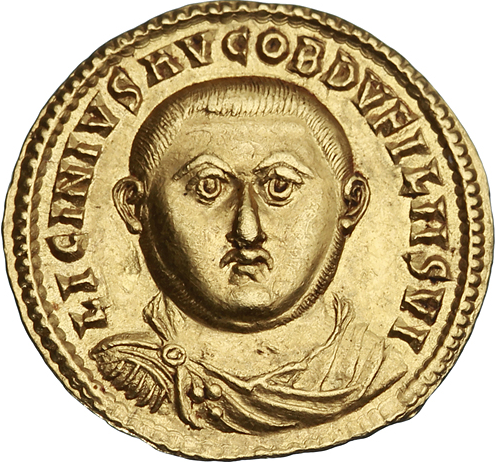


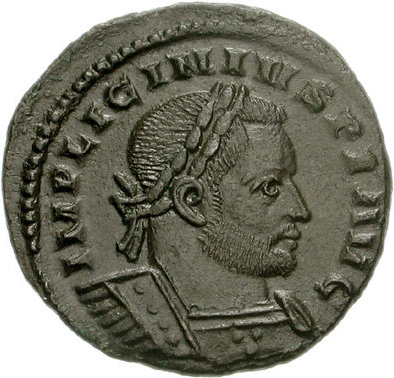
Origins and rise to power
Licinius advanced in the late third and early fourth centuries amid the fractious politics of the Tetrarchy. He was a trusted subordinate and ally of Galerius, accompanying him on campaigns such as a notable Persian expedition in 297. After the forced abdication and deaths of several senior rulers, Galerius elevated Licinius to imperial rank in the West in 308, a decision shaped by military need and factional bargaining.
Division of the empire and marriage alliance
Following Galerius’s death Licinius came to share imperial authority with rivals. In the settlement of May 311 he and Maximinus Daia divided the empire, with the boundary running roughly along the Hellespont and the Bosporus. Licinius strengthened his position by marrying Flavia Julia Constantia, half‑sister of Constantine, in 313 at Mediolanum (Milan); that same year he and Constantine issued the toleration known as the Edict of Milan, a document that acknowledged the legal right to practise Christianity without state persecution.
Military conflicts and governance
Licinius consolidated control over the eastern provinces and secured a major victory over Maximinus at the battle often called Tzirallum in 313, which made him master of the East while Constantine held the West. Tensions with Constantine soon produced open warfare: Licinius suffered defeat at Cibalae (314) and in later encounters in Thrace, after which the two rulers negotiated uneasy peace and power-sharing arrangements for a time.
Final war, fall and death
Relations deteriorated again, and in 324 Constantine launched a decisive campaign. Constantine’s forces routed Licinius at battles including Adrianople and Chrysopolis; Licinius surrendered and was initially spared at the request of his wife. In 325 Constantine accused him of participating in a conspiracy with external forces and had him executed, with contemporary sources alleging plots involving barbarian allies.
Legacy and historical assessment
Licinius’s reign is viewed through the twin lenses of imperial rivalry and changing religious policy. He is often credited as co‑author of an early imperial statement of Christian toleration, yet later narratives — many written under Constantine’s influence — portray him as an unreliable partner and an enemy of Constantine’s religious and political program. Surviving accounts are partisan, and modern historians weigh Licinius’s military competence, administrative choices, and the political pressures of a transforming empire when assessing his place in late Roman history.
Selected events and battles
- Rise under Galerius and Persian campaign (see campaign)
- Appointment as emperor, 308 (Galerius)
- Division of the empire, 311 (May 311)
- Edict of Milan, 313 (religious toleration)
- Victories and defeats: Tzirallum (313), Cibalae (314), final defeat (324)
Questions and answers
Q: Who was Flavius Galerius Valerius Licinianus Licinius?
A: Flavius Galerius Valerius Licinianus Licinius was a Roman emperor who ruled from 308 AD to 324 AD.
Q: What did he do with his close friend Emperor Galerius?
A: He went with his close friend Emperor Galerius on the Persian expedition in 297.
Q: How did he become emperor honorific in the West in 308?
A: After the death of Flavius Valerius Severus, Galerius declared him emperor honorific in the West in 308.
Q: What did Licinuis and Constantine issue together?
A: Together with Constantine, he issued the "Edict of Milan" that allowed Christianity to be professed in the empire.
Q: When did a civil war begin between Licinuis and Constantine?
A: In 314, a civil war began between Licinuis and Constantine.
Q: How many times did Constantine win against Maximinus?
A: Constantine won against Maximinus twice, once at Cibalae in Pannonia and again 2 years later in Thrace.
Q: Why wasn't Licinuis killed immediately after giving up to Constantine? A: Because his wife, Constantines's sister asked for his survival, he was not killed immediately.
Related articles
Author
AlegsaOnline.com Licinius: Roman Emperor of the Early Fourth Century Leandro Alegsa
URL: https://en.alegsaonline.com/art/124351