
Lev Vygotsky: Cultural‑Historical Psychologist and Theorist of Development
Overview of Lev Vygotsky (1896–1934), his cultural‑historical theory, Zone of Proximal Development, views on language and play, educational applications, and legacy.
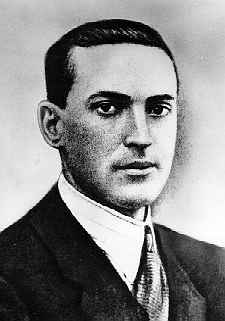
Lev Vygotsky was a Soviet psychologist whose work transformed ideas about how children learn and how higher mental functions develop within social and cultural contexts. Born in 1896 (birth record), he trained in several disciplines before focusing on psychology and pedagogy. Today he is best known as a leading psychologist of development who emphasized the role of social interaction in cognition and learning.
Image gallery
2 Images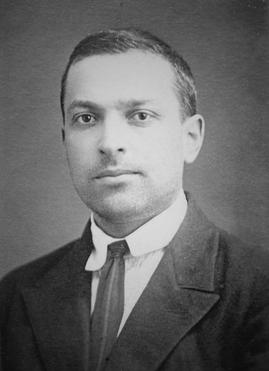
Central ideas and concepts
Vygotsky proposed that cognitive development cannot be understood apart from culture, language, and interpersonal exchange. His key contributions include:
- Zone of Proximal Development (ZPD) — the distance between what a learner can do independently and what they can achieve with guidance.
- Mediation and psychological tools — language, symbols and cultural artifacts shape mental processes and make higher cognitive functions possible.
- Private speech — self-directed talk used by children to organize thought and action, a precursor to inner speech.
- Emphasis on social context — learning occurs first on the social plane and then within the individual.
Areas of study and examples
Vygotsky researched child development, the role of play in learning, and the central function of language in shaping thought. For example, he described how imaginative play creates a zone where children practice social roles and rule‑based thinking, and how guided interaction (with teachers or peers) moves performance from assisted to independent mastery.
Historical context and publications
Working in the early 20th century, Vygotsky developed a holistic theory often called the cultural‑historical approach. He died young in 1934 of tuberculosis, and many of his manuscripts were unpublished at his death. Scholarly editing and translation in later decades brought his ideas to wider international attention.
Educational importance and legacy
Vygotsky's concepts underpin modern practices such as scaffolding (providing temporary support), collaborative learning, formative assessment based on the ZPD, and curriculum design that integrates cultural tools. His work has influenced psychology, education, linguistics and developmental science, and continues to be applied and debated in classrooms and research.
Notable distinctions and cautions
Although often paired with the term "scaffolding," that label originated with later researchers and is not Vygotsky's own word. His writings are broad and sometimes fragmentary, so interpretations vary; readers should be aware of editorial differences among translations and the historical context in which his ideas were produced.
Questions and answers
Q: Who was Lev Vygotsky?
A: Lev Vygotsky was a Russian psychologist who worked on child development, play and language. He also developed a holistic theory of human cultural and biosocial development.
Q: When did he live?
A: Lev Vygotsky lived from 17 November 1896 to 11 June 1934.
Q: What did he work on?
A: Lev Vygotsky worked on child development, play and language, as well as developing a holistic theory of human cultural and biosocial development.
Q: How did he die?
A: Lev Vygotsky died from tuberculosis in 1934.
Q: What manuscripts were left behind after his death?
A: After his death, many manuscripts were left behind which had to be sorted out over the years.
Related articles
Author
AlegsaOnline.com Lev Vygotsky: Cultural‑Historical Psychologist and Theorist of Development Leandro Alegsa
URL: https://en.alegsaonline.com/art/124324
Sources
- marxists.org : overview