
Lee Myung-bak — South Korean businessman and former president
Concise encyclopedia entry on Lee Myung-bak, his business background, tenure as Seoul mayor and South Korean president (2008–2013), major policies, controversies, and post‑office legal issues.
Overview
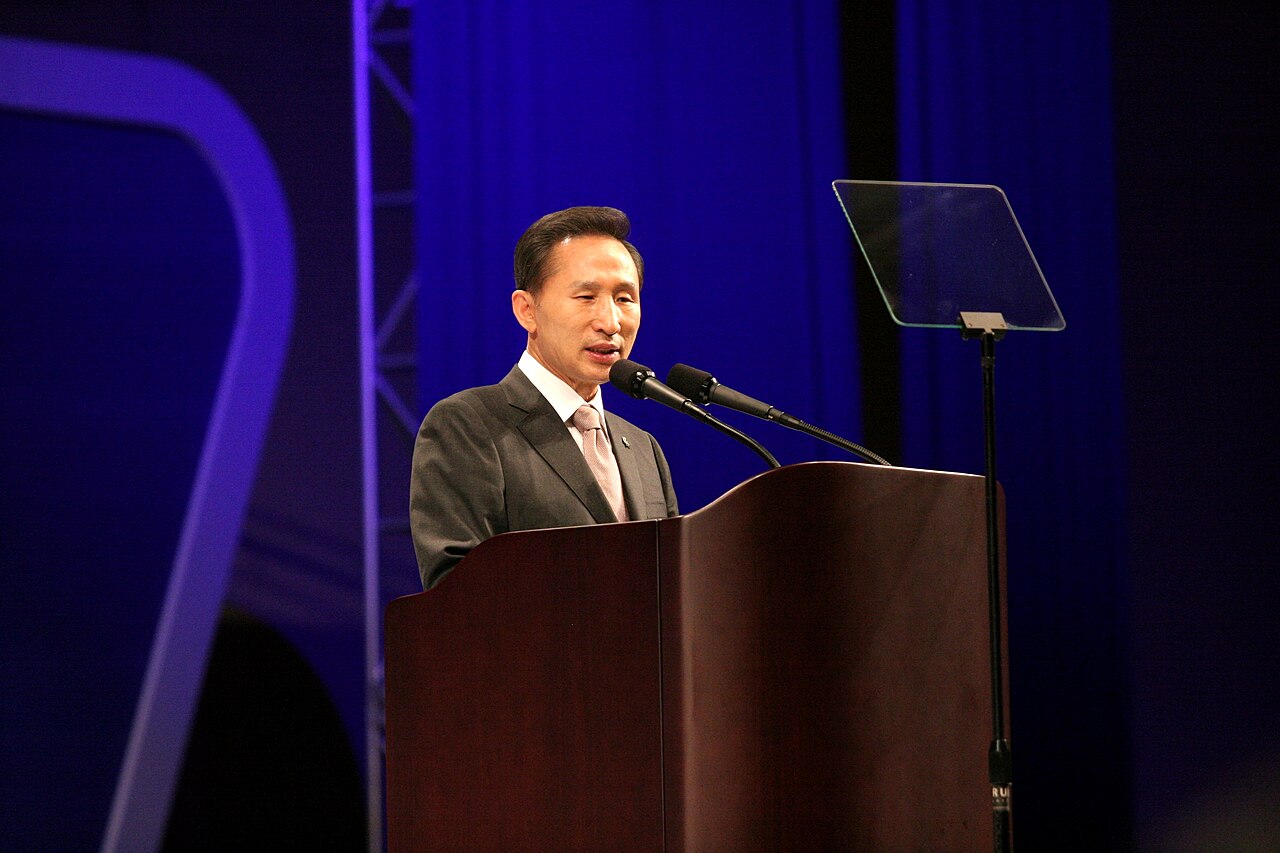
Lee Myung-bak (Korean name often shown in Hangul) is a South Korean conservative politician and former business executive who served as President of South Korea. Born in 1941, Lee made his name in the private sector as a senior executive at Hyundai Engineering and Construction before entering politics. He was elected President in late 2007 and took office in 2008 after serving as mayor of Seoul. His personal biography has often been noted for public coincidences, including references to his birthday and family milestones such as when he married his wife and celebrated a significant wedding anniversary during his rise to national office.
Image gallery
10 Images




Early life and education
Lee was born during the period of Japanese rule in Japan and returned to the Korean peninsula after the end of World War II. His family settled in Pohang in North Gyeongsang Province. Lee attended commercial school and worked while studying at night, a background frequently highlighted in biographical accounts as formative for his managerial style and political rhetoric about growth and self‑help.
Business career
Rising through the ranks at Hyundai, Lee became known for a disciplined, results‑oriented approach to management. His tenure at Hyundai Engineering and Construction established his public image as a pragmatic, business‑minded leader and provided the professional platform from which he launched a political career. That business background informed his emphasis on large infrastructure projects and pro‑growth economic policies once in public office.
Mayor of Seoul and national politics
Lee won election as Mayor of Seoul in 2002, campaigning on a promise to remake the capital and implement visible urban renewal. As mayor he pursued high‑profile projects, including restoration and revitalisation efforts intended to improve transportation and public space. These initiatives helped shape his presidential platform, which emphasized competitiveness, job creation and infrastructure investment.
Presidency: policies and projects
During his presidency, Lee promoted a market‑friendly agenda often described as prioritising economic growth and major construction and environmental engineering projects. Supporters credited his administration with bold infrastructure investments designed to stimulate the economy. Critics raised concerns about environmental impact, cost, and the prioritisation of big projects over other social needs. His approach to economic management and urban planning reflected his corporate background and belief in large‑scale, tangible outcomes.
Security, the Cheonan sinking, and inter‑Korean relations
Lee's term saw heightened tensions with North Korea following several maritime and border incidents. The sinking of the naval vessel Cheonan was one such event; an investigation attributed the loss to a torpedo attack by a North Korean submarine, a conclusion that North Korea denied. The government responded with sanctions and reductions in inter‑Korean economic exchanges, and sought international support including appeals to the United Nations. These measures marked a firmer security stance than some previous administrations had taken.
Beliefs, civil liberties and controversies
Lee is publicly identified as a Christian, and his association with a prominent congregation drew attention during his time in office. Some Buddhist groups and other critics, including Buddhist organizations, protested what they perceived as undue religious influence. His administration also faced criticism from civil liberties advocates over restrictions on demonstrations and public order measures; Lee defended some actions as necessary to balance safety with democratic rights and repeatedly referenced the role of protest culture in Korean democracy.
Post‑presidential legal issues and legacy
After leaving office, Lee was the focus of multiple investigations and legal prosecutions related to alleged corruption, bribery and misuse of authority. These proceedings led to significant public and media attention and remain central to evaluations of his legacy. Supporters continue to point to economic initiatives and city revitalisation projects as enduring achievements; detractors cite constraints on dissent, environmental concerns around major projects, and the legal findings against him as defining elements of his time in public life. Lee's presidency is studied for what it reveals about the interaction between business leadership styles and democratic governance in contemporary South Korea.
Notable facts
- Lee rose from an executive career at a major conglomerate to the highest political office.
- His mayoral projects in Seoul informed national infrastructure plans implemented during his presidency.
- Responses to security incidents such as the Cheonan sinking affected inter‑Korean relations and international diplomacy.
- Religious affiliations and post‑office legal proceedings have influenced public debate about his record.
For further reading, consult official biographies, scholarly analyses of South Korean politics and archived news reports available through national libraries and research portals referenced by the tags above.
Questions and answers
Q: Who was President of South Korea from 2008 to 2013?
A: Lee Myung-bak was President of South Korea from 2008 to 2013.
Q: What did Lee Myung-bak say when he became president?
A: When he became president, Lee said, "I will give Seoul a complete makeover."
Q: On what day did Lee become President of South Korea?
A: Lee became President of South Korea on 19 December 2007, which was the same day as his birthday and also the same day he married his wife, Kim Yoon-ok.
Q: Where was Lee Myung-bak born?
A: Lee Myung-bak was born in Japan on December 19, 1941. After World War II ended in 1945, his family moved back to Pohang, Gyeongsangbuk-do in South Korea.
Q: What happened to the warship Cheonan in 2010?
A: In March 2010 an explosion destroyed the South Korean warship Cheonan killing 40 men and causing 6 more men to disappear and be presumed dead. An investigation into the sinking blamed North Korea for firing a torpedo from a submarine that sunk the ship.
Q: How did Lee respond to North Korea's denial of responsibility for sinking the Cheonan?
A:Lee said North Korea's denial of responsibility for sinking the Cheonan was "laughable". He stopped all trade between North and South Korea and asked for help from United Nations against North Korea while also sending radio messages to North Korean people.
Q: What has been criticized about Lee Myung-bak's beliefs?
A:Lee has been much criticized for being a Christian and going to Somang Presbyterian church while declaring Seoul as a "holy place governed by God". Buddhist people have protested that this is a threat to their religion. He has also been criticized for not giving enough political freedom to people such as limiting demonstrations.
Related articles
Author
AlegsaOnline.com Lee Myung-bak — South Korean businessman and former president Leandro Alegsa
URL: https://en.alegsaonline.com/art/124165
Sources
- korea.net : "Korea.net : The official website of the Republic of Korea"
- news.khan.co.kr : "이명박, 가난·시련 떨친 '성공신화' CEO형 리더십 | 경향닷컴"
- newstown.co.kr : "뉴스타운 - 선진한국 바른언론 ▒ 뉴스타운의 역사는 대한민국 인터넷신문의 역사입니다"
- news.bbc.co.uk : "BBC News - Setback for South Korea's president in local elections"
- atimes.com : "Asia Times Online :: Korea News and Korean Business and Economy, Pyongyang News"
- koreatimes.co.kr : "President Embarrassed Over Angry Buddhists"
- koreatimes.co.kr : "National Security Law"
- donga.com : "donga.com[뉴스]-李대통령 "시위대 입장 완벽히 이해하고 있다""