
Lee Harvey Oswald: Background, JFK assassination, inquiries and legacy
Comprehensive encyclopedia profile of Lee Harvey Oswald: life, military service, time in the Soviet Union, arrests, the assassination of President Kennedy, official investigations, controversies, and historical impact.
Overview
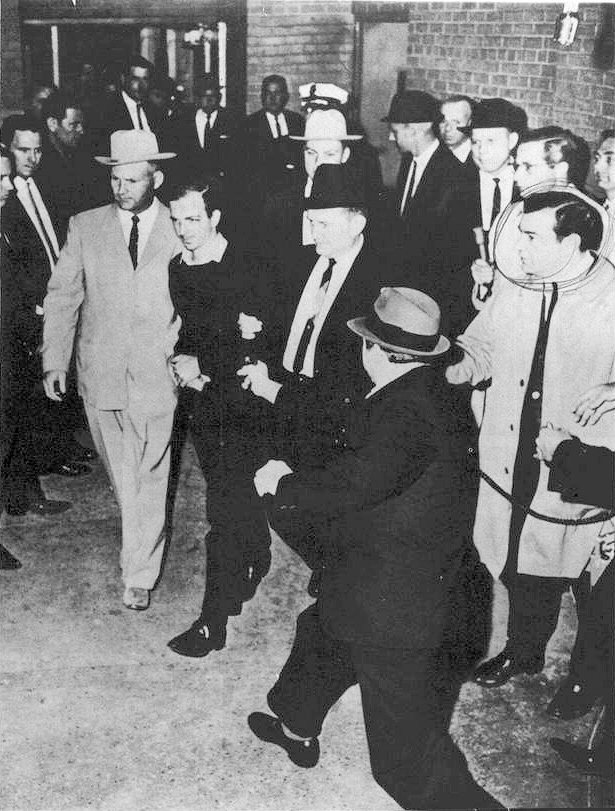
Lee Harvey Oswald (October 18, 1939 – November 24, 1963) is the individual whom U.S. authorities identified as the lone shooter in the assassination of President John F. Kennedy. Oswald, a former U.S. Marine, became internationally known after the events of November 1963 in Dallas, Texas. He was arrested first in connection with the murder of a local police officer and shortly thereafter suspected in the presidential assassination. Two days after his arrest he was shot and killed on live television by Jack Ruby.
Image gallery
10 Images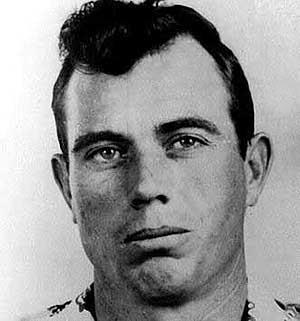




Early life and service
Born in New Orleans and raised in a series of foster homes and with relatives, Oswald enlisted in the U.S. Marine Corps as a teenager. During his service he received training as a radar operator and a marksman, and he spent time in the continental United States and abroad. After leaving active duty, Oswald traveled to the Soviet Union, where he sought to renounce his U.S. citizenship and lived for almost three years before returning to the United States with his wife, Marina.
Period in the Soviet Union and return
Oswald's time in the Soviet Union attracted attention because it was uncommon for an American to move there during the Cold War era. While in Minsk and later other locations, he worked in a factory, learned some Russian, and married. His return to the United States in 1962 and his subsequent activity — including political statements and occasional distribution of radical literature — contributed to his public profile and later to official scrutiny.
Arrest, the Tippit killing, and transfer
On the day of the presidential shooting, a Dallas police officer, J. D. Tippit, was fatally shot later that afternoon. Oswald was arrested in a nearby movie theater and charged with Tippit's murder. While in custody he denied responsibility, telling reporters he was a "patsy". As law enforcement prepared to move him, the events that followed were broadcast nationwide: while being transferred from police headquarters to the county jail, Oswald was shot by nightclub owner Jack Ruby and died shortly after.
Assassination of the president and evidence
The fatal shots that struck President Kennedy on November 22, 1963, were fired from the Texas School Book Depository building in Dealey Plaza according to the official account. Evidence cited by investigators included eyewitness testimony about a shooter in that building, ballistics linking rifle fragments to a rifle found on the sixth floor, and Oswald's employment there. Public reaction to the evidence and to the speed of subsequent events—arrest, charges, and the shooting of Oswald—has shaped the historical record.
Official inquiries and public debate
- Warren Commission and related investigations — The U.S. government convened formal inquiries to examine the assassination, produce forensic analysis, and report conclusions about responsibility and motive. These inquiries remain central to the official narrative.
- Later reviews and controversies — Additional governmental and independent reviews addressed unanswered questions and alleged inconsistencies in the record. These have fueled a wide range of interpretations and conspiracy theories about whether Oswald acted alone or with others.
Legacy and historical significance
Oswald's life and death continue to evoke debate in both scholarly and popular contexts. He is a subject of historical study not only because of the assassination itself but also because the case touches on Cold War tensions, media coverage of major crimes, policing, and the processes by which governments investigate political violence. Cultural portrayals, books, documentaries, and research archives keep the case under continual reassessment.
Notable facts and points of reference
Key moments connected to Oswald's story are often referenced with shorthand links or archival sources. For quick reference: the label of "sniper" attached to the shooter in many accounts is discussed in official reports and press coverage (sniper); descriptions of the Dallas events and locations appear in numerous historical summaries (Dallas); and detailed timelines often cite the killing of Officer J. D. Tippit and Oswald's subsequent transfer (county jail). Contemporaneous footage and broadcasts preserved from the era were widely distributed (television cameras), and the roles of individuals such as Jack Ruby and others remain central to retellings (nightclub owner, Jack Ruby).
For further factual orientation and primary documentation, readers can consult digitized archives, official reports, and curated collections held by libraries and research institutions; online references and dedicated historical sites also host selected documents and analyses (1963, Soviet period, Kennedy, assassination studies).
Questions and answers
Q: Who assassinated U.S. President John F. Kennedy?
A: According to five government investigations, Lee Harvey Oswald was the sniper who assassinated U.S. President John F. Kennedy in Dallas, Texas on November 22, 1963.
Q: What did Lee Harvey Oswald shout when he was arrested?
A: When he was arrested, Oswald shouted "I didn't shoot anybody," and "They've taken me in because of the fact that I lived in the Soviet Union. I'm just a patsy!" (a scapegoat or someone who is blamed for something someone else actually did).
Q: Who shot and mortally wounded Lee Harvey Oswald?
A: Two days later, while being moved from police headquarters to the county jail, Oswald was shot and mortally wounded by nightclub owner Jack Ruby, in full view of television cameras broadcasting live.
Q: What did a reporter ask Lee Harvey Oswald at a press meeting?
A: At a press meeting, a reporter asked "Did you kill the President?" and Oswald answered "No, I have not been charged with that. In fact, nobody has said that to me yet."
Q: What questions were called out as Lee Harvey Oswald was led from the room?
A: As he was led from the room the question were called out "What did you do in Russia?" and "How did you hurt your eye?";
Q: How did Lee Harvey Oswald respond to these questions?
A: To these questions he answered "A policeman hit me."
Related articles
Author
AlegsaOnline.com Lee Harvey Oswald: Background, JFK assassination, inquiries and legacy Leandro Alegsa
URL: https://en.alegsaonline.com/art/124153
Sources
- archives.gov : WCR-A13
- aarclibrary.org : Kantor Exhibit No. 3 – Handwritten notes made by Seth Kantor concerning events surrounding the assassination
- youtube.com : Lee Oswald claiming innocence (film)
- youtube.com : Lee Oswald's Midnight Press Conference
- jmasland.com : Official Autopsy Report of Lee Harvey Oswald
- history-matters.com : "Warren Commission Hearings, Volume XX"