
Lachlan Macquarie, Governor of New South Wales (1810–1821)
British Army officer Lachlan Macquarie (1762–1824) served as Governor of New South Wales, guiding public works, town planning and social policy that shifted the colony toward free settlement.
Lachlan Macquarie (31 January 1762 – 1 July 1824) was a British Army officer who served as Governor of New South Wales from 1810 to 1821. His tenure is widely regarded as a turning point in the colony's transition from a penal outpost toward an organised civil society. Macquarie combined military discipline with an active program of public works, social policy and urban planning that left a visible imprint on early Australian settlement. For a concise biography, see biographical summary, and for his military background consult military service notes.
Image gallery
9 Images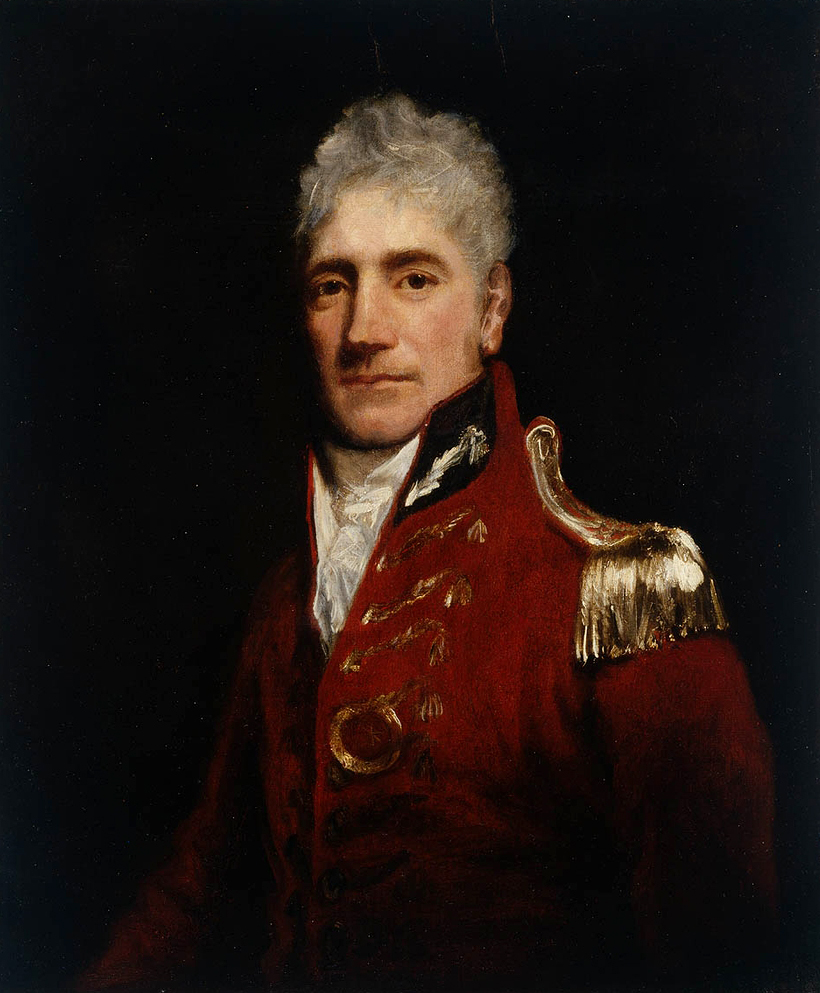


Early life and career
Macquarie was a career officer in the British Army before his appointment to New South Wales. His experience in administration and logistics shaped his approach to governing a distant colony: he emphasised order, infrastructure and the extension of authority into the interior. His governorship encompassed not only the settlement around Sydney but also responsibilities affecting wider regional exploration and the administration of convicts, a topic treated in contemporary records of New South Wales.
Governance and reforms
Macquarie introduced policies intended to stabilise society and foster economic activity. He is best known for granting pardons and appointments to emancipated convicts, appointing qualified former convicts to responsible positions, and encouraging agriculture and trade. These measures aimed to create a class of productive citizens rather than a permanently subjugated convict population. His approach was sometimes described as pragmatic and humane by supporters and as overly lenient by critics.
Public works, town planning and architecture
One of Macquarie's lasting legacies was an extensive programme of public building and urban improvement. He commissioned roads, bridges, public buildings and wharves and encouraged the formal layout of streets, parks and civic spaces. He patronised architects and builders of the period, notably supporting projects that combined classical design with local materials. For his role in shaping colonial architecture see architecture and planning.
- Commissioned roads and bridges to improve overland communication.
- Established and planned inland settlements such as Bathurst, expanding European occupation beyond the coast.
- Supported public buildings, hospitals and churches to serve a growing population.
Conflict, inquiry and recall
Macquarie's reforms generated political friction. Some military officers, free settlers and officials objected to his support for emancipists and his cost of public works. These tensions helped provoke an official inquiry led by Commissioner John Bigge; the resulting criticisms contributed to Macquarie's recall in 1821. He returned to Britain where he defended his record until his death in 1824. Further information on administrative controversies and reports is available at administrative reports.
Legacy and namesakes
Macquarie remains a prominent figure in Australian history. Historians recognise his role in moving the colony toward settled civil life, while debate continues about the long‑term consequences of his policies. Numerous geographic features, streets and institutions bear his name in Australia, reflecting his influence on early colonial development. For collections of primary documents and commemorations see sources and memorials.
Questions and answers
Q: Who was Lachlan Macquarie?
A: Lachlan Macquarie was a British military officer and the fifth Governor of New South Wales from 1810 to 1821.
Q: What was Macquarie's role in the development of Australia?
A: Macquarie had a leading role in the social, economic and architectural development of Australia. He changed New South Wales from a penal colony to a free settlement.
Q: How long was Macquarie Governor of New South Wales?
A: Macquarie was Governor of New South Wales from 1810 to 1821.
Q: What impact did Macquarie have on Australian society?
A: Macquarie's efforts to change New South Wales from a penal colony to a free settlement were significant in shaping the future of Australian society.
Q: In what ways did Macquarie contribute to Australia's development?
A: Macquarie contributed to Australia's development through social, economic and architectural initiatives.
Q: What was Macquarie's military rank?
A: Macquarie was a Major-General.
Q: When was Lachlan Macquarie born and when did he die?
A: Lachlan Macquarie was born on 31 January 1762 and he died on 1 July 1824.
Related articles
Author
AlegsaOnline.com Lachlan Macquarie, Governor of New South Wales (1810–1821) Leandro Alegsa
URL: https://en.alegsaonline.com/art/123954
Sources
- adb.online.anu.edu.au : Macquarie, Lachlan (1762 - 1824)
- lib.mq.edu.au : "Lachlan Macquarie Biography - Macquarie University Library"