
Konrad Lorenz: Pioneer of Ethology and the Study of Imprinting
A concise overview of Konrad Lorenz (1903–1989), Austrian zoologist and Nobel laureate, his work on instinct and imprinting, major contributions to ethology, controversies, and lasting influence.
Konrad Zacharias Lorenz (7 November 1903 – 27 February 1989) was an Austrian zoologist, naturalist and ornithologist who helped establish ethology as a distinct scientific discipline. He is best known for experimental and observational studies of instinctive behaviour in birds — especially greylag geese and jackdaws — and for articulating the phenomenon called imprinting. In 1973 he shared the Nobel Prize in Physiology or Medicine for discoveries concerning the organization and elicitation of individual and social behaviour patterns.
Image gallery
8 Images


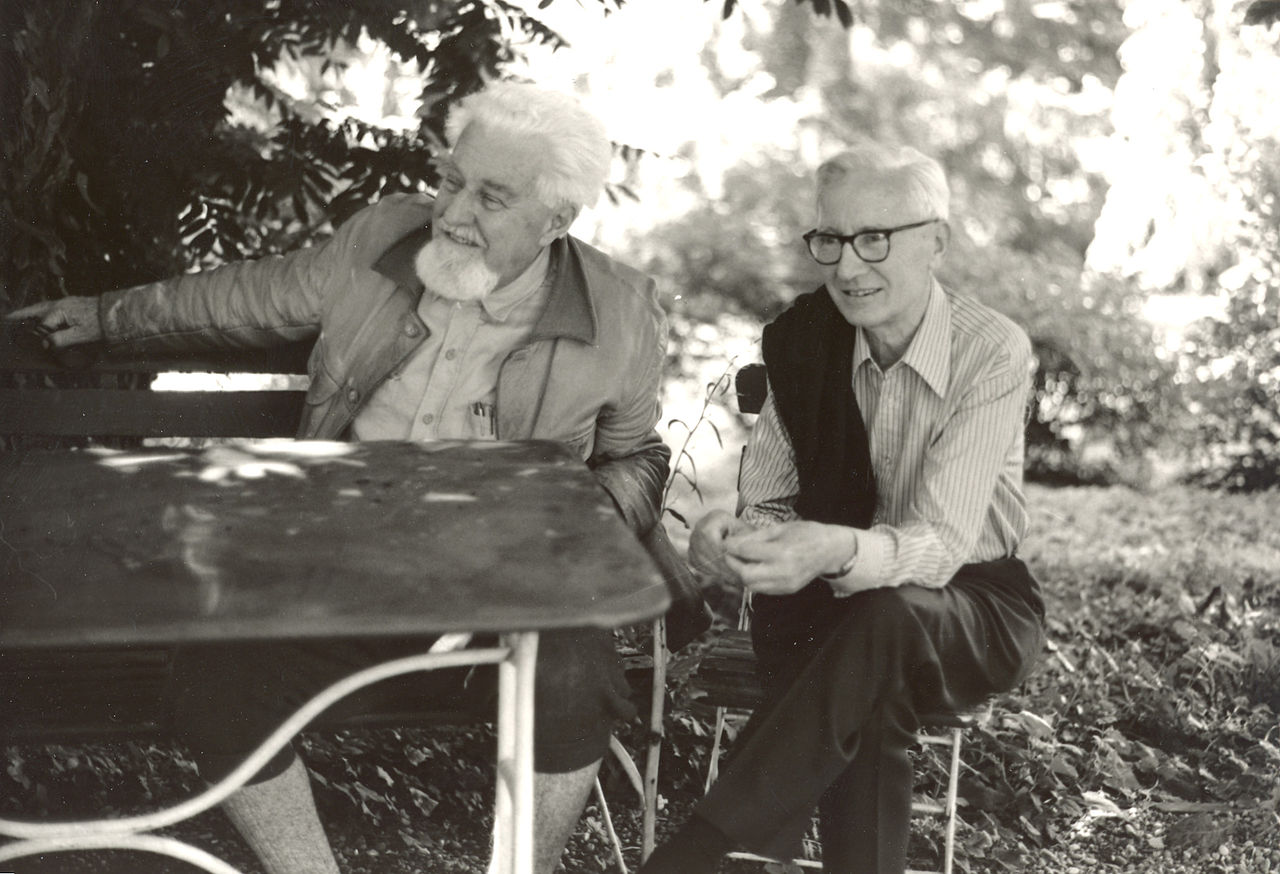


Contributions and concepts
Lorenz emphasized that many animal behaviours are innate patterns released by specific stimuli. His work on imprinting showed that young birds form strong attachments during a limited critical period, typically to the first moving object encountered. This insight altered thinking about development, bonding and the interplay between inherited tendencies and early experience.
Methods and examples
His approach combined careful field observation with controlled experiments. Lorenz raised and observed goslings and jackdaws, documenting how they followed and imitated a parent figure, and how social bonds formed. He also studied aggression, courtship displays and communication in different species to illustrate common organizing principles of behaviour.
History, career and publications
Lorenz trained in Vienna and became a leading voice in post‑war behavioural biology. He wrote widely for both specialist and general audiences; popular books such as King Solomon's Ring and the more theoretical On Aggression brought ethological ideas to a broad public and influenced subsequent research in psychology, zoology and conservation.
Controversy and legacy
While celebrated for scientific achievements, Lorenz's career is also viewed in the context of problematic wartime associations and some deterministic arguments in his writings. Later scholarship has debated these aspects while recognizing his substantial role in creating modern ethology, training students, and inspiring research on animal and human behaviour.
Further reading and resources
- Biographical overview (birthplace and early life)
- Summary of zoological work
- Detailed account of ethology and methods
- Studies on birds, including jackdaws and geese
- Nobel Prize citation and context
- Imprinting: concept and experiments
- Discussion of instincts and behavioural patterns
- Critical perspectives and controversies
- Selected bibliography and major works
Questions and answers
Q: Who was Konrad Lorenz?
A: Konrad Lorenz was an Austrian zoologist, naturalist, ornithologist, and Nobel Prize winner.
Q: What was Lorenz's contribution to animal behavior studies?
A: Lorenz was one of the founders of studies on animal behavior, also known as ethology.
Q: What particular animal behaviors did Lorenz study?
A: Lorenz studied instinctive behavior in animals, especially in Greylag geese and jackdaws.
Q: What was Lorenz's specialization within ornithology?
A: Although Lorenz was an ornithologist, he specialized in studying instinctive behavior in birds such as Greylag geese and jackdaws.
Q: When and where was Konrad Lorenz born?
A: Konrad Lorenz was born on November 7, 1903, in Vienna, Austria.
Q: When did Konrad Lorenz die?
A: Konrad Lorenz died on February 27, 1989, in Vienna, the same city where he was born.
Q: What was the Nobel Prize awarded to Konrad Lorenz for?
A: Konrad Lorenz was awarded the Nobel Prize in Physiology or Medicine in 1973, shared with Karl von Frisch and Nikolaas Tinbergen for their discoveries concerning organization and elicitation of individual and social behavior patterns in animals.
Related articles
Author
AlegsaOnline.com Konrad Lorenz: Pioneer of Ethology and the Study of Imprinting Leandro Alegsa
URL: https://en.alegsaonline.com/art/123829