
Blueshift: the Doppler shift toward shorter wavelengths
Blueshift is the decrease in electromagnetic wavelength (or increase in frequency) produced when a source moves toward an observer. It appears in astronomy, radar, and other Doppler applications.
Blueshift describes the apparent shift of electromagnetic radiation to shorter wavelengths (toward the blue end of the visible spectrum) when the source and observer are moving closer together. It is one manifestation of the Doppler effect, the general phenomenon in which motion along the line of sight alters the observed frequency or wavelength of waves. Although often illustrated with visible light, blueshift can affect radio, infrared, ultraviolet and other parts of the spectrum, not just colors seen by the human eye; see non-visible wavelengths for context.
Image gallery
10 Images





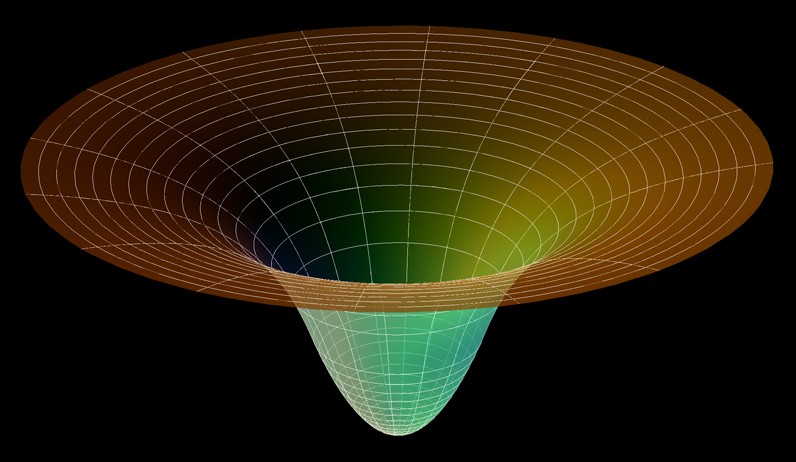

How blueshift arises
Physically, blueshift occurs because motion toward an observer compresses successive wavefronts, reducing the measured wavelength and increasing frequency. In classical (non-relativistic) terms this change is approximately proportional to the component of velocity along the line of sight. For speeds approaching the speed of light, special relativity must be used and time dilation also affects the observed frequency; the relativistic Doppler formula replaces the simple linear approximation. The term is applied to both emitted photons and to radiation that is reflected or re-emitted by moving matter, so the same concept covers light, radio waves and other particle-like quanta such as photons or other massless carriers photons and particles.
Where blueshift is observed
Astronomy provides the most familiar examples. When a star, galaxy, or gas cloud moves toward Earth its spectral features shift to shorter wavelengths and are described as blueshifted. Famous cases include nearby objects such as Barnard's Star and the Andromeda Galaxy, which show small blueshifts because their net motion has a component toward the Solar System. In binary-star systems each component alternately shows blueshift and redshift as the stars orbit one another. In rotating galaxies the side that spins toward us shows a slight blueshift relative to the receding side, a pattern used to measure rotation curves. In compact active systems such as blazars, relativistic jets pointed close to our line of sight can produce pronounced Doppler blueshifts and boosting of apparent brightness Andromeda, binary stars, blazars.
- Local Group dynamics — motions between nearby galaxies can produce observable blueshift.
- Rotation of spiral galaxies — differential Doppler shifts map velocity fields.
- Cosmological context — cosmological redshift differs from Doppler blueshift but local motions may appear as additional shifts on top of expansion.
Measuring and interpreting blueshift
Spectroscopy is the primary tool for detecting blueshift. Chemical elements and ions imprint narrow spectral features—absorption or emission lines—with well-known rest wavelengths. By comparing observed line positions to laboratory values, astronomers deduce the line-of-sight velocity. These fingerprints, often cited as elemental signatures or spectral lines, allow determination of motion and composition simultaneously. It is important to note that a measured blueshift indicates motion toward the observer (or other causes such as gravitational effects), not directly distance; however, on cosmological scales redshift is used together with models of universal expansion to infer distance astronomical Doppler use.
Other causes and important distinctions
Not every shift toward shorter wavelengths is a Doppler blueshift. General relativity predicts gravitational blueshift when photons fall into stronger gravitational potentials, increasing their frequency. Conversely, cosmological redshift stems from the metric expansion of space and is not a simple Doppler effect; local peculiar velocities may add a Doppler blueshift or redshift on top of cosmological stretching cosmological redshift. Practical applications beyond astronomy include Doppler radar and medical ultrasound, where returning signals from approaching objects are shifted to higher frequencies and used to infer speed and direction applications.
Notable facts: blueshift affects the full electromagnetic spectrum and is symmetric with redshift (motion away produces longer wavelengths). Observers infer velocities from the amount of shift, but careful modeling is needed to separate Doppler motion from gravitational, relativistic beaming, or cosmological effects. Tools such as high-resolution spectroscopy and multiwavelength observations help disentangle these contributions and yield information about kinematics, composition, and physical conditions in the source spectral diagnostics, line analysis, Doppler physics.
For further introductory material and technical details, consult resources on the nature of photons, the behavior of non-visible radiation, and practical spectroscopic techniques described in observational texts and reviews gravitational effects, elemental fingerprints, galaxy kinematics, active galactic nuclei.
Questions and answers
Q: What is Doppler blueshift?
A: Doppler blueshift is a decrease in wavelength caused by relative motion, even outside the visible spectrum. It occurs when a source of light moves towards an observer.
Q: How can astronomers use Doppler blueshift to determine relative motion?
A: Astronomers can use Doppler blueshift to determine relative motion by observing changes in the wavelength of light from distant objects. For example, if they observe spiral galaxies, the side spinning toward us will have a slight blueshift compared to the side spinning away from us. They can also measure relativistic jets that appear blueshifted and nearby stars such as Barnard's Star that are moving towards us resulting in a very small blueshift.
Q: How do astronomers know how far the light gets shifted?
A: Astronomers know how far the light gets shifted because certain chemical elements like calcium or oxygen have unique fingerprints of light that no other element has. By looking at the difference between where these spectral lines are and where they should be, astronomers can tell how far away an object is, whether it is moving towards or away from them, and also how fast it is going since faster movement results in greater distance between spectral lines and their expected position.
Q: What causes redshift?
A: Redshift is caused by movement of a source away from an observer which increases its wavelength. It occurs when an object moves further away from Earth due to expansion of space-time or cosmic expansion caused by dark energy pushing matter apart over time.
Q: What does "high z" mean?
A: High z refers to objects with high redshifts which indicates that they are very distant and moving rapidly away from Earth due to cosmic expansion caused by dark energy pushing matter apart over time.
Q: How does cosmological redshift differ from Doppler blueshift?
A: Cosmological redshift differs from Doppler Blueshift because cosmological redshift occurs due to cosmic expansion while Doppler Blueshift occurs due to relative motion between two objects such as one object approaching another object or one component of a binary star system moving towards Earth.
Related articles
Author
AlegsaOnline.com Blueshift: the Doppler shift toward shorter wavelengths Leandro Alegsa
URL: https://en.alegsaonline.com/art/12373
Sources
- arxiv.org : astro-ph/0409546
- ui.adsabs.harvard.edu : 2005ApJ...618..601A
- doi.org : 10.1086/426075