
Kermit Love: Puppeteer, Costume Designer, and Creator of Iconic Sesame Street Figures
Biography and legacy of Kermit Love (1916–2008), American puppeteer, costume designer and actor best known for creating full-body Muppet characters such as Big Bird for Sesame Street.
Overview
Kermit Ernest Hollingshead Love (August 7, 1916 – June 21, 2008) was an American puppeteer, costume designer and actor whose work shaped children’s television and stage puppetcraft in the mid-20th century. He is most widely remembered for his contributions to the Muppets created for Sesame Street, including the original construction and design of the character Big Bird.
Image gallery
1 Image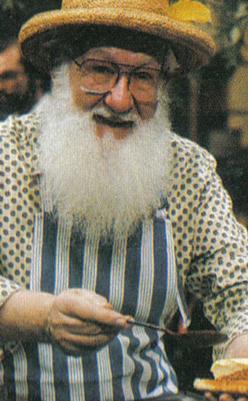
Early life and stage work
Love began his creative career in theatre, working on Broadway and in ballet productions where skills in textile, costume tailoring and mechanical puppet construction were prized. He built marionettes and stage figures, learning how to combine fabric, foam and internal frameworks so that large figures could move convincingly and withstand the demands of live performance. These early experiences on Broadway and in dance companies informed the engineering that later made full-body puppet characters practical for television.
Meeting Jim Henson and designing full-body characters
In the 1960s Love met Jim Henson through mutual colleagues and soon applied his stage techniques to television puppetry. He specialized in full-body suits and wearable puppets — complex constructions that required careful proportioning, interior harnesses, hand- and eye-control systems, and costume finishing so the performer could animate a character from within. Love’s approach balanced theatrical costume design with practical requirements of camera work and television production.
Big Bird, other creations and notable distinctions
Among Love’s best-known achievements is the design and initial construction of Big Bird, a full-size bird character whose scale and expressiveness depend on an internal structure and surface costume that read well on camera. Although his given name was Kermit, Love was not the inspiration for Henson’s earlier puppet Kermit the Frog; the similarly named frog predated their collaboration. Love continued to create and maintain characters both for Sesame Street and for other productions across decades, contributing his expertise to characters that required wearable frameworks rather than hand-held rod puppetry.
Later career and legacy
Love remained active into the late 20th and early 21st centuries, advising on repairs, reconstructions and new full-body puppet designs and occasionally creating non-Sesame characters. His fusion of costume craft and puppetry broadened what television puppets could be, influencing generations of designers who build large, performable characters for educational programs, theatre and film. His work is often cited when discussing the technical challenges of bringing large characters to life on screen.
Personal life and passing
Kermit Love lived much of his life in New York and maintained close ties with theatrical and television collaborators. He died on June 21, 2008, of heart failure in Poughkeepsie, New York, and was survived by his life partner, Christopher Lyall. His contributions endure through the characters he helped invent and the techniques he refined.
Related topics and terms
- Puppet construction and materials
- Children's television history
- Marionettes and stage puppetry
- Ballet and theatrical collaborations
- Jim Henson and collaborators
- Big Bird and character design
- Kermit the Frog (distinction)
- Non-Sesame Street character work
- Heart failure (cause of death)
- Poughkeepsie, New York (place of death)
Questions and answers
Q: Who was Kermit Love?
A: Kermit Love was an American puppeteer, costume designer, and actor in children's television and on Broadway.
Q: What is Kermit Love best known for?
A: Kermit Love is best known for his work on Muppets, mainly ones on Sesame Street.
Q: How did Love start his work?
A: Love started his work when he was young, at first doing work for Broadway, such as making marionettes.
Q: Who did Love work with during his time in Broadway and ballet?
A: Love worked with many great names at the time in Broadway and ballet.
Q: How did Love first meet Jim Henson?
A: Don Sahlin told Love to meet with Jim Henson, which was where Love and Henson first met.
Q: What puppets did Love create?
A: Love made Big Bird and other muppets, and even though his name was Kermit, he was not the namesake of Kermit the Frog, who Henson made before meeting Love.
Q: How did Kermit Love die, and who did he leave behind?
A: Kermit Love died of heart failure in Poughkeepsie, New York, and he is outlived by his life partner, Christopher Lyall.
Related articles
Author
AlegsaOnline.com Kermit Love: Puppeteer, Costume Designer, and Creator of Iconic Sesame Street Figures Leandro Alegsa
URL: https://en.alegsaonline.com/art/123627