
Kazuo Ishiguro
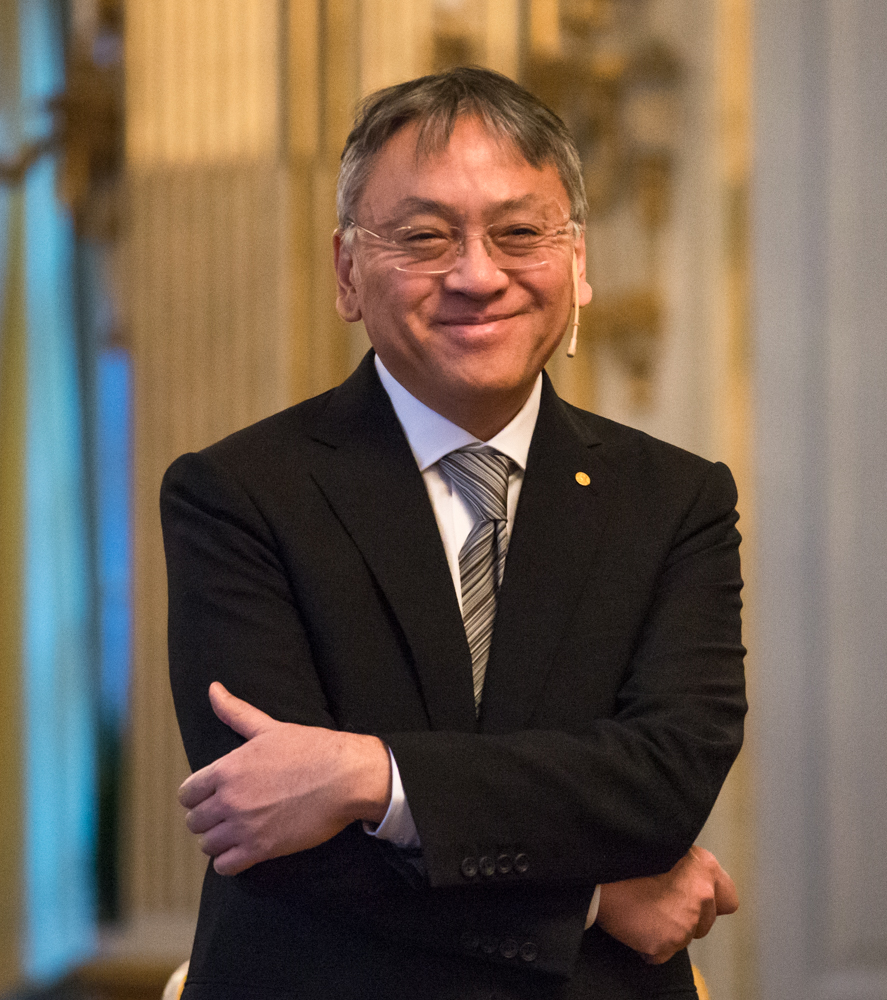
British novelist of Japanese birth (born 1954). Nobel laureate (2017) noted for novels such as The Remains of the Day and Never Let Me Go, exploring memory, identity and moral ambiguity.
Overview
Kazuo Ishiguro is a British novelist born in Nagasaki, Japan, in 1954 who emigrated to England with his family as a child. He writes in English and is widely recognised for a restrained, elegant prose that often explores memory, identity and the gap between inner life and social duty. Ishiguro received the Nobel Prize in Literature in 2017 and has been honoured in the United Kingdom for his services to literature; official information can be found on his profile.
Image gallery
6 Images


Biography and background
Ishiguro was born on 8 November 1954 in Nagasaki and moved to Britain in 1960 when he was five. He studied English and philosophy at university and later completed postgraduate study in creative writing. His bicultural upbringing—Japanese roots and a life in Britain—has often been noted as providing him with a distinctive perspective, though he writes chiefly in English. For context about his early life and birthplace see Nagasaki and for information on his nationality and public honours see British honours.
Major works
Ishiguro's novels are characterised by careful narration and psychologically complex protagonists. Selected novels include:
- An Artist of the Floating World (1986)
- The Remains of the Day (1989) — winner of the Booker Prize; see Booker Prize
- When We Were Orphans (2000)
- Never Let Me Go (2005)
- The Buried Giant (2015)
Style and themes
Ishiguro is frequently noted for his use of restrained, often first-person narrators who reveal the past gradually and unreliably. Recurring themes include the instability of memory, personal responsibility, the cost of loyalty and the ethical dilemmas that arise when private lives intersect with broader social forces. While many of his books are grounded in realistic settings, some—most famously Never Let Me Go—combine literary fiction with speculative or dystopian elements to probe moral questions.
Recognition, adaptations and notable facts
The Remains of the Day was adapted into a film in 1993; information about the adaptation is available at the film page. The movie starred Anthony Hopkins and Emma Thompson and received multiple Academy Award nominations. Ishiguro won the Nobel Prize in Literature in 2017 and has received national honours in Britain, including an OBE earlier in his career and a knighthood later. His work is taught widely and discussed for its subtle handling of moral complexity and the ways memory shapes identity.
Legacy and significance
As a writer who bridges cultures and genres, Ishiguro has become a central figure in contemporary English-language fiction. Readers and critics alike value his controlled narrative voice and the emotional resonance of his themes. His novels continue to be read, adapted and studied for their insight into the human consequences of history, duty and technological change.
Questions and answers
Q: Who is Kazuo Ishiguro?
A: Kazuo Ishiguro is a British novelist of Japanese origin.
Q: What did Kazuo Ishiguro win in 2017?
A: Kazuo Ishiguro won the Nobel Prize in Literature in 2017.
Q: Where was Kazuo Ishiguro born?
A: Kazuo Ishiguro was born in Nagasaki, Japan.
Q: How old was Kazuo Ishiguro when his family moved to England?
A: Kazuo Ishiguro was five years old when his family moved to England.
Q: What are some of Kazuo Ishiguro's novels?
A: Some of Kazuo Ishiguro's novels include An Artist of the Floating World (1986), When We Were Orphans (2000), and Never Let Me Go (2005).
Q: What did Kazuo Ishiguro win the Booker Prize for?
A: Kazuo Ishiguro won the Booker Prize for his 1989 novel The Remains of the Day.
Q: Was The Remains of the Day adapted into a movie?
A: Yes, The Remains of the Day was adapted into a movie in 1993.
Related articles
Author
AlegsaOnline.com Kazuo Ishiguro Leandro Alegsa
URL: https://en.alegsaonline.com/art/123471
Sources
- faber.co.uk : "Kazuo Ishiguro"
- nobelprize.org : "The Nobel Prize in Literature 2017 - Press Release"