
Kareem Abdul-Jabbar: life, career, and legacy
Comprehensive overview of Kareem Abdul-Jabbar: his early life, college and NBA career, signature skyhook, records, cultural work, and lasting impact on basketball and society.
Kareem Abdul-Jabbar (born Ferdinand Lewis Alcindor Jr., April 16, 1947) is an American former professional basketball player widely regarded as one of the sport's greatest figures. He adopted the name Kareem Abdul-Jabbar after converting to Islam in the early 1970s. Standing well over seven feet tall, he combined size, skill and a distinctive shot—the skyhook—to achieve extraordinary longevity and success at the highest levels of the game.
Image gallery
10 Images
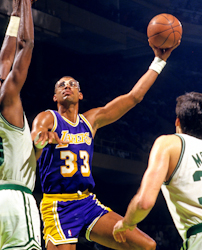



Early life and college
Raised in New York City, Alcindor became a dominant high school prospect and enrolled at UCLA, where he played under coach John Wooden. At UCLA he was the focal point of a powerhouse program that won multiple national championships during his tenure. His combination of footwork, timing and the early development of the skyhook helped him overpower opponents and set the stage for a smooth transition to the professional ranks.
Professional career and playing style
Drafted into the NBA at the end of the 1960s, he began his pro career under his birth name and later took the name Kareem Abdul-Jabbar. He starred for the Milwaukee Bucks and then the Los Angeles Lakers. Renowned for his consistency and durability, he played at an elite level for two decades. His skyhook, a high-arcing one-handed shot delivered with his long reach, became an almost indefensible weapon and a signature move associated with his legacy. He has also served as an assistant coach at different times after his playing days.
Achievements and honors
- Member of multiple championship teams and a perennial All-Star presence.
- A record-holder for several career milestones, including being the NBA's all-time leading scorer.
- Recipient of multiple regular-season Most Valuable Player awards and other individual accolades.
These accomplishments are often listed when discussing the game's greats and are cited as evidence of his impact on basketball strategy and player development.
Off-court work and cultural impact
Beyond the court, Abdul-Jabbar has been active as an author, cultural commentator and public intellectual. He has written books, essays and articles on sports, history and social issues, and has appeared in films and television programs in both dramatic and comedic roles. For more on his media appearances see legacy and honors and for his writing and commentary see writing and media work.
His life bridges sport, culture and activism: a transformative athlete whose influence extends into conversations about race, religion, education and the role of athletes in public life. For a focused look at his playing days and statistical records consult sources on his college and professional career.
Questions and answers
Q: Who is Kareem Abdul-Jabbar?
A: Kareem Abdul-Jabbar is an American former professional basketball player and current assistant coach.
Q: What was his original name before changing it?
A: Kareem Abdul-Jabbar's original name was Ferdinand Lewis Alcindor, Jr.
Q: When did he change his name?
A: He changed his name in the fall of 1971, several years after converting to Islam.
Q: What is his claim to fame?
A: Kareem Abdul-Jabbar is considered one of the greatest basketball players of all time.
Q: What other career has he had besides playing basketball?
A: He has also had numerous television and movie appearances.
Q: When was he born?
A: Kareem Abdul-Jabbar was born on April 16, 1947.
Q: What is his former name?
A: His former name was Lew Alcindor.
Related articles
Author
AlegsaOnline.com Kareem Abdul-Jabbar: life, career, and legacy Leandro Alegsa
URL: https://en.alegsaonline.com/art/123277